Battle of the Atlantic: The Longest Naval Campaign of World War II
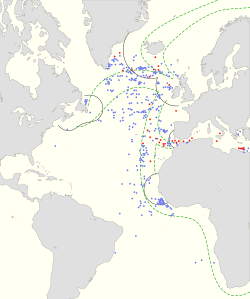
The Battle of the Atlantic was the longest continuous military campaign of the Second World War, spanning from September 3, 1939, to May 8, 1945. This grueling struggle was defined by a clash of strategic necessities: the Allied naval blockade of Germany and the subsequent German counterblockade. For over five years, the Atlantic Ocean became a vast battlefield where the survival of Great Britain and the success of the Allied liberation of Europe depended on the safe passage of vital supplies.
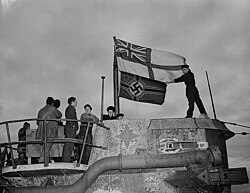
The conflict pitted the German Kriegsmarine (navy) and the Luftwaffe (air force) against a coalition of Allied forces, primarily the Royal Navy, Royal Canadian Navy, and the United States Navy. The primary targets were merchant convoys traveling from North America to the United Kingdom and the Soviet Union. While the Allies fought to keep the sea lanes open, Germany utilized its submarine fleet, known as U-boats, to sever these lifelines.
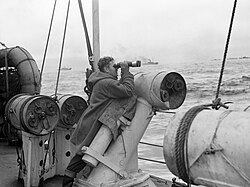
Key Facts
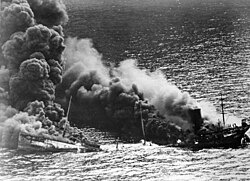
- Duration: 5 years, 8 months, and 5 days.
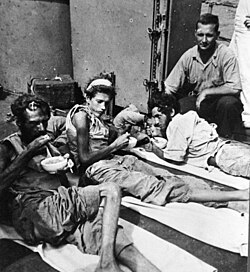
- Allied Losses: Approximately 3,500 merchant vessels and 175 warships lost; 36,200 naval and 36,000 merchant navy personnel killed.
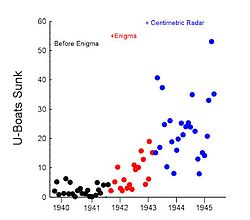
- Axis Losses: 783 U-boats lost and approximately 30,000 U-boat sailors killed.
- Strategic Goal: Allied protection of supply lines versus German attempts to starve Britain into submission.
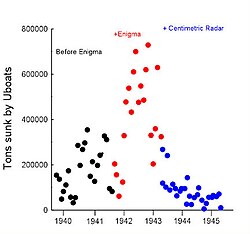
- Turning Point: The convergence of intelligence (Enigma), new radar technology, and increased air cover in 1943.
The Evolution of U-Boat Warfare
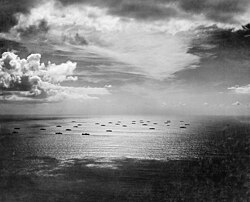
In the early stages of the war, German U-boats enjoyed significant success, particularly during the period from June 1940 to February 1941, often referred to as "The Happy Time." During this era, U-boats operated with high efficiency, sinking vast amounts of Allied tonnage with relatively few losses.
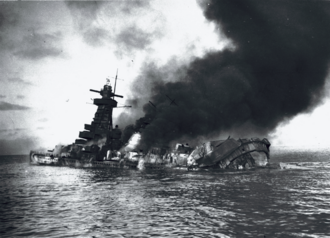
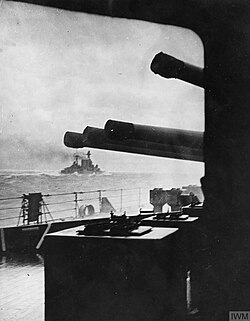
Germany also deployed surface raiders—heavy cruisers and auxiliary ships—to harass Allied shipping. These vessels, such as the Admiral Graf Spee and Admiral Scheer, caused significant disruption before being hunted down or scuttled.
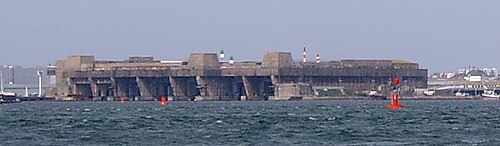
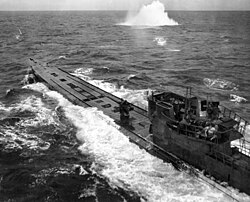
As the war progressed, the Kriegsmarine introduced the Type VIIC U-boat in large numbers. By 1945, 568 of these vessels had been commissioned. To sustain these operations, Germany utilized Type XIV supply submarines, nicknamed "milch cows," to refuel and rearm combat boats at sea.
Allied Anti-Submarine Warfare (ASW)
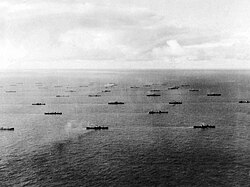
To counter the U-boat threat, the Allies developed Anti-Submarine Warfare (ASW) tactics and technologies. The most fundamental defense was the convoy system, where merchant ships traveled in groups protected by naval escorts.
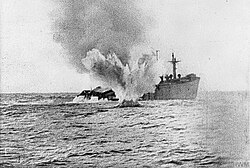
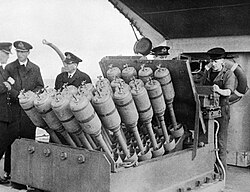
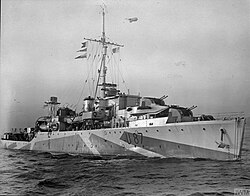
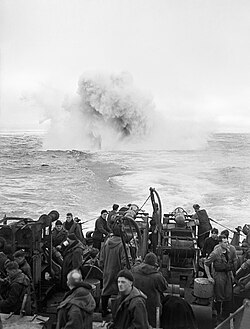
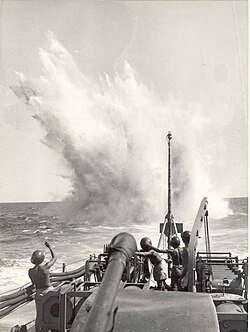
Early escorts, such as the Flower-class corvettes, could detect submarines but often lacked the speed for effective attacks. This led to the development of more advanced weaponry, including the Hedgehog and Squid—ahead-throwing mortars that allowed escorts to attack submarines without losing sonar contact by passing over the target.
Technological Breakthroughs
Several key innovations shifted the tide of the battle:
- HF/DF (Huff-Duff): High-Frequency Direction Finding allowed Allies to locate U-boats by intercepting their radio transmissions.
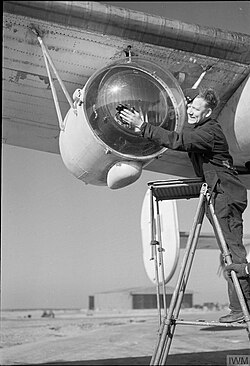
- Centimetric Radar: This allowed aircraft and ships to detect surfaced U-boats, even in darkness or fog.
- Leigh Light: A powerful searchlight fitted to aircraft, used to illuminate U-boats at night during the final stages of an attack.
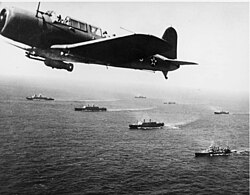
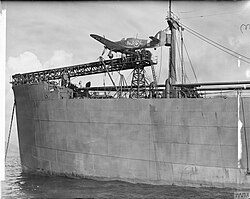
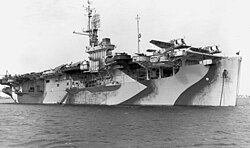
- Escort Carriers: Small aircraft carriers, such as the USS Bogue, provided essential air cover in the "Mid-Atlantic Gap" where land-based planes could not reach.
The War of Intelligence: Enigma
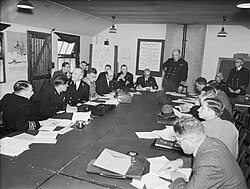
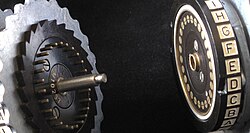
One of the most critical advantages for the Allies was the breaking of the Enigma cipher, the encryption system used by the German military. Codebreakers at Bletchley Park worked tirelessly to decrypt U-boat communications, allowing convoys to be rerouted away from known "wolfpacks." Although the Germans occasionally updated their rotors to blind the Allies, the US Navy eventually developed high-speed "bombes" to crack the four-rotor Enigma machines by September 1944.
Global Reach and the South Atlantic
The battle extended far beyond the North Atlantic. In 1942, Axis submarines began attacking Brazilian shipping. This led Brazil to officially enter the war on August 22, 1942. The Brazilian Navy and Air Force provided vital support in the South Atlantic, escorting over 3,000 ships and collaborating with the US Navy to sink several Axis submarines, including the Italian Archimede.
Campaign Summary and Outcomes
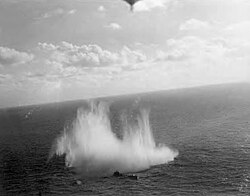
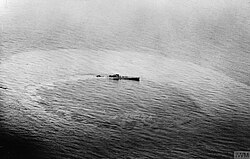
The battle reached a climax in May 1943, when Allied technological and tactical superiority resulted in the destruction of 43 U-boats in a single month—roughly 25% of the U-boat Arm's operational strength. By 1944 and 1945, the U-boats were no longer a strategic threat, though they continued to operate until the final days of the war.
| Year | Submarines | Aircraft | Mines | Surface Ships | Total (Atlantic) |
|---|---|---|---|---|---|
| 1939 | 421,156 | 2,949 | 262,697 | 61,337 | 754,686 |
| 1940 | 2,156,158 | 580,074 | 509,889 | 511,615 | 3,654,511 |
| 1941 | 2,171,070 | 1,017,422 | 230,842 | 487,204 | 3,295,909 |
| 1942 | 6,266,215 | 700,020 | 104,588 | 396,242 | 6,150,340 |
| 1943 | 2,588,906 | 424,411 | 111,658 | 56,986 | 2,200,410 |
| 1944 | 773,327 | 120,656 | 95,855 | 33,693 | 505,759 |
| 1945 | 283,133 | 44,351 | 93,663 | 10,222 | 366,843 |
Frequently Asked Questions
What was the primary goal of the German U-boat campaign?
The primary goal was to sink Allied merchant shipping to starve the United Kingdom of food, fuel, and war materials, thereby forcing a surrender by breaking the Allied naval blockade.
How did the Enigma machine affect the battle?
The Enigma machine provided encrypted communications for the German navy. When Allied codebreakers at Bletchley Park cracked these codes, they could anticipate U-boat movements and redirect convoys to avoid danger.
What was the "Happy Time" for U-boats?
The "Happy Time" refers to the period between June 1940 and February 1941, when U-boats encountered poorly defended convoys and achieved high sinking rates with minimal losses.
What role did Brazil play in the Battle of the Atlantic?
Brazil entered the war in August 1942 after U-boat attacks on its shipping. The Brazilian Navy and Air Force provided critical escort services in the South Atlantic and Caribbean, helping to sink several Axis submarines.
What were "milch cows"?
"Milch cows" were Type XIV supply submarines designed to provide fuel, torpedoes, and provisions to combat U-boats, allowing them to remain on patrol in the Atlantic for much longer periods.