Frederic John Walker: The Royal Navy's Most Successful U-Boat Hunter
During the height of the Second World War, the Battle of the Atlantic served as a critical struggle for the survival of the United Kingdom. Central to the Allied victory was Captain Frederic John Walker, a Royal Navy officer whose innovative tactics and relentless determination earned him the nickname "Johnnie Walker." As the most successful anti-submarine warfare commander of the conflict, Walker transformed the way the Royal Navy hunted and destroyed German U-boats.
Key Facts
- Total Success: Credited with the destruction of 20 U-boats.
- Specialization: Expert in anti-submarine warfare (ASW) trained at HMS Osprey.
- Key Commands: Led the 36th Escort Group and the 2nd Support Group.
- Major Honors: Companion of the Order of the Bath (CB) and the Distinguished Service Order (DSO) with three bars.
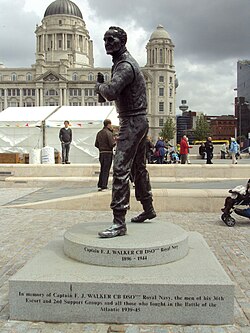
- Legacy: Commemorated with a statue at the Pier Head in Liverpool.
Early Life and Professional Foundation
Born in Plymouth on June 3, 1896, Frederic John Walker entered the Royal Navy as a cadet in 1909. After excelling at the Royal Naval Colleges at Osborne and Dartmouth, he served as a midshipman on the battleship Ajax and later joined the destroyers Mermaid and Sarpedon during the First World War. Following the war, he served on the battleship Valiant.
Between the two World Wars, Walker dedicated himself to the emerging field of anti-submarine warfare (the practice of locating and destroying enemy submarines). He attended the specialized training school at HMS Osprey on the Isle of Portland in 1924. This expertise led to a series of commands, including the destroyer Shikari and the sloop Falmouth on the China Station, before he became the Experimental Commander at HMS Osprey in 1937.
The Second World War: From Staff Officer to Commander
At the start of the Second World War, Walker served as Operations Staff Officer to Vice-Admiral Sir Bertram Ramsay. During this tenure, he played a role in Operation Dynamo, the massive evacuation of over 338,000 British and French troops from Dunkirk, for which he was Mentioned in Despatches.
The 36th Escort Group
In October 1941, Walker finally received a sea command, leading the 36th Escort Group from the sloop HMS Stork. His first major test came with Convoy HG 76 in December 1941. Through innovative methods, his group sank four U-boats, including U-574, which Walker's own ship depth-charged and rammed. This engagement is often cited as the first true Allied convoy victory in the Battle of the Atlantic.
The 2nd Support Group and HMS Starling
In 1943, Walker took command of the 2nd Support Group, leading from the Black Swan-class sloop HMS Starling. Unlike traditional escort groups tied to a specific convoy, Walker proposed a "support group" that could act as a mobile reinforcement, actively hunting U-boats across the ocean.
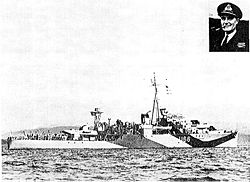
Walker's leadership was characterized by a mix of professional brilliance and charismatic eccentricity, such as playing "A Hunting We Will Go" over the ship's Tannoy when returning to base. Under his command, the group achieved staggering results, including sinking six U-boats in a single patrol in early 1944.
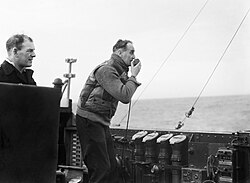
His success extended to the Arctic, where he protected Convoy JW 58, and the Normandy landings, where he successfully prevented U-boats from penetrating the fleet's defenses for two weeks.
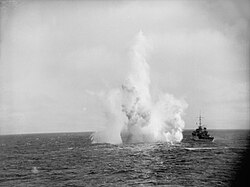
Innovative Anti-Submarine Tactics
Walker's success was not due to luck, but to the development of specific tactical maneuvers designed to overcome the stealth of the U-boat:
- The Creeping Attack: Two ships worked in tandem; one maintained sonar contact from a distance while the other crept forward slowly to drop depth charges, preventing the U-boat from detecting the attacker's approach.
- The Barrage Attack: Three or more sloops formed a line and launched a saturation of depth charges to cover a wide area.
- The Hold Down: Walker would keep a U-boat submerged using constant sonar contact and depth charges, forcing the submarine to stay deep until it ran out of air or battery power and was forced to surface.
Summary of Career and Honors
Captain Walker's career was marked by a rapid ascent in recognition and a devastating toll of losses for the German navy.
| Period/Event | Command/Role | Key Achievement |
|---|---|---|
| 1940 | Staff Officer | Operation Dynamo (Dunkirk) |
| 1941–1942 | 36th Escort Group | Victory at Convoy HG 76 |
| 1943–1944 | 2nd Support Group | Destroyed numerous U-boats via HMS Starling |
| 1944 | Normandy Landings | Prevented U-boat penetration of the fleet |
Death and Legacy
The intensity of Walker's dedication proved fatal. After working without respite during the Normandy invasion, he suffered a cerebral thrombosis on July 7, 1944. He died two days later at the Royal Naval Hospital at Seaforth, aged 48, with his death attributed to overwork and exhaustion.
He was buried at sea after a funeral service at Liverpool Cathedral. Today, his contributions to naval warfare are remembered through a statue at the Pier Head in Liverpool.
Frequently Asked Questions
How many U-boats did Captain Walker destroy?
Captain Frederic John Walker is credited with the destruction of 20 U-boats throughout the Second World War.
What was the "creeping attack"?
The creeping attack was a tactic where two ships collaborated: one ship maintained sonar contact with the submarine while the other moved in slowly and silently to deliver the attack, minimizing the chance of the submarine detecting the attacking vessel.
What was the purpose of the 2nd Support Group?
Unlike standard escort groups that stayed with a convoy, the 2nd Support Group was designed as a reinforcement force that could actively hunt and destroy U-boats independently.
Why was he nicknamed "Johnnie Walker"?
He was popularly known as "Johnnie Walker" as a play on his name and the famous brand of Scotch whisky.
What caused Captain Walker's death?
Captain Walker died of a cerebral thrombosis at the age of 48, which was attributed to extreme exhaustion and overwork during his duties during the Normandy landings.