Commander-in-Chief Fleet: The Command Structure of the Royal Navy (1971–2012)
From 1971 until April 2012, the Commander-in-Chief Fleet (CINCFLEET) served as the admiral responsible for the operational management of the British Royal Navy's ships, submarines, and aircraft. This pivotal role ensured that the UK's maritime capabilities were coordinated and ready for deployment across the globe.
For much of its existence, the command was defined by the Cold War, specifically the strategic threat of a third Battle of the Atlantic. However, the role also oversaw the Navy's most prominent conflict of the era: the 1982 Falklands War. Subordinate to the First Sea Lord and Chief of Naval Staff—the professional head of the Navy—the CINCFLEET managed the transition of the Navy as it evolved in size and administrative scope over four decades.
Key Facts
- Active Period: November 1971 to April 2012.
- Primary Responsibility: Operational command of all Royal Navy ships, submarines, aircraft, the Royal Marines, and the Royal Fleet Auxiliary.
- Headquarters: Originally established at Northwood (HMS Warrior), later moving to Portsmouth in 1992.
- Appointment: Nominated by the Secretary of State for Defence and appointed by the Prime Minister, subject to approval by the King-in-Council.
- Reporting Line: Reported directly to the First Sea Lord.
Evolution and History
Before 1964, naval command was managed by the Admiralty Naval Staff. This changed when the Admiralty merged into the Ministry of Defence, becoming the Navy Department. By November 1971, force reductions led to the amalgamation of the Western Fleet and the Far East Fleet. This merger created the position of Commander-in-Chief Fleet, a four-star admiral based at the Northwood Headquarters in Middlesex, England.
In the early years (1971–1972), CINCFLEET directed several key officers, including the Flag Officer Submarines and the Hydrographer of the Navy. Operational control was further delegated to regional officers in Plymouth, Gibraltar, Malta, the West Indies, and Hong Kong.
As the Royal Navy shrank in the following decades, the role of CINCFLEET expanded to include more administrative duties. In 2005, the Second Sea Lord (reduced to Vice-Admiral rank) came under CINCFLEET's command, a structure that remained until the Levene reforms of 2012.
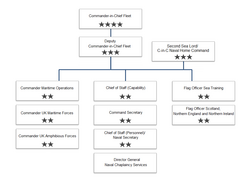
Command Responsibilities and Structure
The CINCFLEET held full command of the Fleet element of military operational capability. This included the Royal Marines (the Navy's amphibious infantry) and the Royal Fleet Auxiliary (the civilian-manned fleet providing logistics and support).
By the 2010s, the command structure was supported by three primary pillars:
- Deputy CINCFLEET: Based at HMS Excellent, directing the work of the Fleet Headquarters.
- Commander Operations: Based at Northwood, overseeing active fleet operations.
- Commander United Kingdom Amphibious Forces: Who also served as the Commandant General Royal Marines.
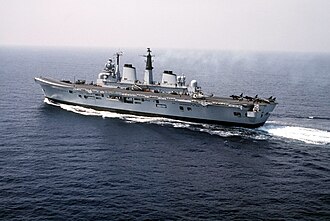
Operational Assets and Subordinate Commands
The scale of CINCFLEET's oversight is best illustrated by the diverse assets under its command. During the late 1980s, this included a vast array of surface combatants, submarines, and aviation wings.
Surface Fleet and Mine Countermeasures
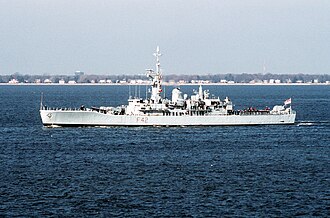
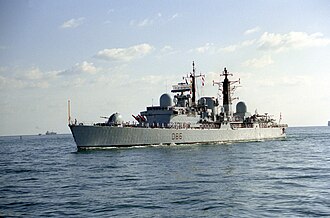
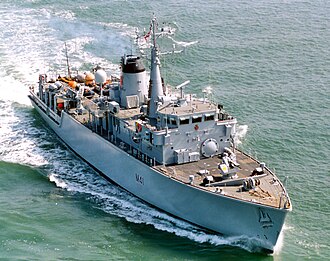
The surface fleet was organized into flotillas. The First Flotilla utilized Type 22 frigates and Type 42 destroyers, while the Second Flotilla operated Type 21 frigates and additional Type 42 destroyers. Mine countermeasures were handled by specialized vessels, such as the Hunt-class and Sandown-class minehunters.
Submarine and Air Commands
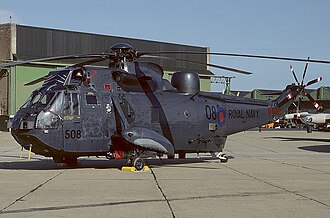
The Flag Officer Submarines managed a variety of classes, including the Oberon, Swiftsure, Churchill, and Valiant classes. Simultaneously, the Flag Officer Naval Air Command oversaw various Naval Air Squadrons (NAS) operating Sea Harriers for combat and Sea Kings for anti-submarine warfare and air assault.
The Royal Marines
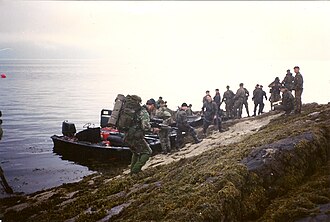
The Commandant General Royal Marines served as the service head for the Royal Marines. By 1989, this included 3 Commando Brigade and various assault squadrons equipped with landing craft and Centurion BARVs (Beach Armoured Recovery Vehicles) to support amphibious landings.
Summary of Command Administration
| Detail | Description |
|---|---|
| Inaugural Holder | Admiral Edward Ashmore (1971) |
| Typical Term | 2 to 4 years |
| Primary HQ | Northwood (until 1992), then Portsmouth |
| Key Subordinates | Deputy CINCFLEET, Commander Operations, CG Royal Marines |
| End of Post | April 2012 (following Levene reforms) |
Frequently Asked Questions
What was the primary purpose of the CINCFLEET role?
The Commander-in-Chief Fleet was the admiral responsible for the operational command and readiness of all Royal Navy ships, submarines, aircraft, and the Royal Marines from 1971 to 2012.
Where was the CINCFLEET headquarters located?
The headquarters were originally established at Northwood in the London Borough of Hillingdon (HMS Warrior) and were later moved to Portsmouth in 1992.
Who did the Commander-in-Chief Fleet report to?
The CINCFLEET was subordinate to the First Sea Lord and Chief of Naval Staff, who served as the professional head of the Royal Navy.
Which major conflict occurred during the tenure of the CINCFLEET?
The most prominent conflict during this period was the Falklands War in 1982, though the command also focused heavily on the Cold War threat in the Atlantic.
Why was the position of CINCFLEET eventually abolished?
The post ended in April 2012 as part of the Levene reforms, which restructured the management and organization of the Ministry of Defence.