Articles/Gamal Abdel Nasser: The Architect of Pan-Arabism and Modern Egypt
Gamal Abdel NasserEgypt PresidentPan-ArabismSuez CrisisFree Officers Movement
Gamal Abdel Nasser: The Architect of Pan-Arabism and Modern Egypt
Gamal Abdel Nasser: The Architect of Pan-Arabism and Modern Egypt Gamal Abdel Nasser was a transformative figure in 20th-century geopolitics, serving as the second President of Egypt from...
Gamal Abdel Nasser: The Architect of Pan-Arabism and Modern Egypt
Gamal Abdel Nasser was a transformative figure in 20th-century geopolitics, serving as the second President of Egypt from 1954 until his death in 1970. A military officer turned statesman, Nasser became the face of Pan-Arabism—the ideology seeking to unify the Arabic-speaking peoples of the Middle East and North Africa—and a champion of the Non-Aligned Movement during the Cold War.
His journey from a lieutenant colonel in the Egyptian army to the leader of the Arab world was marked by revolutionary fervor, high-stakes diplomacy, and a relentless drive for national sovereignty.
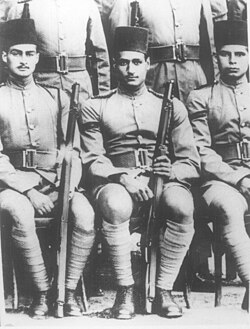
Nasser (center) with Ahmed Mazhar (left) in army, 1940
Key Facts
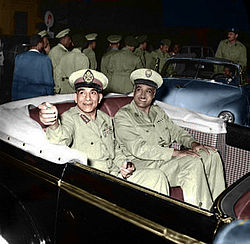
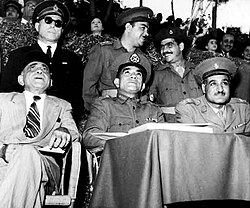
Nasser (right) and Mohamed Naguib (left) during celebrations marking the second anniversary of the 1952 revolution, July 1954
Presidency: Served as President of Egypt from November 14, 1954, to September 28, 1970.
Revolution: A key leader of the Free Officers Movement that ousted King Farouk in 1952.
Major Achievement: Nationalized the Suez Canal Company in 1956, asserting Egyptian control over the vital waterway.
Global Leadership: Served as the 2nd Secretary-General of the Non-Aligned Movement and Chairman of the Organisation of African Unity.
Ideology: Promoted Arab Socialism and the unification of Arab states, most notably through the United Arab Republic.
Rise to Power and the 1952 Revolution
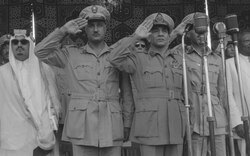
Nasser and Naguib saluting at the opening of the Suez Canal
Nasser's political ascent began within the military. Having served in the 1948 Arab-Israeli War, he became disillusioned with the Egyptian monarchy. He co-founded the Free Officers, a secret group of military officers dedicated to ending British influence in Egypt and overthrowing the monarchy.
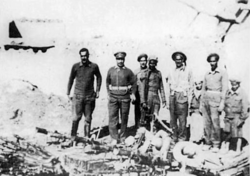
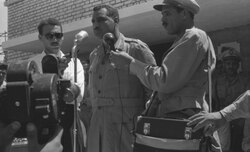
Nasser (first from left) with his unit in the Faluja pocket, displaying weapons captured from the Israeli Army during the 1948 war.
In July 1952, the Free Officers successfully executed a coup, leading to the ouster of King Farouk. While Mohamed Naguib initially served as the public face of the revolution, Nasser operated behind the scenes as the Chairman of the Revolutionary Command Council (RCC). Following a period of internal disputes with Naguib, Nasser consolidated power and officially assumed the presidency in 1954.
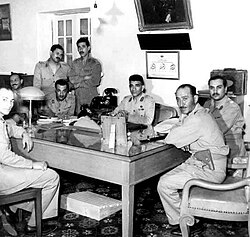
The Free Officers after the coup, 1953. Counterclockwise: Zakaria Mohieddin, Abdel Latif Boghdadi, Kamel el-Din Hussein (standing), Nasser (seated), Abdel Hakim Amer, Mohamed Naguib, Youssef Seddik, and Ahmad Shawki.Leaders of Egypt following the ouster of King Farouk, November 1952. Seated, left to right: Sulayman Hafez, Mohamed Naguib and Nasser
The Suez Crisis and National Sovereignty
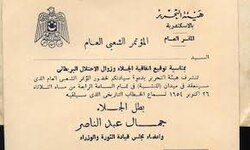
Liberation organization in Alexandria invitation to Nasser speech 26 October 1954
One of the most defining moments of Nasser's career was the 1956 Suez Crisis. In a bold move to fund the Aswan High Dam and challenge colonial remnants, Nasser nationalized the Suez Canal Company. This action triggered a military intervention by Britain, France, and Israel.
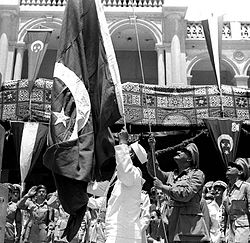
Nasser raising the Egyptian flag over the Suez Canal city of Port Said to celebrate the final British military withdrawal from the country, June 1956
Despite the military pressure, international diplomatic intervention forced the invaders to withdraw. This outcome cemented Nasser's status as a hero of the developing world and a symbol of resistance against imperialism.
Nasser giving a speech at the opening of the Suez Canal
Pan-Arabism and the United Arab Republic
ภาพประกอบจากบทความต้นฉบับ
Nasser envisioned a unified Arab front to resist external influence and strengthen the region. This vision culminated in the creation of the United Arab Republic (UAR), a political union between Egypt and Syria. While the union eventually collapsed, Nasser continued to influence regional politics, supporting liberation movements in Algeria and Yemen.
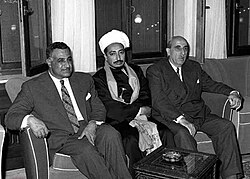
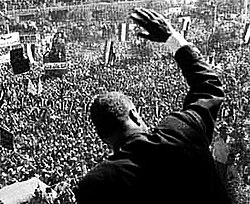
Nasser seated alongside Crown Prince Muhammad al-Badr of North Yemen (center) and Shukri al-Quwatli (right), February 1958. North Yemen joined the UAR to form the United Arab States, a loose confederation.Nasser waving to crowds in Damascus, Syria, October 1960
His influence extended beyond the Arab world. As a leader in the Non-Aligned Movement, he advocated for a "third way" for nations that wished to remain neutral during the ideological struggle between the United States and the Soviet Union.
Nasser and Imam Ahmad of North Yemen facing the camera, Prince Faisal of Saudi Arabia in white robes in the background, Amin al-Husayni of the All-Palestine Government in the foreground at the Bandung Conference, April 1955
Internal Reforms and Later Years
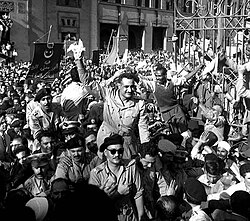
Nasser greeted by crowds in Alexandria one day after his announcement of the British withdrawal and the assassination attempt against him, 27 October 1954.
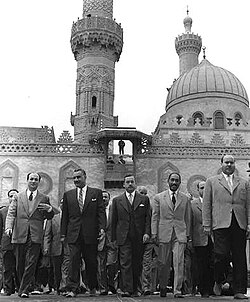
Domestically, Nasser implemented a series of socialist reforms under the Arab Socialist Union. He focused on land redistribution, industrialization, and expanding education and healthcare to the poor. He also maintained a complex relationship with religious institutions, including Al-Azhar Mosque.
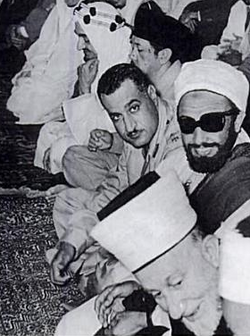
Government officials attending Friday prayers at al-Azhar Mosque, 1959. From left to right; Interior Minister Zakaria Mohieddin, Nasser, Social Affairs Minister Hussein el-Shafei and National Union Secretary Anwar Sadat
However, his later years were clouded by the devastating defeat of the 1967 Six-Day War. The loss of the Sinai Peninsula led to a wave of public grief and anger. Although Nasser briefly attempted to resign, massive public demonstrations urged him to remain in office.
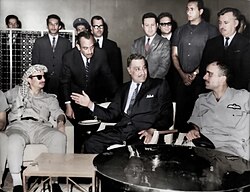
Nasser spent his final years overseeing the War of Attrition and attempting to broker peace between regional rivals, including the PLO and Jordan, before his sudden death on September 28, 1970.
Nasser brokering a ceasefire between Yasser Arafat of the PLO (left) and King Hussein of Jordan (right) at the emergency Arab League summit in Cairo on 27 September 1970, one day before Nasser's death
Legacy and Death
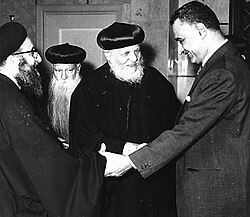
President Nasser receives a delegation of Christian bishops from Dakahlia, Qena, Qus and Sohag (1965)
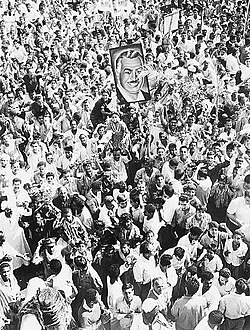
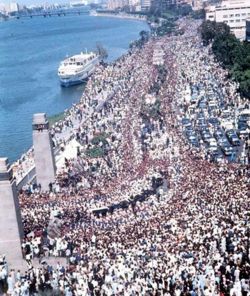
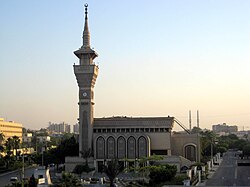
Nasser's death triggered an outpouring of grief unprecedented in the region, with an estimated five million people attending his funeral procession in Cairo. He was buried at the Gamal Abdel Nasser Mosque.
Nasser's funeral procession attended by five million mourners in Cairo, 1 October 1970Gamal Abdel Nasser Mosque in Cairo, the site of his burial
Summary of Gamal Abdel Nasser's Political Career
Role
Period
Key Focus/Outcome
Chairman of the RCC
1954–1956
Consolidation of revolutionary power
President of Egypt
1954–1970
Nationalization of Suez Canal; Pan-Arabism
Secretary-General, Non-Aligned Movement
1964–1970
Cold War neutrality and global diplomacy
Chairman, Organisation of African Unity
1964–1965
African liberation and unity
Frequently Asked Questions
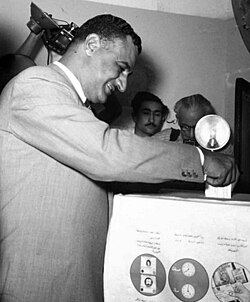
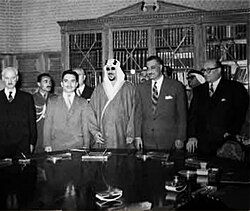
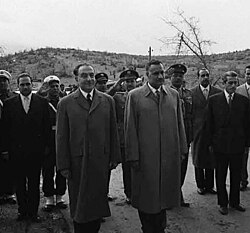
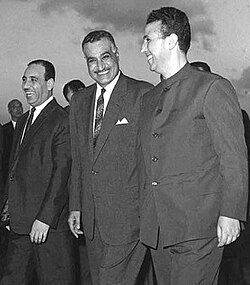
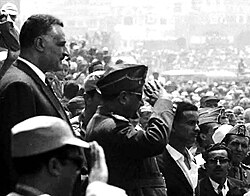
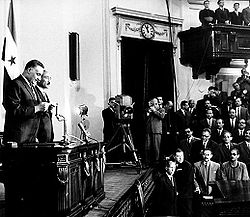
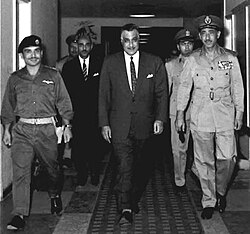
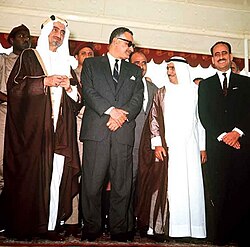
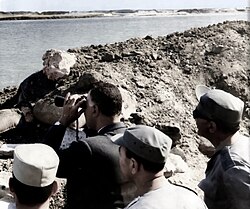
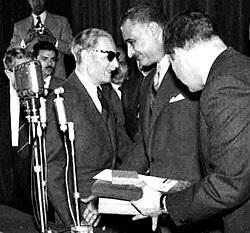
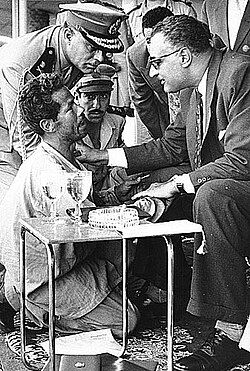
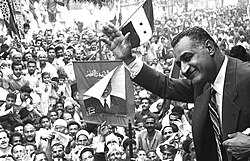
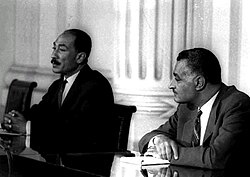
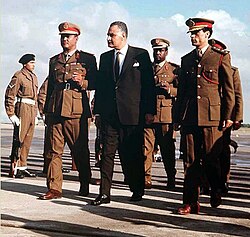
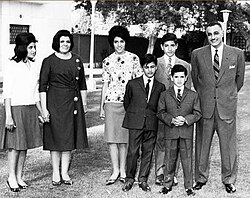
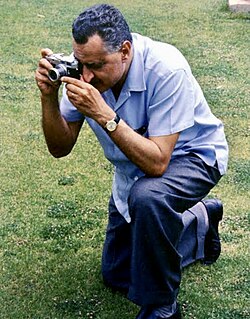
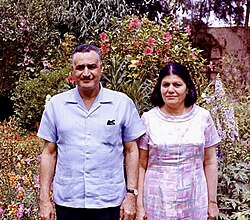
Nasser submitting his vote for the referendum of the proposed constitution, 23 June 1956The signing of the regional defense pact between Egypt, Saudi Arabia, Syria and Jordan, January 1957. At the forefront, from left right: Prime Minister Sulayman al-Nabulsi of Jordan, King Hussein of Jordan, King Saud of Saudi Arabia, Nasser, Prime Minister Sabri al-Asali of SyriaNasser (right) and Lebanese president Fuad Chehab (to Nasser's right) at the Syrian–Lebanese border during talks to end the crisis in Lebanon. Akram al-Hawrani stands third to Nasser's left, and Abdel Hamid Sarraj stands to Chehab's right, March 1959.Nasser (center) receiving Algerian president Ahmed Ben Bella (right) and Iraqi president Abdel Salam Aref (left) for the Arab League summit in Alexandria, September 1964. Ben Bella and Aref were close allies of Nasser.Nasser before Yemeni crowds on his arrival to Sanaa, April 1964. In front of Nasser and giving a salute is Yemeni President Abdullah al-SallalNasser being sworn in for a second term as Egypt's president, 25 March 1965Nasser (center), King Hussein of Jordan (left) and Egyptian Army Chief of Staff Abdel Hakim Amer (right) at the Supreme Command of the Armed Forces headquarters in Cairo before signing a mutual defense pact, 30 May 1967Some of the attending heads of state at the Arab League Summit in Khartoum following the Six-Day War. From left to right: Faisal of Saudi Arabia, Nasser, Abdullah al-Sallal of Yemen, Sabah Al-Salim Al-Sabah of Kuwait and Abd al-Rahman Arif of Iraq, 2 September 1967Nasser delivering his final speech to the nation on 23 July 1970Nasser observing the Suez front with Egyptian officers during the War of Attrition. General Commander Mohamed Fawzi is directly behind Nasser, and to their left is Chief of Staff Abdel Moneim Riad, November 1968Nasser presenting prominent and blind writer Taha Hussein (standing in front of Nasser) with a national honors prize for literature, 1959Nasser speaking to a homeless Egyptian man and offering him a job, after the man was found sleeping below the stage where Nasser was seated, 1959Nasser waving to crowds in Mansoura, 1960Anwar Sadat (left) and Nasser in the National Assembly, 1964. Sadat succeeded Nasser as president in 1970 and significantly departed from Nasser's policies throughout his rule.Jaafar Nimeiry of Sudan (left), Nasser, and Muammar Gaddafi of Libya (right) at the Tripoli Airport, 1969. Nimeiry and Gaddafi were influenced by Nasser's pan-Arabist ideas and the latter sought to succeed him as "leader of the Arabs".Nasser and his family in Manshiyat al-Bakri, 1963. From left to right, his daughter Mona, his wife Tahia Kazem, daughter Hoda, son Abdel Hakim, son Khaled, son Abdel Hamid, and Nasser.Nasser practices photography at his home in Cairo, 1969Nasser with his wife Tahia in his home in Cairo in 1969
What was the Free Officers Movement?
The Free Officers were a group of Egyptian military officers who organized a coup in 1952 to overthrow King Farouk and end British colonial influence in Egypt.
Why did Nasser nationalize the Suez Canal?
Nasser nationalized the canal in 1956 to assert Egyptian sovereignty and to use the canal's tolls to fund the construction of the Aswan High Dam.
What was the United Arab Republic?
The United Arab Republic was a short-lived political union between Egypt and Syria, established to realize Nasser's goal of Pan-Arab unification.
How did the Six-Day War affect Nasser's presidency?
The 1967 war resulted in significant territorial losses for Egypt. While it led to a temporary resignation attempt, the Egyptian public demanded he stay to lead the country's recovery.
Who succeeded Gamal Abdel Nasser?
Nasser was succeeded by Anwar Sadat, who had served as a member of the National Assembly and later departed significantly from Nasser's socialist and pan-Arabist policies.