Nazim al-Qudsi: The Diplomat and President of Syria
Nazim al-Qudsi (1906–1998) was a pivotal figure in 20th-century Syrian politics, serving as the President of Syria from 1961 to 1963. A highly educated lawyer and diplomat, al-Qudsi navigated the turbulent waters of Syria's transition from French mandate to independence, balancing the tensions between military coups and democratic aspirations.
Key Facts
- Presidential Term: Served as President of Syria from December 14, 1961, to March 8, 1963.
- Diplomatic Milestone: Appointed as the first Syrian Ambassador to the United States in 1945.
- Political Affiliation: A leading member of the National Bloc and later a founder of the People's Party.
- Education: Held degrees from Aleppo College, Damascus University, the American University of Beirut, and a PhD from the University of Geneva.
- Political Vision: Advocated for a federal union between Syria and Iraq and maintained strong ties with Western powers.
Early Life and Academic Foundation
Born in Aleppo on February 14, 1906, during the Ottoman era, al-Qudsi pursued an extensive education that spanned several countries. After completing his initial studies at Aleppo College and earning a law degree from Damascus University, he expanded his expertise with a master's degree from the American University of Beirut (AUB). He eventually earned a PhD from the Graduate Institute of International Studies affiliated with the University of Geneva.
Rise in Syrian Politics and Diplomacy
Upon returning to Syria in 1935, al-Qudsi joined the National Bloc, a political organization dedicated to achieving independence from French control through diplomatic negotiation. He won a seat in parliament in 1936 but eventually broke away from the Bloc due to disagreements over the 1939 annexation of Alexandretta to Turkey.
In 1943, al-Qudsi and fellow lawyer Rushdi al-Kikhya successfully ran for Parliament. To integrate the opposition, President Shukri al-Quwatli appointed al-Qudsi as Syria's first Ambassador to the United States. On March 19, 1945, he presented his credentials to President Franklin D. Roosevelt, establishing the Syrian Embassy in Washington, D.C. from the ground up.
The People's Party and the Quest for Union
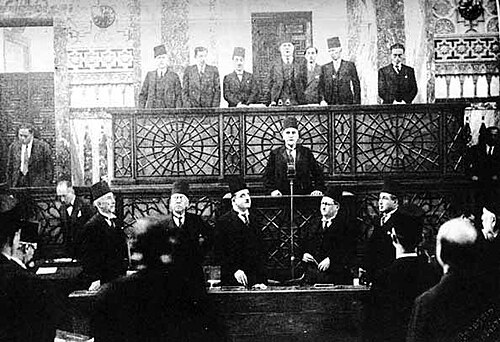
In 1947, al-Qudsi co-founded the People's Party in Aleppo. This party served as a counterbalance to the National Party and advocated for a democratic government, stronger Western ties, and a union between Syria and Iraq—a goal supported and funded by the Hashemite royal family in Baghdad.
Political Turbulence and the UAR Era
Al-Qudsi's career was marked by the volatility of Syrian governance. He survived multiple political shifts, including the 1949 coup by Husni al-Za'im, which led to his arrest and house arrest. Following Za'im's overthrow by General Sami al-Hinnawi, al-Qudsi returned to power as Minister of Foreign Affairs and later served two brief terms as Prime Minister (1949 and 1950).
Throughout the 1950s, al-Qudsi faced increasing opposition as Syrian public sentiment shifted toward the pan-Arabism of Egypt's President Gamal Abdel Nasser. Al-Qudsi's pro-Western views and support for the Baghdad Pact—an Anglo-American treaty designed to contain Communism—put him at odds with the rising socialist movement. When Syria and Egypt merged to form the United Arab Republic (UAR) in 1958, al-Qudsi resigned from public life.
The Presidency (1961–1963)
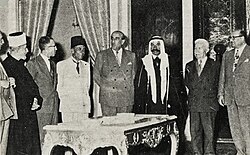
Following a 1961 coup that ended the UAR, al-Qudsi was elected President on December 12, 1961. His presidency focused on reversing Nasser's policies: he restored nationalized factories, dismissed pro-Nasser officials, and drafted a new constitution. He also sought to rebuild relations with the United States, Great Britain, Jordan, and Saudi Arabia.
Despite these reforms, al-Qudsi struggled with the military officers who had installed him. He attempted to marginalize their political influence by appointing civilian leaders like Maarouf al-Dawalibi as Prime Minister. This tension led to a failed coup in March 1962, which was quickly suppressed by a counter-coup that restored al-Qudsi to power.
Final Years and Legacy
The stability of al-Qudsi's government was short-lived. On March 8, 1963, the Military Committee of the Ba'ath Party launched a coup, arresting al-Qudsi and aiming to restore the union with Egypt. After his release, al-Qudsi lived in exile across Lebanon, Europe, and finally Jordan, where he passed away on February 6, 1998, at the age of 91.
| Role | Period(s) | Key Focus/Outcome |
|---|---|---|
| Ambassador to the US | 1945–1947 | Established the first Syrian Embassy in Washington, D.C. |
| Prime Minister | 1949, 1950–1951 | Attempted to facilitate union with Iraq. |
| Speaker of Parliament | 1951, 1954–1957 | Navigated tensions between pro-Western and pro-Nasser factions. |
| President of Syria | 1961–1963 | Post-UAR economic reform and restoration of political parties. |
Frequently Asked Questions
What was Nazim al-Qudsi's primary political goal?
Al-Qudsi primarily advocated for a democratic government in Syria, strong diplomatic and economic ties with the West, and a federal union between Syria and Iraq.
Why did al-Qudsi clash with the National Bloc?
He resigned from the National Bloc after the leadership failed to prevent the annexation of Alexandretta to Turkey in 1939.
How did al-Qudsi view the United Arab Republic (UAR)?
Al-Qudsi opposed the union between Syria and Egypt under Gamal Abdel Nasser, leading him to retire from public life in 1958 until the UAR was toppled in 1961.
What economic changes did he implement as President?
He launched a massive reform program that included denationalizing factories that had been seized under the UAR and securing loans from the World Bank to rebuild the economy.
How did his presidency end?
His term ended on March 8, 1963, when a coup d'état launched by the Ba'ath Party's Military Committee removed him from power.