Francoist Spain: The Rise and Fall of the Spanish State (1936–1975)
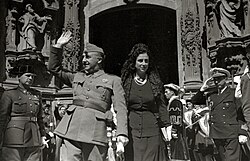
From 1936 to 1975, Spain was governed by a unitary one-party dictatorship known as the Spanish State (Estado Español). This era, commonly referred to as Francoist Spain, was defined by the absolute rule of Francisco Franco, who rose to power during the brutal Spanish Civil War and maintained control for nearly four decades.
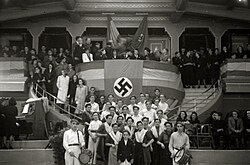
The regime was characterized by a blend of military authority, Falangism (a Spanish fascist ideology), and a deep alliance with the Catholic Church. While the state began as a totalitarian project born from conflict, it eventually evolved into a complex authoritarian system that navigated the transition from the Axis-aligned atmosphere of World War II to the geopolitical realities of the Cold War.
Key Facts
- Duration: 1936–1975 (Full control of Spain from 1939).
- Head of State: Francisco Franco (known as the Caudillo).
- Official Ideology: National Catholicism and Falangism.
- Motto: "Una, Grande y Libre" (One, Great and Free).
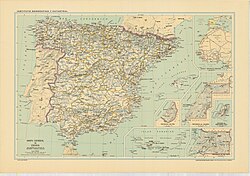
- Territories: Included Spain, Ifni, Western Sahara, and Equatorial Guinea.
- Succession: Ended with Franco's death in 1975, leading to the proclamation of King Juan Carlos I.
The Establishment of the Regime
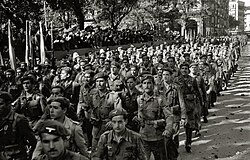
The Spanish State was forged in the violence of the Spanish Civil War (1936–1939). Following the Nationalist victory on April 1, 1939, Franco established a regime based on the suppression of political opposition. The early years were marked by severe repression; regime figures estimate that over 270,000 people were imprisoned and 500,000 fled into exile.
The human cost was staggering. Between 1940 and 1942, it is estimated that more than 200,000 Spaniards died due to political persecution, hunger, and disease. Many exiles were interned in Nazi concentration camps, with approximately six to seven thousand dying in Mauthausen.
Governance and Ideology
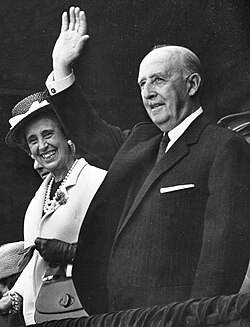
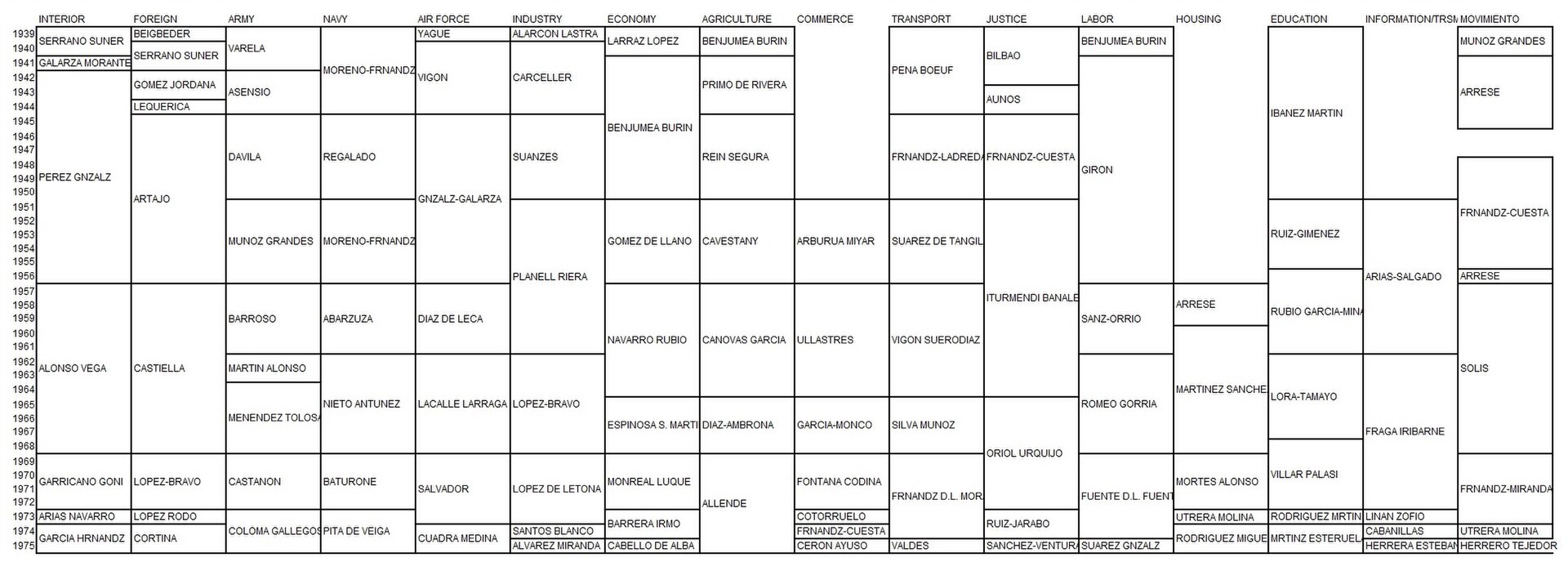
Franco's government operated as a dictatorship, ruling by decree until 1942, when the Cortes Españolas (the Spanish parliament) was created. Although the state was declared a de jure monarchy in 1947, Franco remained the absolute authority until his death.
National Catholicism
A cornerstone of the regime was National Catholicism, a system where the Catholic Church held significant influence over public life, education, and morality. This alliance ensured the Church's support for the regime in exchange for the official status of Catholicism and control over social norms.
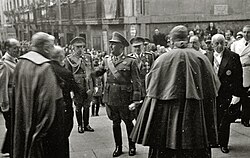
Social Control and Education
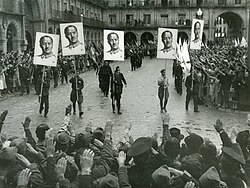
The regime exerted strict control over the population through censorship and a rigid educational system designed to instill loyalty to the state and the Church. Classrooms typically featured portraits of Franco and José Antonio Primo de Rivera, the founder of the Falange.
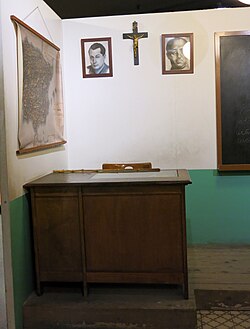
The Economy: From Autarky to the "Economic Miracle"
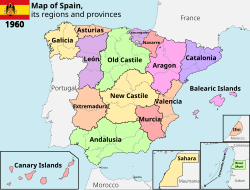
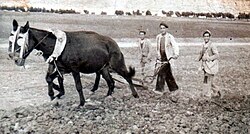
The economic trajectory of Francoist Spain was divided into two distinct phases. The early period was marked by low productivity and limited technological development, particularly in agriculture.
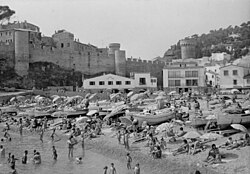
However, from the late 1950s onward, Spain experienced a period of rapid growth known as the "Spanish economic miracle." This was driven by industrialization and a massive surge in international tourism, which became a key pillar of the economy.
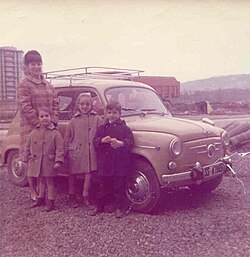
This growth led to the emergence of a mass consumer society. The SEAT 600 automobile became the primary symbol of this new middle-class prosperity during the 1960s.
Colonial Empire and International Relations
During the mid-20th century, the Spanish State maintained several overseas territories, including the Protectorate in Morocco, Ifni, Western Sahara, and Equatorial Guinea. Over time, these territories underwent a process of decolonization.
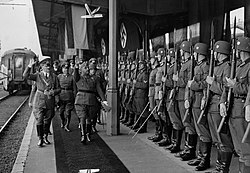
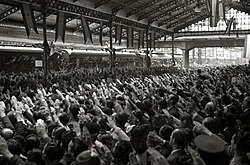
Internationally, Franco's position shifted. While he initially maintained close ties with Adolf Hitler and Benito Mussolini, he managed to keep Spain neutral during World War II, though he sent the "Blue Division"—anti-communist volunteers—to fight on the Eastern Front.
The End of the Regime and its Legacy
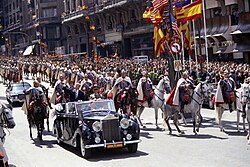
As Franco's health declined, he designated Juan Carlos de Borbón as his successor. Upon Franco's death on November 20, 1975, the Regency Council briefly administered the state before the proclamation of King Juan Carlos I on November 22, 1975, marking the beginning of Spain's transition to democracy.
The legacy of the dictatorship remains a point of contention. In 2007, the Historical Memory Law was passed to officially recognize crimes committed against civilians and to facilitate the search for mass graves. This effort seeks to address the "White Terror" and the systemic executions carried out during the regime.
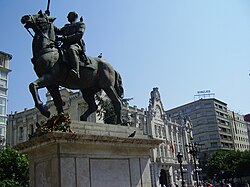
![By the decision of King Juan Carlos I, Franco was entombed in the monument of Valle de los Caídos, until his body was moved in October 2019.[125]](/images/cf/b5/cfb5ab9033992e11f02d011da12c3fc988163c4128e8b19d6a1eef99af669ee2.jpg)
Summary of the Spanish State
| Category | Details |
|---|---|
| Government Type | Unitary one-party dictatorship |
| Head of State | Francisco Franco (1936–1975) |
| Official Religion | Catholicism (National Catholicism) |
| Key Economic Phases | Early stagnation $\rightarrow$ 1960s Economic Miracle |
| Major Territories | Spain, Equatorial Guinea, Western Sahara, Ifni |
| Successor State | Kingdom of Spain (Democratic transition) |
Frequently Asked Questions
What was the role of the Catholic Church in Franco's Spain?
The Church was a central pillar of the state under the doctrine of National Catholicism. It provided moral and political legitimacy to Franco's rule in exchange for official status and significant control over education and social morality.
What was the "Spanish economic miracle"?
This refers to the period of rapid GDP growth between 1958 and 1974, characterized by industrialization, the rise of a consumer society (symbolized by the SEAT 600), and a boom in international tourism.
How did the regime handle political opposition?
The regime used severe repression, including mass imprisonments, executions, and forced exile. Hundreds of thousands of people were targeted in the early years of the dictatorship to consolidate Franco's power.
What happened to Franco's remains?
Franco was originally entombed in the Valle de los Caídos monument by the decision of King Juan Carlos I. However, his body was moved in October 2019 as part of efforts to address the regime's legacy.
What was the Blue Division?
The Blue Division consisted of Spanish anti-communist volunteer forces who were sent to fight alongside German forces on the Eastern Front during World War II.