Falangism: The Ideology and History of the Spanish Falange
Falangism (Spanish: Falangismo) is a far-right political ideology that emerged in Spain during the early 20th century. Rooted in the efforts of the Falange Española and its successor parties, this ideology blends intense Spanish nationalism, authoritarianism, and Catholic traditionalism with a fierce opposition to communism, liberalism, and democracy.
At its core, Falangism sought to reorganize Spanish society through national syndicalism—an economic system intended to replace class conflict with state-directed cooperation between workers and employers. While it shared many characteristics with the revolutionary nationalist movements of its era, such as Italian Fascism and German Nazism, Falangism maintained a distinct focus on Spain's unique religious and imperial identity.
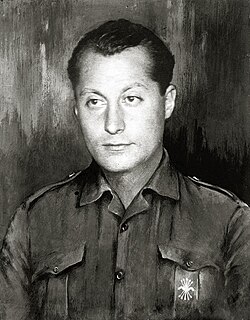
Key Facts
- Founder: Established by José Antonio Primo de Rivera.
- Core Pillars: Ultranationalism, anti-communism, anti-capitalism, and Catholic traditionalism.
- Political Position: Far-right, though it claimed to be a "third position" beyond the left-right divide.
- Economic Model: National Syndicalism, emphasizing a trans-class society and state authority.
- Global Vision: Promoted Hispanidad, the cultural and economic union of Spanish-speaking nations.
The Evolution of the Movement
The movement began with the Falange Española, which later became the Falange Española de las JONS. However, the trajectory of the ideology shifted significantly during the Spanish Civil War. In 1937, Francisco Franco issued the Unification Decree, merging the FE de las JONS with the Traditionalist Communion and other factions to create the FET y de las JONS.
This merger transformed the Falange into the sole legal political party of Francoist Spain. While intended to unify all Nationalist factions, the move was opposed by original Falangists like Manuel Hedilla, who viewed the merger as a dilution of the movement's radical roots.
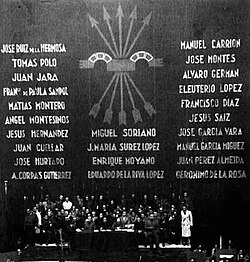
The Debate Over Fascism
Historians debate the exact nature of Falangism. Some argue it was a purely fascist movement in its early years. Others suggest that after 1937, it became a compromise between radical fascism and authoritarian conservatism. A third perspective, held by historian Enrique Moradiellos, suggests that Franco "fascistized" his regime during the Civil War to emulate Italy, only to distance himself from fascism after the fall of Mussolini in 1943.

Core Ideological Tenets
Nationalism and Territorial Ambitions
Falangism advocated for the absolute unity of Spain and the eradication of regional separatism. This nationalism extended beyond current borders; the movement promoted the incorporation of Gibraltar, French Morocco, and Portugal into Spain. During World War II, Franco explicitly declared in 1942 that Portugal should become part of the Spanish state.
Race, Religion, and Spirit
Unlike Nazism, Falangism did not focus on biological racial purity. Instead, it viewed the intermixing of Spanish and other races as the creation of a "Hispanic supercaste" that was spiritually and morally robust. The movement emphasized spiritual regeneration through Roman Catholicism, though it maintained that the state should hold supreme authority over the nation.
Regarding the Jewish community, founder José Antonio Primo de Rivera viewed conversion to Catholicism as the solution to the "Jewish problem," though he warned against "Jewish-Marxist" influences. The movement also praised Spain's Visigothic heritage, linking Germanic roots to a national love for law and order.
Hispanidad
The concept of Hispanidad served as a form of pan-hispanism. It advocated for the cultural, economic, and racial unity of Hispanic peoples worldwide, proposing a commonwealth or federation of Spanish-speaking states led by Spain.
Economic and Social Structure
National Syndicalism
The Falange rejected both liberal capitalism—which it saw as dehumanizing—and state socialism, which it believed enslaved the individual. The "Twenty-Seven Point Program" called for a social revolution to establish national syndicates of employees and employers to mutually control economic activity.
Key economic goals included:
- Agrarian reform and industrial expansion.
- Protection of private property, except for the nationalization of credit facilities to prevent usury.
- The criminalization of both strikes and employer lockouts.
- State-set wages.
Under Franco, the economy shifted toward a "middle way." While private ownership remained the primary means of production, the state intervened when national interests required it. The regime also supported cooperatives, such as the Mondragon Corporation, to argue that social classes no longer existed in Spain.
Gender Roles and the Sección Femenina
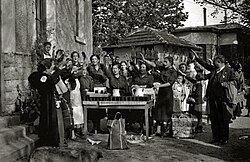
Falangism enforced rigid, conservative gender roles. Women were expected to be submissive wives and loving mothers, a direct reversal of the universal suffrage granted during the Second Spanish Republic. The Sección Femenina (Female Section) was established to train women in domestic economy and traditional folk dances, though it allowed some unmarried women, such as Pilar Primo de Rivera, to hold prominent public leadership roles.
Summary of Falangist Ideology
| Category | Falangist Position |
|---|---|
| Political System | Authoritarian dictatorship; anti-democratic and anti-liberal. |
| Economy | National Syndicalism; anti-capitalist and anti-communist. |
| Religion | Strong Roman Catholic identity; state supremacy. |
| Territory | Anti-separatist; sought annexation of Portugal and Gibraltar. |
| Social Order | Strict hierarchy; traditional gender roles via Sección Femenina. |
Frequently Asked Questions
Was Falangism the same as Fascism?
While Falangism was heavily influenced by Classical Fascism and shared traits like ultranationalism and authoritarianism, it had unique elements, such as its deep ties to Catholic traditionalism and its specific vision of Hispanidad. Historians debate whether it remained fascist or evolved into authoritarian conservatism under Franco.
What was National Syndicalism?
National Syndicalism was an economic theory that rejected both capitalism and communism. It proposed organizing society into "syndicates" (vertical unions) comprising both workers and employers to cooperate for the national good, thereby eliminating class struggle.
How did Falangism view race?
Unlike the racial purity laws of Nazi Germany, Falangism did not denounce other races as inferior. Instead, it claimed that the blending of races in Spain created a spiritually and morally superior "Hispanic supercaste," focusing more on spiritual Catholic regeneration than biological purity.
What was the role of the Sección Femenina?
The Sección Femenina was the women's wing of the Falange. Its primary purpose was to instruct women in their roles as wives and mothers, teaching domestic skills and promoting traditional Spanish culture, while providing a limited path to public leadership for a few women.
What is Hispanidad?
Hispanidad is the belief in the cultural, economic, and racial unity of all Spanish-speaking peoples. The Falange promoted this to encourage a global federation of Hispanic states with Spain as the central leader.