Fort William: The Gateway to the Scottish Highlands
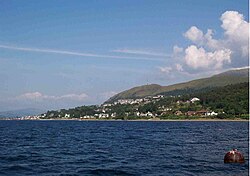
Nestled at the southern end of the Great Glen, Fort William (known in Scottish Gaelic as An Gearasdan) serves as a vital hub for the Scottish Highlands. As the second-largest settlement in the Highland council area, trailing only Inverness, it is a town defined by its dramatic geography and deep historical roots. Surrounded by towering peaks and shimmering lochs, it is most famous as the base for those seeking to conquer Ben Nevis, the highest mountain in the British Isles.
The town's identity is a blend of rugged outdoor adventure and a complex military past, making it a primary destination for hikers, historians, and sports enthusiasts alike.
Key Facts
- Population: 15,757 (as of 2024).
- Language: Approximately 7.33% of the population speaks Scottish Gaelic.
- Geography: Located near the head of Loch Linnhe and the confluence of the rivers Nevis and Lochy.
- Major Landmark: Proximity to Ben Nevis, the highest peak in the British Isles.
- Transport Hub: Northern terminus of the West Highland Way and a starting point for the Great Glen Way.
Origins and Historical Evolution
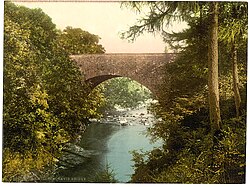
The site of Fort William has long been a strategic point of contention. The earliest recorded settlement was a Cromwellian wooden fort, the Garrison of Inverlochy, established in 1654 to pacify Clan Cameron following the Wars of the Three Kingdoms. Later, after the 1688 revolution, a new fort was commissioned by William of Orange to maintain control over the local clans, giving the town its current name.
The settlement surrounding the fort underwent several name changes, evolving from Maryburgh (named after Mary II of England) to Gordonsburgh, then Duncansburgh, before finally being named Fort William after Prince William, Duke of Cumberland.
Military Conflicts and the Jacobite Rising
Before the fort's construction, the area of Lochaber was the territory of Clan Chattan and Clan Cameron. The nearby settlement of Inverlochy was the site of two major battles in 1431 and 1645. During the 1745 Jacobite Rising (the "Forty-Five"), Fort William was besieged by Jacobite forces from March 20 to April 3, 1746. While the Jacobites successfully captured Fort Augustus and the original Fort George, they failed to take Fort William.
Geography and Urban Layout
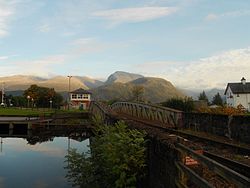
Fort William is situated in a stunning natural basin where the rivers Nevis and Lochy meet in an intertidal zone before flowing into the sea. The town's suburbs, including Lochyside, Caol, and Corpach, stretch along the shores of Loch Eil.
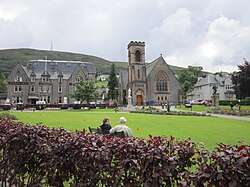
The town center is anchored by the High Street, which became pedestrianized in the 1990s. Several key squares mark the town's history: Monzie Square, Station Square, Gordon Square, and Cameron Square. Additionally, Fraser Square remains a notable spot, housing the Imperial Hotel.
Outdoor Trails and Regional Attractions
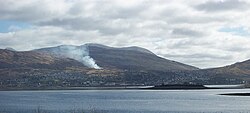
The town is a mecca for long-distance walkers. It marks the northern end of the 95-mile (153 km) West Highland Way, which leads to Milngavie near Glasgow, and serves as a terminus for the Great Glen Way connecting to Inverness.
Nearby attractions include Glenfinnan, located 17 miles (27 km) away. This village is home to the Glenfinnan Monument and the iconic Glenfinnan Viaduct. The viaduct has gained global fame as the "Harry Potter Bridge" due to its appearance in the Harry Potter and the Chamber of Secrets film.
Climate and Environment
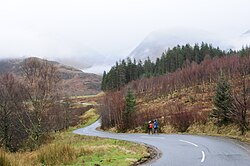
The climate of Fort William is characterized by significant precipitation and cool temperatures, typical of the West Highlands. The area experiences its warmest temperatures in July and August, while January and December are the coldest months.
| Metric | Winter (Jan/Dec) | Summer (Jul/Aug) | Annual Average |
|---|---|---|---|
| Mean Daily Max Temp (°C) | ~7.2 | ~18.4 | 12.4 |
| Mean Daily Min Temp (°C) | ~3.2 | ~9.8 | 4.0 |
| Precipitation Days (≥ 1.0 mm) | 18-19 | 15-18 | ~180+ |
Economy and Infrastructure
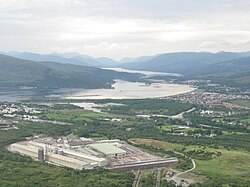
A significant part of the local economy is tied to the Lochaber aluminium plant. The plant's location is strategically chosen for its proximity to a hydroelectric plant, which provides the immense power required for the smelter. This operation is linked to the 114,000-acre Jahama Highland Estates, which includes the north face of Ben Nevis.
In terms of health infrastructure, the town is awaiting a new hospital. While exploratory work began in 2023 with construction planned for the Blar Mhor area near Caol, funding issues in 2024 have led to potential delays and local protests.
Transport and Connectivity
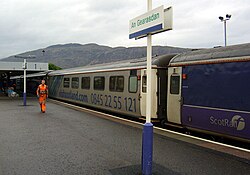
Fort William is accessible via the A82 road. The Corran Ferry provides a vital link across Loch Linnhe, connecting the A82 to the A861. Rail travel remains a key feature, with the town serving as a destination for the overnight sleeper train from London Euston.
Sports and Culture
Fort William is a global destination for extreme sports. Since 2002, it has hosted rounds of the UCI Mountain Bike World Cup and held the UCI Mountain Bike & Trials World Championships in 2007. It also hosts the World Endurance Mountain Bike Organisation (WEMBO) solo 24-hour championship.
Motorcycle enthusiasts gather annually in May for the Scottish Six Day Motorcycle Trial (SSDT), an event that celebrated its centenary in 2011. Other local sporting staples include the Lochaber Rugby Club, Lochaber Yacht Club, and the Fort William Golf Club.
Culturally, the town hosts the Fort William Mountain Festival, a volunteer-led event celebrating mountain culture, climbing, and walking tourism through film and other media.
Frequently Asked Questions
What is the highest mountain near Fort William?
Ben Nevis is the highest mountain in the British Isles and is located very close to the town.
What is the "Harry Potter Bridge" and where is it?
The "Harry Potter Bridge" is the Glenfinnan Viaduct, located 17 miles (27 km) from Fort William, which was featured in the film Harry Potter and the Chamber of Secrets.
Which long-distance walking trails end in Fort William?
Fort William is the northern terminus of the West Highland Way and a key point for the Great Glen Way.
What is the significance of the Scottish Six Day Motorcycle Trial?
The SSDT is a world-renowned annual event held in May that attracts competitors globally; it celebrated 100 years of history in 2011.
How many people in Fort William speak Scottish Gaelic?
Approximately 726 people, or about 7.33% of the population, are able to speak Scottish Gaelic.