Farnley: From Medieval Hamlet to Industrial Hub
The story of Farnley is a tale of two settlements. What began as a quiet agricultural community in the early medieval period eventually split into two distinct identities: Old Farnley and New Farnley. This evolution reflects the broader transformation of the English landscape, moving from feudal landholdings to the industrial powerhouse of the 19th century.
The Origins of Old Farnley
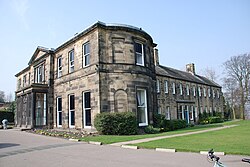
Originally recorded in the Domesday Book, Farnley was situated within the Hundred of Morley. At that time, it was part of the King's land, with Ilbert de Lacy serving as the tenant-in-chief. The heart of the village centered around Cross Lane, providing essential services to the Farnley Manor House and the stately Farnley Hall.
Ownership of the manor and estates shifted over centuries. In 1086, the land was held by Swain Fitz Alric and his descendants until 1497, when it passed by marriage to Sir James Danby. The Danby family maintained control for approximately 300 years before the estate was eventually purchased by James Armitage.
The Farnley Wood Plot
Beyond its agricultural roots, the area has a history of political unrest. Until the 19th century, Farnley was heavily wooded. In 1663, a site believed to be Sykes Wood at the bottom of Green Lane became the meeting point for a planned rebellion against Charles II, known as the Farnley Wood Plot. Although the uprising failed due to a lack of support, the aftermath was severe; betrayal led to 26 participants being condemned to death, with 16 executed by being hanged, drawn, and quartered in York.
The Rise of New Farnley
The landscape changed dramatically in the early 19th century with the arrival of Edward Armitage. He established the Farnley Iron Works and Farnley Fireclay, industries that required a massive influx of labor. To accommodate his workforce, Armitage built housing that transformed the area into what is now known as New Farnley.
As the Industrial Revolution accelerated urban expansion, surrounding hamlets were absorbed. Low Moor Side merged into New Farnley, while the village of Bawn became part of Farnley. Because these two settlements grew so close, the entire industrial sector became known as New Farnley, while the original village around Hall Lane and Cross Lane became popularly known as Old Farnley.
Industrialization and Labor
The local economy shifted from farming to manufacturing. Residents found employment in various mills, including the Butterbowl Mill and three specific sites near Post Hill: the Union Bridge Mill, the Upper Mill, and the Woolen Mills of Farnley.
Governance and Community
Administratively, Farnley began as a chapelry (a small subdivision of a parish) within the parish of Leeds. It became a separate civil parish in 1866, though this status was abolished on March 26, 1904, to form the Armley and Bramley parish. At the turn of the century, the population was recorded at 4,351 in 1901 and 4,208 in 1911.
Today, the community is served by several educational institutions, including The Farnley Academy, Lawns Park Primary School, and Cobden Primary School. The area retains a mix of local commerce, from the mini-marts and hair salons of the original village to the butcher and Cow Close Community Corner in the former Bawn village area.
For transport, Old Farnley serves as the western terminus for First Leeds bus routes 15 and 42. It is believed that the designation "Old Farnley" was reinforced by bus operators to prevent confusion with the nearby area of Farsley.
Key Facts
- Domesday Record: Originally part of the King's land in the Hundred of Morley.
- The Farnley Wood Plot: A failed 1663 rebellion against Charles II resulting in 16 executions in York.
- Industrial Catalyst: Edward Armitage founded the Farnley Iron Works and Fireclay in the early 19th century.
- Population: The civil parish had 4,351 residents in 1901.
- Religious Sites: St Wilfrid's Church is located in lower Old Farnley, while St Michael's Church is situated in Farnley Park.
| Period/Era | Key Development | Primary Influence |
|---|---|---|
| Early Medieval | Agricultural Village | Domesday Book / King's Land |
| 1663 | Farnley Wood Plot | Political Rebellion |
| Early 19th Century | Creation of New Farnley | Edward Armitage / Iron Works |
| 1866 - 1904 | Civil Parish Status | Local Governance |
Frequently Asked Questions
What is the difference between Old Farnley and New Farnley?
Old Farnley refers to the original medieval agricultural village centered around Hall Lane and Cross Lane. New Farnley developed in the 19th century around the industrial housing and works established by Edward Armitage.
What was the Farnley Wood Plot?
It was a failed attempt to rebel against King Charles II in 1663. The plotters met in what is believed to be Sykes Wood, and the subsequent betrayal led to 26 death sentences and 16 executions in York.
Who owned the Farnley estates before the Armitages?
The estates were held by Swain Fitz Alric in 1086 and later passed to Sir James Danby in 1497, who held them for approximately 300 years.
Which mills were prominent in the Farnley area?
Key industrial sites included the Butterbowl Mill and the mills near Post Hill, specifically the Union Bridge Mill, the Upper Mill, and the Woolen Mills of Farnley.
Why is the name "Old Farnley" used for bus routes?
It is likely that bus operators used the term "Old Farnley" to distinguish the area from Farsley, another nearby location in Leeds, to avoid passenger confusion.