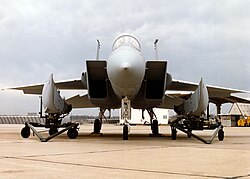
F-15 EagleMcDonnell Douglasair superiority fighterF-15C specificationsF-15E Strike Eagle

F-15 Eagle: The Legacy of an Air Superiority Icon

F-15 Eagle: The Legacy of an Air Superiority Icon Since its introduction in the mid-1970s, the F-15 Eagle has stood as a symbol of aerial dominance. Designed with a singular focus on air ...

F-15 Eagle: The Legacy of an Air Superiority Icon

Since its introduction in the mid-1970s, the F-15 Eagle has stood as a symbol of aerial dominance. Designed with a singular focus on air superiority—the ability to control the skies by defeating enemy aircraft—this fighter has evolved through decades of technological advancement, remaining a cornerstone of modern air forces worldwide.

Originally manufactured by McDonnell Douglas (now part of Boeing Defense, Space & Security), the F-15 was born from a need for a smaller, lighter, and more agile platform capable of outclassing any contemporary adversary. From its first flight in July 1972 to its ongoing service in the 21st century, the Eagle has proven its versatility and lethality.
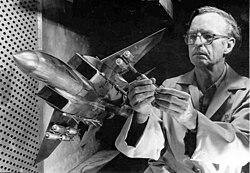
A model of the F-15 Eagle is adjusted before undergoing aerodynamic testing in the mid-1970s in the 4-foot transonic wind tunnel at Arnold Air Force Base, Tennessee
: A model of the F-15 Eagle is adjusted before undergoing aerodynamic testing in the mid-1970s in the 4-foot transonic wind tunnel at Arnold Air Force Base, Tennessee

Key Facts

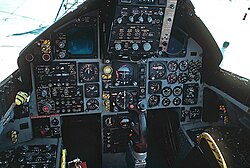
Cockpit of jet fighter with circular dials and gauges: A control stick protrude from between where the pilot's legs would be.
F-15A cockpit
  • Primary Role: Air superiority fighter.
  • First Flight: July 27, 1972.
  • Manufacturer: McDonnell Douglas / Boeing.
  • Top Speed: Mach 2.5 at altitude.
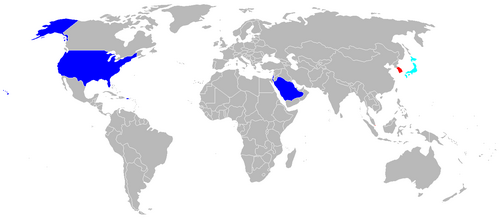
  • Primary Users: United States Air Force, Japan Air Self-Defense Force, Royal Saudi Air Force, and Israeli Air Force.
  • Combat Record: Highly successful in various conflicts, including the Gulf War.

Development and Design Philosophy
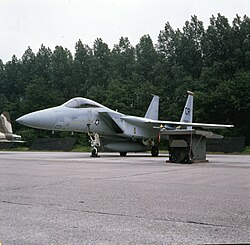
An early USAF F-15A
An early USAF F-15A

The development of the F-15 was driven by rigorous studies aimed at creating a fighter that prioritized maneuverability and high-altitude performance. Unlike multi-role aircraft that attempt to do everything, the early F-15 models were specialized tools for air-to-air combat.

The design features a high thrust-to-weight ratio, allowing the aircraft to accelerate vertically and maintain extreme agility during dogfights. This is supported by advanced avionics—the electronic systems used for navigation, communication, and combat—and powerful engines that provide the necessary thrust to reach speeds of Mach 2.5.
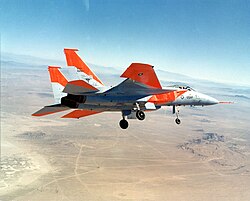
Jet aircraft with distinctive orange markings banking left over desert, with landing gears extended
McDonnell Douglas F-15A (S/N 71-0280) during the type's first flight
: McDonnell Douglas F-15A (S/N 71-0280) during the type's first flight

Engineering Excellence

A critical component of the F-15's performance is its engine air intake system. The aircraft utilizes variable geometry engine air intake ramps. These ramps automatically adjust to ensure a constant, optimal airflow to the engines, regardless of the aircraft's speed or angle of attack.
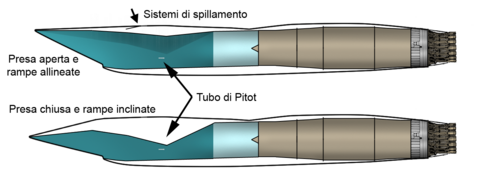
Variable geometry engine air intake ramps with internal Pitot tubes and automatic control for constant optimal airflow to engines. Above: open intake, aligned ramp. Below: closed intake, inclined ramp
: Variable geometry engine air intake ramps with internal Pitot tubes and automatic control for constant optimal airflow to engines. Above: open intake, aligned ramp. Below: closed intake, inclined ramp

Variants and Evolution

USAF F-15C during Operation Noble Eagle patrol, 2007

The F-15 family has expanded significantly from its original design. While the F-15A and F-15C remain legendary for air-to-air combat, the lineage has branched into specialized roles.

Basic and Training Models

  • F-15A: The original single-seat, all-weather air-superiority fighter.
  • F-15B: A two-seat version designed for training purposes.
  • F-15C: A highly capable single-seat variant used extensively for air superiority.
  • F-15J/DJ: Specialized versions produced for the Japan Air Self-Defense Force.
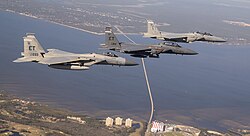
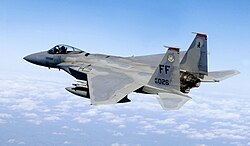
F-15C, F-15E and F-15EX of United States Air Force, representing three generations of F-15 variants.
: F-15C, F-15E and F-15EX of United States Air Force, representing three generations of F-15 variants.

Strike and Multi-Role Derivatives

The most notable evolution is the F-15E Strike Eagle. This derivative transitioned the platform from a pure air-superiority fighter into a potent multi-role strike aircraft, capable of deep interdiction and ground attack missions while maintaining its aerial combat prowess.
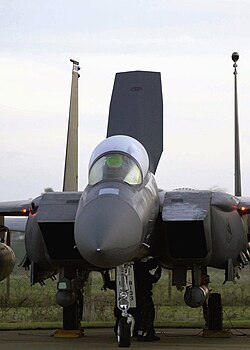
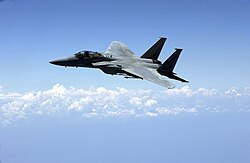
F-15E with speed brake deployed and CFTs fitted
: F-15E with speed brake deployed and CFTs fitted

Technical Specifications: F-15C

F-15A 75–057 in service with the Florida Air National Guard flying over Florida with AIM-9X and AIM-120 missiles loaded

To understand the capabilities of the F-15C, one must look at its impressive physical and performance metrics. It is a massive machine designed to carry heavy payloads while remaining incredibly fast.

F-15C Technical Specifications
Feature Specification
Crew 1
Maximum Speed Mach 2.5 (1,650 mph) at altitude
Service Ceiling 65,000 ft
Max Takeoff Weight 68,000 lb
Combat Range 586 nmi (counter-air mission)
Armament (Guns) 1× 20 mm M61A1 Vulcan rotary cannon
3-view line drawing of the McDonnell Douglas F-15 Eagle
: 3-view line drawing of the McDonnell Douglas F-15 Eagle

Weaponry and Avionics

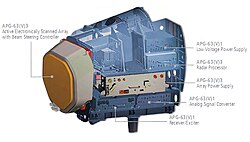
AN/APG-63(V)3 radar
AN/APG-63(V)3 radar

The F-15's lethality is derived from its sophisticated radar systems and missile integration. Modern variants utilize Active Electronically Scanned Array (AESA) radar, such as the AN/APG-63(V)3, which provides superior detection and tracking capabilities.
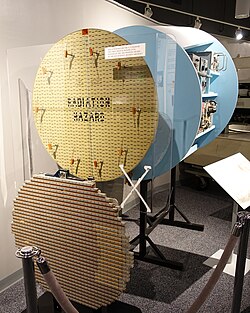
AN/APG-63 radar
AN/APG-63 radar
: AN/APG-63 radar

Missile Loadouts

The aircraft can be configured with various missile combinations depending on the mission profile:

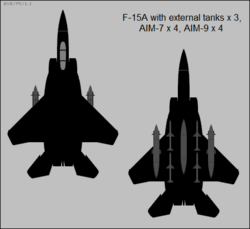
  • 4× AIM-7 Sparrow and 4× AIM-9 Sidewinder
  • 6× AIM-120 AMRAAM and 2× AIM-9 Sidewinder
  • 8× AIM-120 AMRAAM
Diagram of the F-15A Eagle's weapon loadout
: Diagram of the F-15A Eagle's weapon loadout

For close-in combat, the M61A1 Vulcan 6-barrel rotary cannon provides devastating firepower, mounted strategically to allow for rapid engagement.
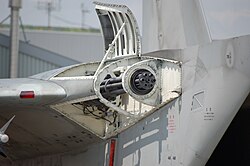
M61 Vulcan mounted on the side of the right engine intake
: M61 Vulcan mounted on the side of the right engine intake

Operational History

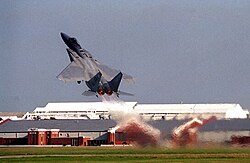
Gray jet fighter taking off at steep angle of attack, with full afterburner, as evident by hot gas ejected from its engines
F-15C executing a maximum-performance takeoff

The F-15 has seen extensive combat use. From anti-satellite trials in 1985 to its pivotal role in the Gulf War, the Eagle has consistently met the demands of high-intensity conflict. It has also served in various capacities, including patrols during Operation Noble Eagle and operations in the Yemen Civil War.
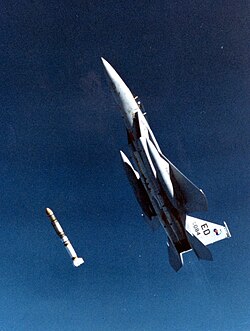
ASM-135 ASAT test launch from F-15A 76-0084 in 1985
: ASM-135 ASAT test launch from F-15A 76-0084 in 1985

Beyond combat, the F-15 has been a vital research tool. NASA has utilized the F-15B as a research testbed, even adapting it with technologies like the "Quiet Spike" to study and control sonic booms.
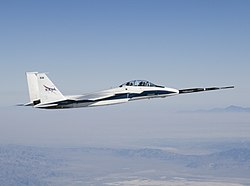
NASA F-15B Research Testbed, aircraft No. 836 (AF Ser. No. 74-0141). Note the Quiet Spike adaption to reduce and control sonic booms
: NASA F-15B Research Testbed, aircraft No. 836 (AF Ser. No. 74-0141). Note the Quiet Spike adaption to reduce and control sonic booms

Frequently Asked Questions
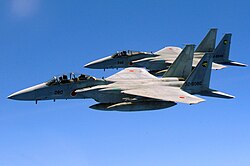
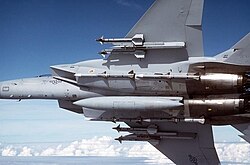
F-15C underside with external stores
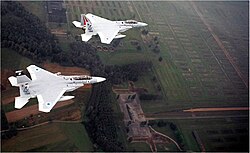
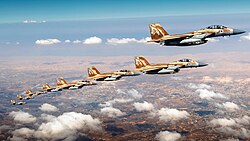
Israeli Air Force F-15 Eagle fighters overflying Auschwitz Concentration Camp, 2003
An RSAF F-15 approaches a KC-135 for refueling during Operation Desert Shield.
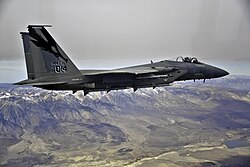
A USAF F-15C flying over Fresno, California, 2013
A USAF F-15C of the 125th Fighter Wing
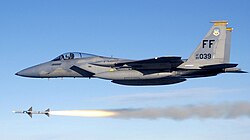
Gray jet aircraft flying above missile following firing of the weapon.
USAF F-15C fires an AIM-7 Sparrow in 2005
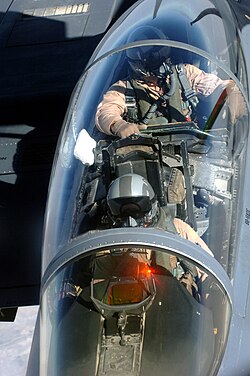
A view of an F-15E cockpit from an aerial refueling tanker.
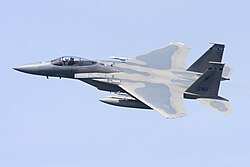
USAF F-15E arrives for the 2014 Royal International Air Tattoo, UK
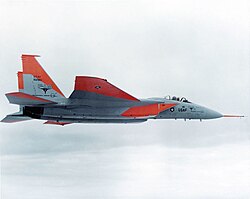
F-15A 71–0280, the first prototype
Operators F-15 Eagle Both versions
Israeli Air Force F-15I Ra'am from the 69th Squadron
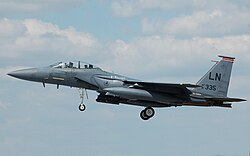
Japan Air Self-Defense Force F-15DJ and F-15J of the 306th TFS
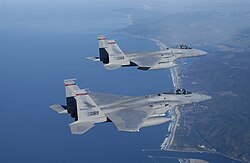
Two F-15s over the coast of Oregon
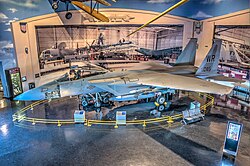
F-15A 76–0020 at the American Air Museum, Imperial War Museum Duxford
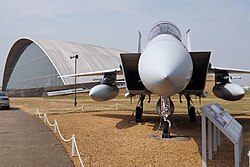
F-15A display at the Museum of Aviation, Robins AFB
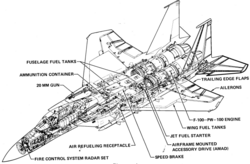
General arrangement of the F-15A Eagle
Front view of an F-15C with conformal FAST PACK fuel tanks on trailers

What is the primary role of the F-15 Eagle?

The F-15 Eagle is primarily an air superiority fighter, designed to dominate the airspace by engaging and defeating enemy aircraft.

How does the F-15E differ from the F-15C?

While the F-15C is a dedicated air-to-air fighter, the F-15E Strike Eagle is a multi-role derivative designed for ground attack and interdiction missions.

What kind of radar does the F-15 use?

The F-15 utilizes various radar systems, including the Hughes/Raytheon AN/APG-63 and advanced Active Electronically Scanned Array (AESA) technologies like the AN/APG-63(V)3.

Can the F-15 carry external fuel tanks?

Yes, the F-15 can be equipped with external fuel tanks to significantly extend its range for various mission types.

Who are the main operators of the F-15?

The primary operators include the United States Air Force, the Japan Air Self-Defense Force, the Royal Saudi Air Force, and the Israeli Air Force.