Exporting in International Trade: Strategies, Barriers, and Economic Impacts
In the realm of international trade, an export is defined as a good produced in one country and sold to another, or a service provided in one country for a resident of another. The entity selling these goods or services is the exporter, while the foreign buyer is the importer. While physical goods are the most visible exports, the sector also encompasses critical services such as tourism, education, accounting, financial services, and the trade of intellectual property rights.
For many businesses, exporting serves as a primary engine for growth and a gateway to global expansion. It allows companies to leverage their competitive advantages—whether derived from natural resources, climate, or specialized expertise—to reach a wider customer base.
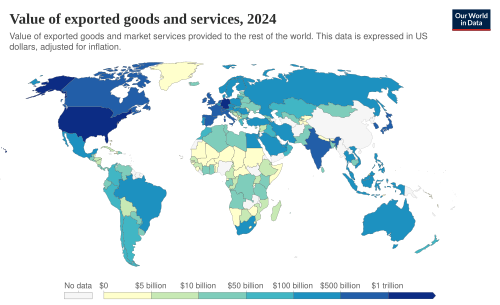
Key Facts
- Exporting is often the first step for manufacturing firms entering foreign markets before they commit to more complex expansion modes.
- Trade barriers include government-imposed laws, regulations, and policies designed to protect domestic industries from foreign competition.
- Net exports (exports minus imports) are a fundamental component of a nation's Gross Domestic Product (GDP).
- Tariffs act as economic barriers by increasing the cost of imported or exported goods through taxation.
- SMEs (Small and Medium-sized Enterprises) with fewer than 250 employees face higher hurdles in exporting due to resource constraints and regulatory complexity.
Business Expansion and Export Strategies
Exporting is a popular strategy for product-based companies seeking global growth. It is frequently used as an initial entry point into a foreign market because it requires significantly less investment than establishing a direct presence abroad.
Global Expansion Options
Beyond simple exporting, businesses may employ various other strategies to scale internationally, including:
- Franchising and Licensing
- Joint Ventures and Mergers
- Acquisitions
- Creating owned subsidiaries
- Turnkey Projects
By choosing to export, companies can avoid the high costs of building manufacturing plants in target countries. This approach allows them to achieve location economies (cost advantages from performing a value activity in the optimal location) and experience curve effects within their home country.
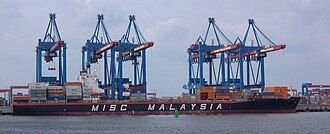
Barriers to International Trade
Despite the benefits, exporters face several challenges. These are generally categorized into four main types of barriers: motivational, informational, operational/resource-based, and knowledge-based.
Trade Barriers and Tariffs
Trade barriers are official government measures that restrict the exchange of goods and services. One of the most common tools is the tariff—a tax imposed on specific categories of goods. Tariffs are typically used to:
- Protect domestic producers who struggle to compete with cheaper imports.
- Safeguard industries critical to national security.
- Combat dumping, which occurs when a producer exports goods at a loss or prices them lower in the foreign market than in their domestic market.
While tariffs protect local industries, they can reduce the incentive for those industries to innovate or produce more efficiently. Furthermore, tariffs can spark international tension, often leading to disputes settled by the World Trade Organization (WTO).
Strategic Trade Restrictions
Certain international agreements strictly limit the transfer of sensitive goods and information to prevent the proliferation of weapons and protect cultural heritage. Key regimes include:
- Nuclear Suppliers Group: Limits trade in nuclear weapons and related goods (45 countries).
- Australia Group: Restricts chemical and biological weapons trade (39 countries).
- Missile Technology Control Regime: Controls the delivery means for weapons of mass destruction (35 countries).
- Wassenaar Arrangement: Limits trade in conventional arms and dual-use technologies (40 countries).
Economic Advantages and Disadvantages
The Benefits of Exporting
Exporting allows a firm to retain its core competencies within the company rather than outsourcing or licensing them. It provides a low-risk entry mode for companies with ownership advantages (such as unique assets or international experience) and internalization advantages. From a macroeconomic perspective, trade liberalization—the removal of trade barriers—can shift markets toward more efficient exporters and boost aggregate productivity.
The Risks and Drawbacks
Exporting is not without significant risks. High transport costs can make bulk products uneconomical to ship. Additionally, exporters are highly vulnerable to exchange rate fluctuations. For example, if a country's local currency appreciates (increases in value), the revenue earned in foreign currencies (like the US Dollar) decreases when converted back to the local currency.
This was evident in Armenia, where an influx of Russian tourists led to the appreciation of the Armenian dram. While this appeared to boost the economy, exporters and IT professionals paid in US dollars saw their effective revenue drop by approximately 25% due to the dollar's depreciation against the dram.
Summary of Exporting Dynamics
| Category | Positive Impacts / Advantages | Negative Impacts / Challenges |
|---|---|---|
| Corporate | Low initial investment; retains core competence. | Limited marketing control; dependency on intermediaries. |
| Economic | GDP growth; leverages competitive advantage. | Currency volatility; risk of retaliatory tariffs. |
| Operational | Avoids foreign manufacturing costs. | High transport costs for bulk goods; customs complexities. |
| SMEs | Opportunity for global growth. | Lack of regulatory knowledge; resource strain. |
Frequently Asked Questions
What is the difference between an exporter and an importer?
An exporter is the seller or service provider located in one country who sells goods or services to another country. An importer is the foreign buyer who purchases those goods or services.
How do tariffs affect the price of goods?
Tariffs are taxes on imported or exported goods, which increase the overall cost of the product. This usually makes the imported good more expensive for the consumer, encouraging them to buy domestic alternatives.
Why is exporting particularly difficult for SMEs?
Small and Medium-sized Enterprises often lack the staff and financial resources to navigate complex foreign trade regulations, language barriers, cultural differences, and volatile foreign-exchange markets.
What is "dumping" in international trade?
Dumping occurs when a company exports a product at a price lower than the price it normally charges in its own domestic market, or sells it at a loss to gain market share.
How does currency appreciation affect exporters?
When a domestic currency appreciates, the foreign currency earned from exports becomes less valuable when converted back into the home currency, which can significantly reduce the exporter's total revenue.