Developed Countries: Defining Economic and Social Advancement
What distinguishes a highly prosperous nation from its neighbors? The concept of a developed country—often referred to as an advanced or industrialized nation—describes a state with a high quality of life, a sophisticated economy, and advanced technological infrastructure. While the term is widely used, defining exactly which nations qualify remains a subject of significant international debate.
Generally, developed nations are characterized by post-industrial economies. In these societies, the tertiary sector (services) typically generates more wealth than the secondary sector (manufacturing). This stands in contrast to developing countries, which may be in the process of industrialization or remain primarily agrarian.

Key Facts
- Economic Weight: As of 2023, advanced economies accounted for 57.3% of global GDP by nominal value and 41.1% by purchasing power parity (PPP).
- Diverse Metrics: There is no single universal definition; organizations like the IMF, World Bank, and UN use different criteria.
- HDI Components: The Human Development Index (HDI) measures progress through life expectancy, education, and income per capita.
- Top Performers: Historically, countries like Norway, Japan, Canada, and Iceland have held the highest HDI scores.
Criteria for Economic Evaluation
Because "development" is a multifaceted concept, economists and international bodies use various metrics to evaluate a nation's status. Common indicators include:
- Gross Domestic Product (GDP): The total value of goods and services produced within a country.
- Gross National Income (GNI): The total income earned by a nation's people and businesses.
- Per Capita Income: The average income earned per person in a given year.
- Industrialization Levels: The extent of a country's manufacturing and technological capabilities.
- Infrastructure and Living Standards: The availability of widespread public services and the general well-being of the population.
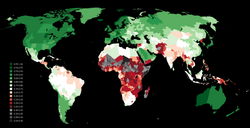
The Human Development Index (HDI)
The Human Development Index (HDI) is a composite statistic used to rank countries based on social and economic dimensions. Rather than looking solely at wealth, it incorporates health and knowledge. In 2023, several nations were classified as having "very high human development."
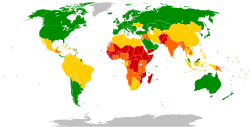
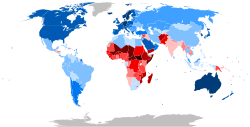
Global Classifications by International Organizations
Different institutions provide unique perspectives on which countries are considered advanced or high-income. These classifications are essential for international policy, aid, and economic forecasting.
World Bank and UNDESA Perspectives
The World Bank classifies economies based on income. For the 2025 fiscal year, "high-income economies" are defined as those with a nominal GNI per capita exceeding $13,935. Meanwhile, the United Nations Department of Economic and Social Affairs (UNDESA) uses its World Economic Situation and Prospects (WESP) report to identify developed economies.
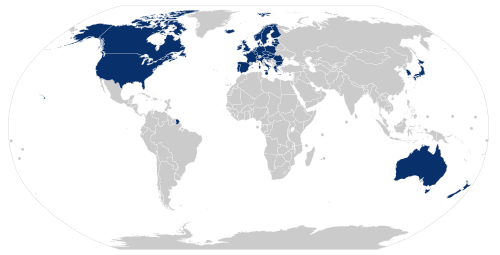
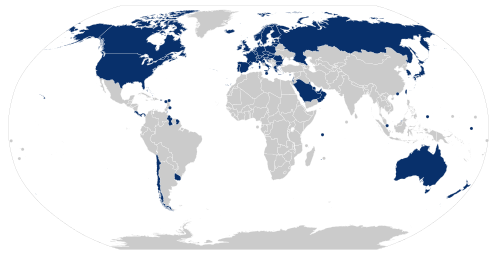
IMF and Development Assistance Committee (DAC)
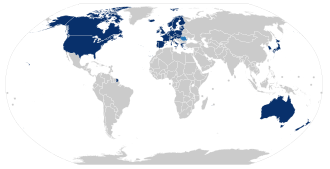
The International Monetary Fund (IMF) officially lists 43 countries and territories as advanced economies. Additionally, the Development Assistance Committee (DAC), a group within the OECD, consists of major donor nations that focus on poverty reduction and development aid.
UNIDO and the Paris Club
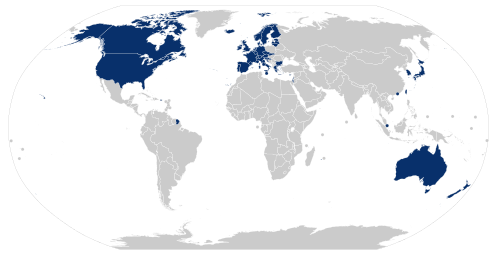
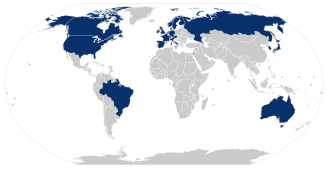
The United Nations Industrial Development Organization (UNIDO) uses a specific metric for "high-income industrial economies," evaluating manufacturing value added per capita, historical employment shares, and the quality of technological exports. Finally, the Paris Club serves as an informal group of creditor nations that provides solutions to countries facing official debt problems.
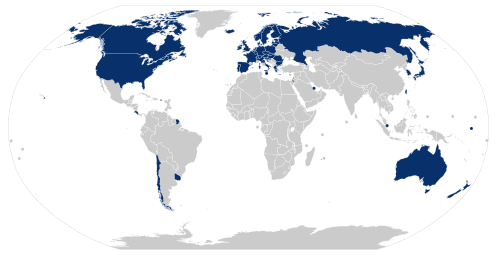
Comparative Summary of Development Metrics
| Metric/Organization | Primary Focus | Key Indicator Example |
|---|---|---|
| Human Development Index (HDI) | Social & Economic Well-being | Life expectancy, education, income |
| World Bank | Income Levels | GNI per capita |
| IMF | Economic Sophistication | Advanced market structures |
| UNIDO | Industrial Capacity | Manufacturing value added |
| DAC (OECD) | Development Aid | Donor capacity/aid contribution |
Frequently Asked Questions
What is the difference between a developed and a developing country?
Developed countries generally possess high-quality infrastructure, advanced technology, and post-industrial economies. Developing countries are often in the process of industrializing or are primarily agrarian.
Is there a single official definition of a "developed country"?
No. There is no established convention within the United Nations system. Different organizations like the IMF, World Bank, and UNIDO use different criteria to define development.
What does the Human Development Index (HDI) measure?
The HDI is a composite index that measures three key dimensions: life expectancy (health), education (knowledge), and per capita income (standard of living).
What are "high-income industrial economies" according to UNIDO?
This is a classification for economies that have achieved high national income through a development path characterized by high levels of industrialization, specifically looking at manufacturing value and export quality.
Why do different organizations have different lists of advanced countries?
Because each organization has a different mandate. For example, the World Bank focuses on income, while the IMF focuses on economic stability and market sophistication, and UNIDO focuses on industrial manufacturing strength.