ESCWA: Driving Economic and Social Development in Western Asia
The United Nations Economic and Social Commission for Western Asia (ESCWA) serves as a vital regional arm of the United Nations, dedicated to fostering growth and stability across Western Asia. As one of five regional commissions under the jurisdiction of the United Nations Economic and Social Council, ESCWA focuses on promoting economic and social development through strategic regional and subregional cooperation and integration.
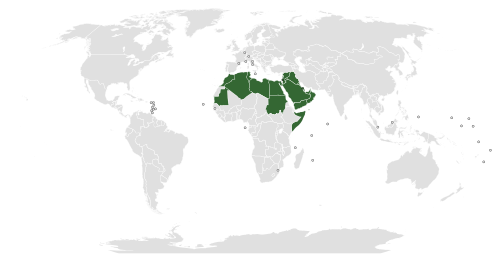
Comprising 21 member states from North Africa and the Middle East, the Commission acts as a bridge between global UN initiatives and local needs. It collaborates extensively with UN headquarters in New York, specialized agencies, and key regional partners, including the League of Arab States, the Gulf Cooperation Council, and the Organisation of Islamic Cooperation.
Key Facts
- Established: August 9, 1973.
- Headquarters: Beirut, Lebanon.
- Current Head: Executive Secretary Rola Dashti.
- Membership: 21 member states from North Africa and the Middle East.
- Primary Goal: To facilitate economic reconstruction and social development in Western Asia.
History and Evolution
ESCWA was originally established on August 9, 1973, as the United Nations Economic Commission for Western Asia (ECWA). It succeeded the United Nations Economic and Social Office in Beirut (UNESOB), absorbing its framework to better initiate and participate in measures for the economic reconstruction of the region.
As the scope of its work expanded to include critical social issues, the Economic and Social Council officially renamed the body to the United Nations Economic and Social Commission for Western Asia (ESCWA) on July 26, 1985.
Operational Headquarters
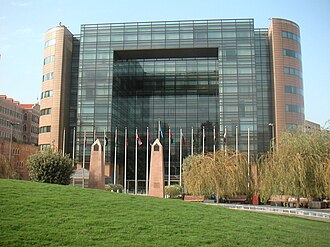
Since 1997, the Commission has been headquartered in the Central District of Beirut, Lebanon. However, the location of its headquarters shifted several times during its early decades due to regional dynamics.
- 1974–1982: Beirut, Lebanon
- 1982–1991: Baghdad, Iraq
- 1991–1997: Amman, Jordan
- 1997–Present: Beirut, Lebanon
Funding and Budgetary Structure
ESCWA is funded primarily through United Nations contributions, supplemented by donations from governments, private foundations, regional funds, and international development agencies. In 2017, the total budget was US$27.4 million, with an additional $7.1 million in voluntary contributions since 2014 to support national and regional activities.
The Commission manages its finances through four distinct budget lines:
- Regular Budget: Voted on biennially by the UN General Assembly to fulfill the core mandate (e.g., $19.9 million in 2017).
- Regular Programme of Technical Cooperation (RPTC): Supports member states in creating sustainable socioeconomic policies ($2.3 million in 2017).
- Development Account: Funds capacity-building projects at various regional levels ($1.9 million in 2017).
- Extrabudgetary Projects Account: Supports seven specific subprograms, including Gender and Women Issues, Natural Resources, and Statistics and Technology for Development ($3.2 million in 2017).
Strategic Programs and Initiatives
Implementing Sustainable Development Goals (SDGs)
In December 2020, ESCWA introduced the Climate/SDGs Debt Swap–Donor Nexus Initiative. This mechanism is designed to provide debt relief for middle-income countries by allowing creditors to convert debt-serving payments into domestic investments. This enables indebted nations to fund climate or SDG-related programs without increasing their overall budget.
Advancing Women in the Judiciary
ESCWA actively monitors the role of women in legal systems. A 2019 report highlighted a significant increase in female judges in countries such as Jordan, Lebanon, Morocco, Tunisia, and the State of Palestine. While some nations had appointed female judges as early as 1959 (Iraq) and 1961 (Morocco), others, such as Oman and Somalia, had not yet done so by the time of the report. Notably, Egypt announced in June 2021 that female judges would join the State Council and Public Prosecution in October of that year.
Summary of ESCWA Administration
| Category | Details |
|---|---|
| Parent Organization | United Nations Economic and Social Council |
| Legal Status | Active (Primary Organ – Regional Branch) |
| Member States | 21 (North Africa and Middle East) |
| Current Executive Secretary | Rola Dashti (Kuwait) |
| Official Website | www.unescwa.org |
Controversies
In March 2017, ESCWA released a report describing Israel as an "apartheid regime." The report, co-authored by professors Richard Falk and Virginia Tilley, criticized Israel's law of return for Jews. Following criticism from the UN Secretary-General, who stated the report was issued without approval, the document was withdrawn from UN websites.
The controversy led to the resignation of the then-Executive Secretary, Rima Khalaf, who stood by the report's findings and criticized the pressure exerted to have the document removed.
Frequently Asked Questions
What is the primary purpose of ESCWA?
ESCWA's primary role is to promote the economic and social development of Western Asia through regional cooperation, integration, and the implementation of sustainable policies.
Where is ESCWA headquartered?
The headquarters are currently located in the Central District of Beirut, Lebanon, where they have been based since 1997.
How is ESCWA funded?
It is funded through a combination of the UN regular budget, voluntary contributions from governments and private foundations, and specific accounts for technical cooperation and development projects.
What is the Climate/SDGs Debt Swap–Donor Nexus Initiative?
It is a mechanism launched in 2020 that allows middle-income countries to convert debt payments into domestic investments for climate and sustainable development goals.
Who leads ESCWA?
The Commission is led by an Executive Secretary; the current head is Rola Dashti of Kuwait.