Ecosystem Engineers: The Architects of the Natural World
In the intricate web of nature, some species do more than just inhabit their environment—they actively reshape it. These organisms are known as ecosystem engineers: species that create, significantly modify, maintain, or destroy a habitat. By altering the physical landscape, these architects influence species richness and landscape-level heterogeneity, playing a critical role in the overall health and stability of their environments.
While every living organism affects its surroundings to some degree, ecologists typically reserve the term "ecosystem engineer" for keystone species whose behaviors exert a profound influence on other organisms. Unlike species that impact the food chain through predation or competition (trophic effects), ecosystem engineers are defined by their ability to modify physical resources.
Key Facts
- Definition: Organisms that physically manipulate their environment, affecting the availability of resources for other species.
- Two Main Types: Allogenic engineers (mechanical modifiers) and Autogenic engineers (structural modifiers).
- Biodiversity Boost: By creating habitat heterogeneity, these species often increase the total number of species a landscape can support.
- Non-Trophic Impact: Their importance stems from physical modification of the environment rather than their position in the food web.
- Scale: Impact can be massive (like beavers) or subtle (like mud shrimp), regardless of the species' population density.
Types of Ecosystem Engineering
Ecologists Jones et al. categorized ecosystem engineers into two primary types based on how they modify their surroundings.
Allogenic Engineers
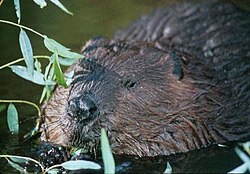
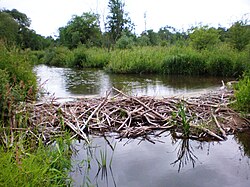
Allogenic engineers change the environment by mechanically transforming living or nonliving materials from one form to another. The most iconic example is the beaver, which clearcuts trees and builds dams, fundamentally altering water flow and the distribution of local wildlife.
Other examples include caterpillars that fold leaves into shelters, and woodpeckers that drill holes in trees. Once the original creator leaves, these structures often provide essential housing for other birds or mammals.
Autogenic Engineers
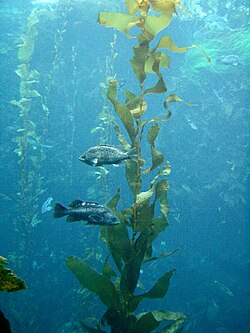
Autogenic engineers modify the environment via their own physical structure. Instead of moving external materials, their very growth creates the habitat. Kelp forests are a prime example, where the physical presence of the kelp provides the necessary structure for an entire community of marine life.
The Ecological Importance of Engineering
Identifying ecosystem engineers is vital for understanding resource availability within a habitat. Because they create habitat heterogeneity—the variety of different physical conditions in an area—they often support species that could not survive elsewhere. For instance, beaver-engineered wetlands protect the rare Saint Francis' satyr butterfly and increase overall plant diversity.
It is important to note that these species are not always abundant. The mud shrimp Filhollianassa filholi exists in low densities, yet its burrow structures significantly impact the growth of macrofauna in its area. This suggests that conserving a single ecosystem engineer can act as an "umbrella," protecting the broader diversity of the entire landscape.
Classification and Scientific Controversy
The term "ecosystem engineer" is not without controversy. Some scientists argue it is a "buzzword" and worry that it implies animals consciously design their environments. Others suggest that since all organisms affect their surroundings, the term is too general. To address this, researchers have proposed a more detailed six-case classification system based on a species' ability to change the state (physical condition) of materials and combat abiotic (non-living) forces.
| Case | Type | Rationale | Example |
|---|---|---|---|
| 1 | Autogenic | Not considered ecosystem engineering | Non-engineering species |
| 2 | Allogenic | Transforms resources into beneficial forms | Cows (dung providing food/shelter for invertebrates) |
| 3 | Autogenic | Organism transforms itself to affect environment | Coral and forests |
| 4 | Allogenic | Transforms one material state to another | Beavers (live trees to dams) |
| 5 | Autogenic | Modulates extreme abiotic forces | N/A |
| 6 | Allogenic | Falls under multiple cases | N/A |
Examples Across Different Environments
Terrestrial Environments
Beyond beavers, several land-based animals act as engineers. Elephants reshape landscapes through digging, feeding, and migration. Prairie dogs are allogenic engineers whose burrowing turns soil and creates underground corridors for reptiles, birds, and arthropods, increasing local species richness.
Even smaller organisms play huge roles. Fungi create "underground pipelines" that redistribute carbon between trees and translocate nutrients, creating niches for xylophagous (wood-eating) invertebrates. Bark beetles can alter forest ecosystems to the point of affecting the severity of wildfires.
Marine Environments
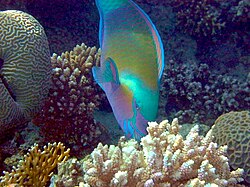
In the ocean, filter feeders and plankton control water turbidity (cloudiness), which determines how deep sunlight can penetrate for photosynthesis. Scleractinian corals build the physical framework for entire reef ecosystems, often supported by parrotfish that eat competing macroalgae.
Whales also serve as engineers through the "Whale Pump." By feeding at depth and defecating at the surface, they release nutrients that stimulate the growth of phytoplankton, distributing essential minerals across the ocean as they migrate.
Frequently Asked Questions
What is the difference between a keystone species and an ecosystem engineer?
While both have a large impact on their environment, keystone species are typically essential due to their trophic effects (their role in the food chain), whereas ecosystem engineers are defined by their physical modification of the habitat.
Can a species be both an autogenic and allogenic engineer?
Yes. While the two types are distinct—autogenic using their own bodies and allogenic using external materials—some species may fall into multiple categories depending on their behaviors and growth patterns.
How do humans fit into this classification?
Humans are considered the ultimate ecosystem engineers, as we modify the planet's landscapes, climates, and resource distributions on a global scale.
Do ecosystem engineers always increase biodiversity?
Generally, they increase species richness by creating more diverse habitats (heterogeneity). However, the impact can vary; for example, introduced species acting as engineers in foreign lands can disrupt existing species interactions.