Eclecticism in Architecture: The Art of Blending Historical Styles
Eclecticism is an architectural and interior design approach that flourished during the 19th and early 20th centuries. Rather than adhering to a single rigid tradition, eclectic design incorporates a mixture of elements from various historical styles to create something entirely new and original. This approach allows architects to draw from a vast catalogue of structural features, decorative motifs, and cultural ornaments, selecting components based on their aesthetic value and suitability for the specific project.
While some architects of this era were revivalists—those who sought to meticulously imitate a specific past style—eclecticists were driven by creation rather than nostalgia. For them, the past was a source of inspiration and expressive freedom, enabling them to blend diverse influences into a cohesive, modern vision.
![The Basilica of the Sagrada Família in Barcelona designed by Antoni Gaudí is a notable example of eclecticism in architecture. Elements of the Gothic style were merged with Art Nouveau motifs and forms found in the natural world, resulting in a structure that was distinctive and original.[1] Although it was designed during the peak of the eclectic period (1883–1926), it remains under construction today.](/images/22/25/2225ff5e767f8bc89e1b0f83c9b578d01fe0ffda6fbc56b4c027212e709c7ec8.jpg)
Key Facts
- Core Concept: The blending of multiple historical architectural styles into a single original work.
- Peak Period: Late 19th century through the early 20th century.
- Educational Influence: The École des Beaux-Arts in Paris provided the academic foundation for many eclectic pioneers.
- Global Reach: Spread from Europe and North America to Asia and colonized regions via ocean liners and settlers.
- Legacy: Paved the way for modern innovation by breaking the rules of strict stylistic imitation.
The Evolution of Eclectic Design
Origins in Europe
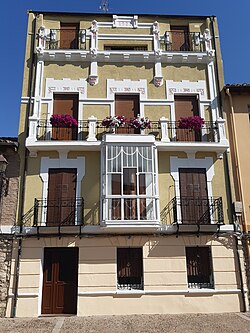
Eclecticism first emerged across continental Europe as architects pushed for greater creative autonomy. Notable regional manifestations included Beaux-Arts architecture in France, Victorian architecture in England, and Gründerzeit in Germany. A central hub for this movement was the École des Beaux-Arts in Paris, where a rigorous academic approach equipped students with the skills to blend classical traditions with new designs.
Interestingly, eclecticism was less enthusiastically embraced in Europe than in America. This was largely because Europe already possessed an abundance of authentic historical architecture, which reduced the appeal of creating new imitations.
The North American Boom
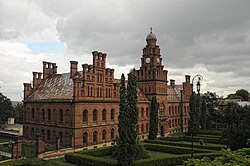
In North America, eclecticism became a cornerstone of urban development at the turn of the century. Architects like Richard Morris Hunt and Charles Follen McKim, trained at the École des Beaux-Arts, brought European sensibilities to the US. During a period of rising commercial prosperity, eclectic design allowed the US to incorporate the aristocratic grandeur of Britain and France into its own landscape.
This style was not limited to private estates; it was applied to skyscrapers, courthouses, public libraries, and movie theaters, making high-style architecture accessible to the general public. While some landmarks, such as the original Pennsylvania Station in New York City, have been lost, many remaining structures are still regarded as vital pieces of American heritage.
Global Spread and Diverse Applications
The reach of eclecticism extended globally, often traveling via the primary transport of the era: ocean liners. To combat the discomfort of long voyages, these ships featured lavish interiors that blended traditional styles to create an atmosphere of established grandeur.
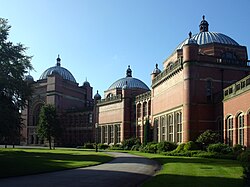
As colonists moved to undeveloped regions, they brought Western eclectic tastes, often blending Roman classicism with Gothic motifs. In Asia, the influence appeared through architects trained in American Beaux-Arts schools, such as Tatsuno Kingo, who designed the Bank of Japan in 1895. Another distinct variation was the Indo-Saracenic Revival, a British-led style that merged Western public building forms with traditional Indian and Mughal architectural details.
Interior Design and the Professional Shift
The complexity of eclectic buildings necessitated a new kind of specialist: the professional interior designer. Experts like Elsie De Wolfe and Dorothy Draper emerged to create interiors that complemented the diverse historical shells of eclectic buildings. While initially serving the wealthy, these designs reached the middle class through popular magazines such as House Beautiful and Ladies Home Journal.
Regional preferences shaped these interiors; for example, Spanish styles were highly favored in California, while New England residents preferred elements of American Colonial architecture.

Critical Reception and Decline
Because eclecticism lacked strict guiding rules, it was prone to failure. Critics often targeted projects that failed to blend their disparate styles harmoniously, viewing them as disjointed or unsuccessful.
By the 1930s, the appetite for historical imitation waned. Design schools began phasing out eclecticism in favor of avant-garde movements such as Art Deco, Brutalism, Postmodernism, and Streamline Moderne. These new styles leveraged modern materials and technology to prioritize innovation over historical reference.
| Approach | Primary Goal | Relationship to History |
|---|---|---|
| Revivalism | Meticulous imitation | Nostalgic; seeks "pure" reproduction |
| Eclecticism | Original creation | Inspirational; blends multiple styles |
| Modernism | Innovation | Rejects historical imitation for new forms |
Frequently Asked Questions
What is the difference between a revivalist and an eclectic architect?
A revivalist aims to meticulously imitate a specific historical style from a particular period or region. An eclectic architect, however, mixes and combines elements from various historical styles to create an original design.
Which school of thought heavily influenced eclectic architecture?
The École des Beaux-Arts in Paris was highly influential, providing a rigorous academic foundation that allowed graduates to blend classical traditions with new, expressive designs.
How did eclecticism spread to Asia?
It spread through architects who trained at American Beaux-Arts influenced schools and returned to their home countries, as well as through the British-led Indo-Saracenic Revival style in India.
Why did eclecticism decline in the 1930s?
The decline was driven by a shift toward avant-garde styles like Art Deco and Brutalism, as well as the availability of new materials and technologies that allowed for greater innovation beyond historical imitation.
Is "eclectic" still used to describe modern architecture?
In contemporary terms, "eclectic" is often used loosely to describe any style that draws from various cultures. However, in a formal architectural context, it specifically refers to the movement of the late 19th and early 20th centuries.