Doha: The Dynamic Capital of Qatar
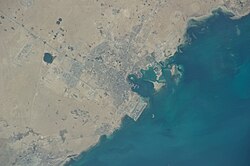
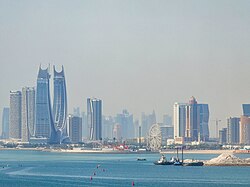
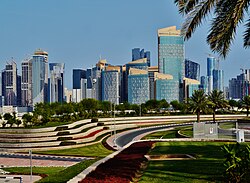
Doha, the capital city of Qatar, is a striking blend of traditional Arabian heritage and futuristic urban planning. Located on the east coast of the Qatar peninsula, the city has evolved from a modest fishing and pearling village into a global hub of finance, culture, and sports. Its rapid expansion, particularly since the discovery of oil in the 1960s, has transformed the skyline into one of the most recognizable in West Asia.
Key Facts
- Established: 1825
- Population: Approximately 1,186,023 (City proper, 2020)
- Metro Population: Approximately 2,000,000
- Area: 132 square kilometers (City proper)
- Key Industries: Finance, Tourism, Energy, and Education
- Climate: Arid with extreme summer heat and mild winters
Historical Evolution
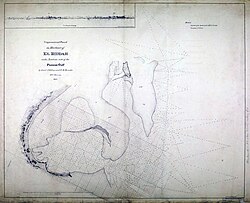
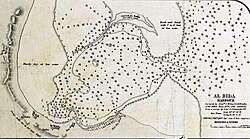
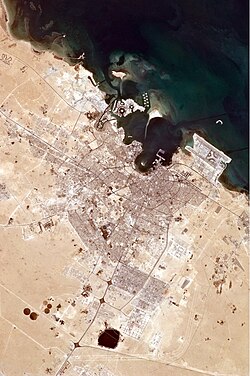
The origins of the city are tied to Al Bidda, a harbor settlement. Early records from 1823 show the trigonometrical plan of the harbor, which served as a vital point for maritime activity on the Persian Gulf.
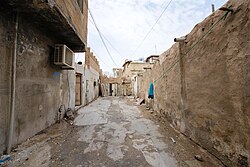
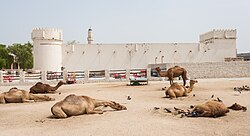
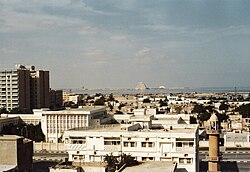
By the mid-19th century, the settlement expanded, and the arrival of the House of Al Thani solidified the political structure of the region. In the early 20th century, Doha was characterized by low-rise buildings constructed from natural materials such as palm fronds and rammed earth, reflecting a community deeply rooted in fishing and pearl diving.
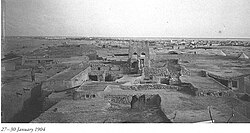
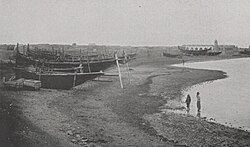
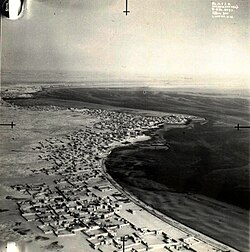
The city underwent significant changes during the British protectorate period (1916–1971). Following independence, the discovery of oil triggered an unprecedented economic boom, leading to the radial expansion of the city and the construction of modern infrastructure.
Geography and Climate
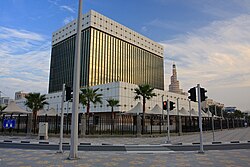
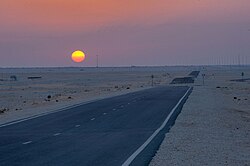
Doha is situated on the waterfront, which has historically dictated its growth pattern. The topography is generally flat, and the city is surrounded by the arid landscape typical of the Arabian Peninsula.
The climate is characterized by extreme temperature variations. Summers are intense, with record highs reaching 50.4°C, while winters are mild, with record lows dipping to 3.8°C. Precipitation is minimal, occurring primarily in the winter months.
| Metric | Winter (Jan) | Summer (Jul) | Annual Average |
|---|---|---|---|
| Mean Daily Max Temp (°C) | 22.6 | 42.4 | 33.5 |
| Mean Daily Min Temp (°C) | 14.8 | 32.1 | 24.2 |
| Average Precipitation (mm) | 11.2 | 2.8 | Variable |
| Mean Daily Sunshine (Hours) | 7.9 | 10.7 | 9.5 |
Urban Development and Architecture
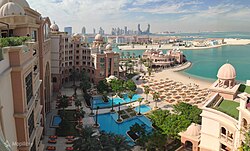
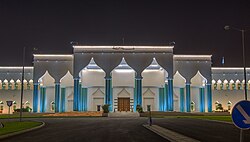
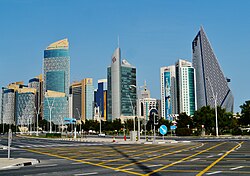
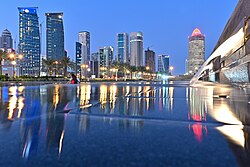
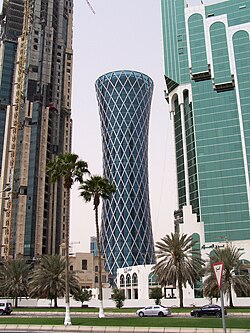
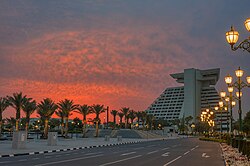
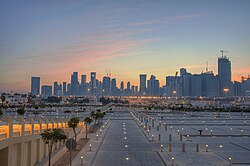
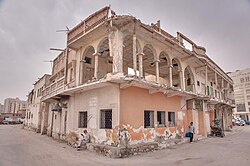
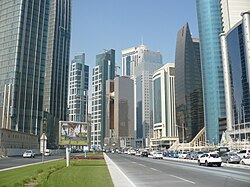
Doha's architecture is a dialogue between the past and the future. Traditional districts, such as the Old Al Ghanim area, feature historic arcaded houses and narrow streets. In contrast, the West Bay district is a forest of high-rises and corporate headquarters, representing the city's economic power.
Modern Landmarks
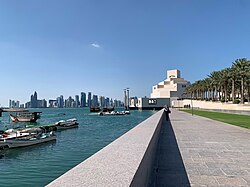
- Museum of Islamic Art: A five-story masterpiece designed by Pritzker Prize-winning architect I. M. Pei.
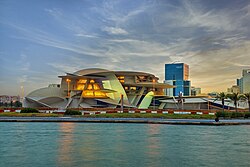
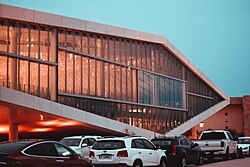
- National Museum of Qatar: An architectural landmark reflecting the nation's history.
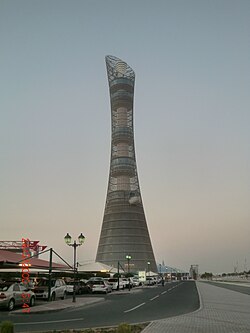
- Aspire Tower and Tornado Tower: Iconic skyscrapers that define the modern skyline.
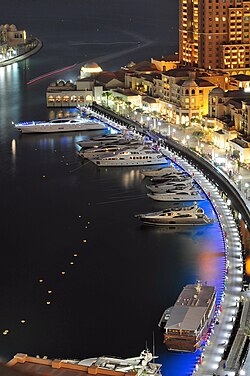
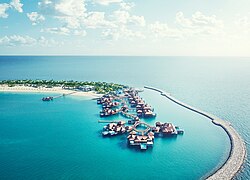
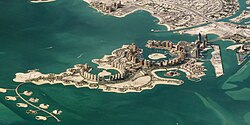
- The Pearl-Qatar: A purpose-built artificial island connected to the mainland by a bridge, featuring luxury residences and marinas.
![The five-storeyed Museum of Islamic Art designed by Pritzker Prize-winning architect I. M. Pei[165]](/images/b8/6d/b86dbdfe449157fc8759bff23069a83bb1a27d4d1655469eafca1b66f5693a0b.jpg)
Infrastructure and Economy
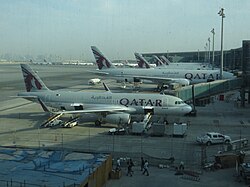
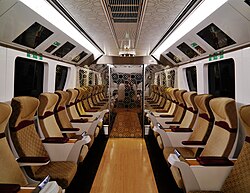
The city's infrastructure has seen massive investment to support its growing population. The Doha Metro provides efficient rail transport, while the Hamad International Airport serves as a primary global aviation hub for Qatar Airways.
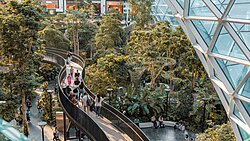
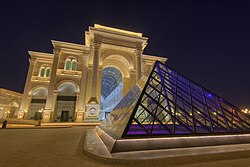
Planned communities like Lusail are expanding the city's footprint, integrating smart-city technology with sustainable urban living. The economy is bolstered by the Qatar Petroleum district and a thriving retail sector, including luxury destinations like Al Hazm Mall.
Education, Culture, and Sports
Doha has established itself as an educational hub, hosting branches of prestigious international universities such as Carnegie Mellon, Georgetown, and Northwestern University, alongside the national Qatar University.
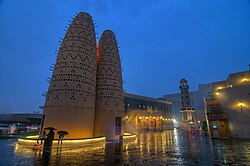
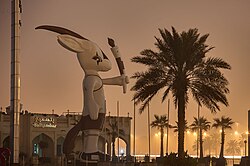
Culturally, the city offers a rich experience through the Katara Cultural Village and the Souq Waqif, where traditional commerce and arts thrive. The city is also a global sports destination, featuring world-class venues like the Al Thumama Stadium and the Aspire Dome.

Frequently Asked Questions
When was Doha established?
Doha was established in 1825, evolving from the earlier settlement of Al Bidda.
What is The Pearl-Qatar?
The Pearl-Qatar is a purpose-built artificial island located off the coast of Doha, connected to the mainland by a bridge, and known for its luxury residential and commercial developments.
Who designed the Museum of Islamic Art?
The Museum of Islamic Art was designed by the Pritzker Prize-winning architect I. M. Pei.
What is the climate like in Doha?
Doha has an arid climate with very hot summers (reaching over 50°C) and mild winters, with very low annual precipitation.
Which major international universities have campuses in Doha?
Doha hosts campuses from several prestigious institutions, including Georgetown University, Carnegie Mellon University, Texas A&M University, and Northwestern University.