Museum of Islamic Art Berlin: A Treasury of Global Heritage
Located within the renowned Pergamon Museum, the Museum of Islamic Art (German: Museum für Islamische Kunst) serves as a premier institution for the study and appreciation of Islamic creativity. Spanning a vast geographical range from Spain to India and a chronological timeline from the 7th to the 19th century, the museum offers a profound look into the artistic and cultural evolution of the Islamic world.
The museum is part of the Staatliche Museen zu Berlin and is managed by the Stiftung Preußischer Kulturbesitz. Under the current leadership of Director Stefan Weber, it continues to bridge the gap between historical preservation and contemporary intercultural dialogue.
Key Facts
- Established: October 18, 1904.
- Location: Pergamon Museum, Berlin, Germany.
- Scope: Artworks from the 7th to 19th centuries, covering Spain to India.
- Core Focus: Significant holdings from Egypt, Iran, and the Foreign Orient.
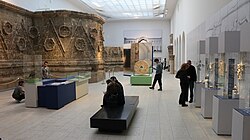
- Notable Feature: Home to the Mshatta Facade and the Aleppo Room.
A Journey Through the Collection
The museum's collection is the result of extensive excavation activities in sites such as Ctesiphon, Samarra, and Tabgha, alongside strategic acquisitions. While Egypt and Iran are primary focal points, the museum also houses exceptional examples of Mughal Empire calligraphy and miniature painting, as well as rare Sicilian ivory works.
Among the most celebrated objects is the Mshatta Facade, a stunning piece of stone carving from an unfinished Umayyad desert palace in Jordan. Other highlights include the Aleppo Room—exquisite Ottoman-period wall paneling from a broker's home in Syria—and the Alhambra cupola.
Visitors can also admire the intricate craftsmanship of the Dragon-Phoenix carpet from Asia Minor (early 15th century) and various Mihrabs (prayer niches indicating the direction of Mecca) from Kashan and Konya.
Diverse Artistic Mediums
Beyond architecture and textiles, the museum showcases a wide array of objects, including:
- Book Art: A rotating exhibition of manuscripts and bindings.
- Ceramics: Including 9th-century bowls from Abbasid Samarra and 10th-century Samanid platters.
- Metalwork: Such as the 13th-century wash basins and pitchers from Mosul.
- Ivory: Including the Siculo-Arabic ivory casket and signal horns from Lower Italy or Sicily.
Historical Evolution and Resilience
The museum was founded in 1904 by Wilhelm von Bode as the Islamic Department in the Kaiser-Friedrich-Museum. Its inception was sparked by the donation of the Mshatta Facade from Ottoman Sultan Abdülhamid II to Emperor Wilhelm II. By 1932, the collection moved to the south wing of the newly constructed Pergamon Museum.
The mid-20th century brought significant challenges. During World War II, the museum suffered losses due to bombing; one of the Mshatta facade's gate towers was destroyed, and several valuable carpets were lost to incendiary bombs. Following the war, the collection was split between the Pergamon Museum and a site in Dahlem. It wasn't until 1992, under the Unification Treaty, that these entities merged into the current Museum of Islamic Art.
In 2000, a redesigned permanent exhibition was opened on the upper floor of the Pergamon Museum's south wing, creating the cohesive experience visitors enjoy today.
Modern Outreach and Research
The museum is not merely a repository of the past but an active center for social engagement. In 2015, it launched Multaka (Museum as Meeting Point), an intercultural project providing free guided tours for Arabic- and Persian-speaking refugees and migrants. This initiative encourages visitors to discuss the history of cultural objects through the lens of their own heritage. The project has since expanded into an international network including museums in Italy, Greece, Switzerland, and the UK.
Additionally, the museum engages in critical global research, including the creation of digital cultural property registers for Syria and the reconstruction of ancient cultural landscapes in Baluchistan, Pakistan.
Museum Summary
| Category | Details |
|---|---|
| Parent Institution | Staatliche Museen zu Berlin |
| Key Periods | 7th Century to 19th Century |
| Geographic Reach | Spain, North Africa, Middle East, India |
| Major Works | Mshatta Facade, Aleppo Room, Alhambra Cupola |
| Social Project | Multaka (Refugee-led guided tours) |
Frequently Asked Questions
Where is the Museum of Islamic Art located?
The museum is located on the upper floor of the south wing of the Pergamon Museum in Berlin, Germany.
What is the Mshatta Facade?
The Mshatta Facade is a significant architectural remnant from an unfinished Umayyad desert palace located south of Amman, Jordan, donated to the museum by Sultan Abdülhamid II.
What is the Multaka project?
Multaka is an intercultural initiative that trains Arabic-speaking refugees and migrants as guides to lead tours and discussions about Islamic art and cultural heritage for other visitors.
What happened to the Keir Collection?
The Keir Collection, a massive private collection of approximately 1,500 works on permanent loan from Edmund de Unger, was withdrawn in July 2012 due to differing views on how to manage the collection.
Which regions are most represented in the collection?
While the museum covers a vast area from Spain to India, Egypt, Iran, and the Foreign Orient are particularly prominent focal points due to extensive excavations and acquisitions.