Discovering Dietes: The Elegant Fortnight Lilies of the Iris Family
Known by many names—including the fortnight lily, wood iris, and butterfly iris—the genus Dietes comprises a group of stunning rhizomatous plants. These perennials are cherished by gardeners worldwide for their striking blooms and resilience. While they share a family lineage with the more common iris, they possess unique botanical characteristics that set them apart.
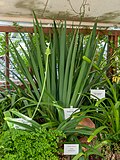
The genus Dietes consists of six species, most of which are endemic to southern and central Africa. However, their beauty has led to their widespread cultivation across the globe. From the coastal gardens of California and Florida to the landscapes of Japan and Australia, these plants have naturalized in various climates, adapting well to environments far from their original African roots.
Key Facts
- Family: Iridaceae (the iris family).
- Species Count: Six recognized rhizomatous species.
- Origin: Primarily southern and central Africa, with one species native to Lord Howe Island.
- Defining Feature: Flowers with six free tepals (segments of the perianth that are not clearly differentiated into petals and sepals).
- Growth Habit: Rhizomatous, meaning they grow from a rhizome, which is a continuously growing horizontal underground stem.
Botanical Classification and Taxonomy
The taxonomy of Dietes has evolved over time. These plants were previously classified under the genus Moraea, but were later reclassified because they are rhizomatous. This distinguishes them from Moraea, which typically grow from corms (rounded underground storage organs).
Furthermore, Dietes differ from the genus Iris in the structure of their flowers. While irises often have petals joined into a tube at the base, Dietes possess six free tepals. The name of the genus itself is derived from the Greek words di-, meaning "two," and etes, meaning "affinities."
It is common to find the name Dietes vegeta in some references; however, this is generally a misapplication of the name. This confusion stems from Moraea vegata, a plant that grows from a corm rather than a rhizome. In most cases, D. vegeta is used incorrectly to refer to either D. grandiflora or D. iridioides.
Global Distribution and Naturalization
While the majority of Dietes species originate in Africa, several have become popular landscaping choices globally. Dietes bicolor, D. grandiflora, and D. iridioides are the most common species found outside their native range.
In the Americas, they have naturalized across Mexico, Central and South America, the Bahamas, Jamaica, Bermuda, and Hispaniola. In the United States, they are documented in several states, including Alabama, Florida, Georgia, Hawaii, Louisiana, Mississippi, Nevada, South Carolina, Texas, and both Southern California and the Bay Area.
Their reach extends further into Europe and Asia, with sightings in Spain, Portugal, southern France, Sicily, Israel, Palestine, Istanbul, Hong Kong, Taiwan, Tokyo, and parts of India (Sikkim) and Indonesia (Java). They are also established in Australia (particularly New South Wales, Queensland, Tasmania, Victoria, and near Adelaide and Perth), New Zealand, and New Caledonia.
Comparing Dietes Species
While some species look similar in photographs, they have distinct physical characteristics. For example, D. bicolor is easily identified by its cream or yellow flowers. In contrast, D. grandiflora and D. iridioides both feature white flowers marked with yellow and violet, but they differ in scale and longevity.
D. grandiflora is the larger of the two plants. Its flowers are significantly larger, last for three days, and feature dark spots at the base of the outer tepals. D. iridioides produces smaller flowers that last only one day and lack those characteristic dark spots.
| Scientific Name | Common Names | Primary Distribution |
|---|---|---|
| Dietes bicolor | Yellow wild iris, peacock flower, butterfly iris | Cape Province, KwaZulu-Natal |
| Dietes butcheriana | — | Cape Province, KwaZulu-Natal |
| Dietes flavida | — | South Africa, Eswatini |
| Dietes grandiflora | Wild iris, large wild iris, fairy iris | Cape Province, KwaZulu-Natal; naturalized in St. Helena, Mauritius, Rodrigues Island, Western Australia |
| Dietes iridioides | Wild iris, African iris, Cape iris, fortnight lily, morea iris | Ethiopia to Cape Province; naturalized in Madeira, Mauritius, Réunion, Hawaii, Jamaica |
| Dietes robinsoniana | Wedding lily | Lord Howe Island (New South Wales) |
Frequently Asked Questions
What is the difference between Dietes and Iris?
The primary difference lies in the flower structure. Dietes have six free tepals that are not joined into a tube at their bases, whereas Iris flowers typically have petals that are joined at the base.
Why is it called a "fortnight lily"?
While the source does not explicitly define the etymology of the common name, "fortnight lily" is one of the widely used common names for species like Dietes iridioides.
How can I tell the difference between D. grandiflora and D. iridioides?
D. grandiflora is a larger plant with larger flowers that last for three days and have dark spots at the base of the outer tepals. D. iridioides has smaller flowers that last only one day and do not have these spots.
Where did Dietes plants originate?
Most Dietes species are endemic to southern and central Africa. However, Dietes robinsoniana is native to Lord Howe Island, located off the eastern Pacific coast of Australia.
What does "rhizomatous" mean in relation to Dietes?
Rhizomatous means the plant grows from a rhizome, which is a horizontal underground stem. This characteristic is what separates Dietes from the genus Moraea, which grows from corms.