Cuckold: History, Culture, and Psychology
The term cuckold is most commonly used to describe a man whose wife is adulterous. While often viewed through a lens of betrayal or humiliation, the concept spans biological, historical, and psychological dimensions. Its female counterpart is the cuckquean, referring to the wife of an adulterous husband. In a biological context, a cuckold is a male who unwittingly invests parental effort into offspring that are not genetically his own.
Beyond these basic definitions, there are nuanced variations. A wittol (or wittold) is a husband who is aware of his wife's infidelity and chooses to tolerate it. In modern slang, the term bull refers to the dominant man who engages in a relationship with the cuckold's partner.
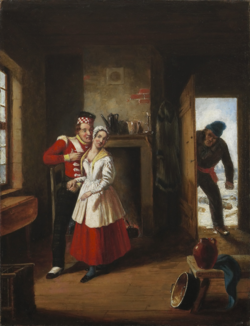
The Etymology and History of the Term
The word cuckold is derived from the cuckoo bird, specifically referencing brood parasitism—the biological tendency of the cuckoo to lay its eggs in the nests of other bird species, leaving the unsuspecting foster parents to raise offspring that are not their own.
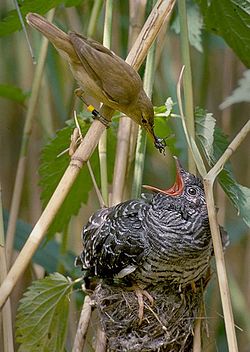
This association has been a staple of medieval folklore, iconography, and literature. The term first appeared in English around 1250 in the medieval debate poem The Owl and the Nightingale. By approximately 1440, John Lydgate described it as an overtly blunt term in The Fall of Princes. Later, William Shakespeare frequently utilized the concept in his plays, often featuring characters who suspected they had been cuckolded.
Historically, the term implies deception; the husband is typically unaware of the infidelity until the arrival of a child who does not resemble him, mirroring the cuckoo's behavior. The term cuckquean appeared later, in 1562, by adding a feminine suffix to "cuck." Meanwhile, the word wittol emerged around 1520, replacing the first part of the word with "wit" (meaning knowledge) to signify a man who knows of the betrayal.
In contemporary usage, the word has been shortened to "cuck" in internet slang. This modern iteration has evolved beyond sexual contexts to include pejorative political undertones.
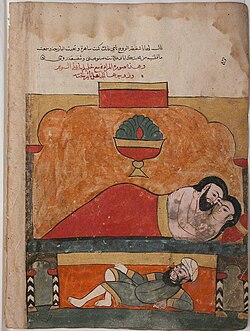
Biological Frequency and Scientific Evidence
Despite its prevalence in literature and art, scientific evidence suggests that cuckoldry is a relatively rare phenomenon. Research conducted by genetic genealogist Maarten Larmuseau indicates that in Western society, only 1% to 2% of births result from unfaithful mothers.
Cultural Symbols of Cuckoldry
Different cultures have developed unique symbols to represent the cuckold, often drawing from nature or law.
The Symbolism of Horns
In many Western traditions, a cuckold is said to be "wearing the horns." This is an allusion to the mating habits of stags, who lose their mates after being defeated by a rival male. This imagery is deeply embedded in several languages:
- Italy: The insult cornuto is often accompanied by the "sign of the horns" hand gesture.
- France: The phrase porter des cornes is used.
- Germany: Terms include Hörner tragen or jemandem Hörner aufsetzen.
- Brazil and Portugal: The term corno (meaning "horned") is used and is considered highly offensive.
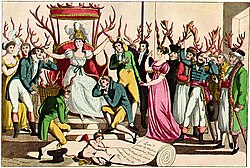
This imagery appears in classic literature, such as Rabelais's Tiers Livers of Gargantua and Pantagruel (1546) and Molière's L'École des femmes (1662), where the character Arnolphe mocks cuckolds using the image of a horned buck before becoming one himself.
The Green Hat in China
In Chinese culture, the phrase dài lǜmàozi ("wearing the green hat") signifies a cuckold. This stems from sumptuary laws—laws that regulate consumption and dress—active between the 13th and 18th centuries. These laws required men living in households with prostitutes to wear a green scarf or hat.
Cross-Cultural and Mythological Parallels
Cuckoldry and related concepts appear in various global traditions. In Islamic cultures, the term dayyūṯ describes a person viewed as apathetic or permissive regarding the unchaste behavior of a spouse or female relative, or one who lacks ghayrah (paternalistic protectiveness). This term has been criticized for reinforcing paternalistic gender roles and stigmatizing sexuality.
In mythology, the Greek hero Actaeon is often linked to cuckoldry because he was transformed into a stag, thereby becoming "horned." This connection is referenced in works such as Robert Burton's The Anatomy of Melancholy and Shakespeare's The Merry Wives of Windsor. Additionally, Saint Arnoul(t) (possibly Arnold of Soissons) is frequently cited as the patron saint of cuckolded husbands.
Cuckoldry as a Psychological Fetish
In a modern psychological and sexual context, cuckolding differs from the traditional definition because it is consensual. In this fetish, the cuckold is complicit in their partner's infidelity. The partner who enjoys this role is called a cuckoldress, and the dominant third party is the bull.
Psychology classifies cuckold fetishism as a variant of masochism—the derivation of pleasure from humiliation or pain. According to psychologist Roy Baumeister in Masochism and the Self, this behavior can be analyzed through "Self Theory." Baumeister suggests that masochism allows an individual to escape burdensome self-awareness, such as feelings of inadequacy, guilt, or anxiety, by shifting focus toward physical or mental pain.
When practiced consensually and within the boundaries of a relationship agreement, some couples find that this fantasy can improve their sexual relationship. However, the fetish relies on the cuckold's desire for humiliation; it does not function if the humiliation is forced or against the individual's will.
Summary of Key Terms
| Term | Definition | Context |
|---|---|---|
| Cuckold | A man whose wife is unfaithful; biologically, a male raising non-genetic offspring. | General/Biological |
| Cuckquean | A woman whose husband is unfaithful. | General |
| Wittol | A husband who is aware of and tolerates his wife's infidelity. | Historical |
| Bull | The dominant male partner in a cuckolding scenario. | Slang/Fetish |
| Dayyūṯ | A person permissive of unchaste behavior by female relatives. | Islamic Culture |