Continental Shelves: The Submerged Margins of Our Continents
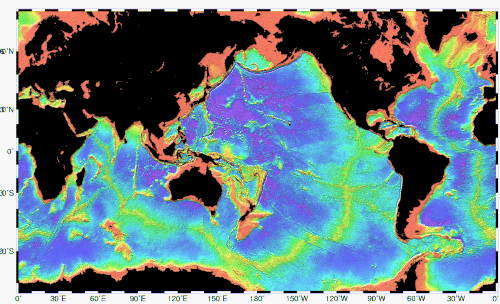
A continental shelf is the submerged edge of a continent, resting under relatively shallow waters known as shelf seas. While these areas are currently underwater, many were exposed as dry land during glacial periods when global sea levels dropped. When a continental shelf surrounds an island, it is specifically referred to as an insular shelf.
These regions serve as the critical transition between the terrestrial landmass and the deep ocean basin. Rather than being part of the deep ocean proper, they are the flooded margins of the continents, playing a vital role in global biodiversity and economic activity.
Key Facts
- Global Coverage: Continental shelves cover approximately 27 million square kilometers, representing about 7% of the ocean's surface.
- Average Dimensions: The average width is roughly 80 km, with depths generally shallower than 100 m.
- Biological Powerhouse: Despite their small size, shelf seas support 15–20% of global primary productivity.
- Sediment Composition: 60–70% of shelf sediments are relict deposits from the last ice age.
- Legal Status: Under UNCLOS, nations can claim exclusive economic zones (EEZ) extending 200 nautical miles from their baseline.
The Topography of the Continental Margin
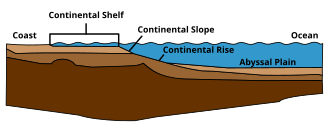
The transition from land to the deep ocean is not a simple drop, but a series of distinct geological features collectively known as the continental margin.
The Shelf and the Shelf Break
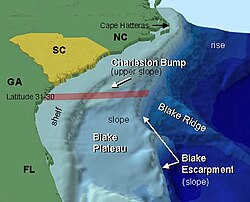
The continental shelf is typically divided into three zones: the inner, mid, and outer shelves, each possessing unique marine biology and geomorphology. The shelf ends at the shelf break, a point where the slope increases sharply. Interestingly, the shelf break usually occurs at a remarkably consistent depth of about 140 m, a likely remnant of past ice ages.
The Slope and the Rise
Beyond the break lies the continental slope, which is significantly steeper than the shelf, with average angles of 3° (though ranging from 1° to 10°). This slope is frequently carved by submarine canyons. At the base of the slope is the continental rise, a flatter area where sediments cascade down and accumulate. The rise can extend up to 500 km from the slope and eventually merges into the abyssal plain, the vast, deep ocean floor.
Geographical Distribution and Margins
The width and characteristics of continental shelves vary wildly across the globe. Some regions, such as the coasts of Chile or Sumatra, have virtually no shelf because oceanic plates dive beneath continental crust in subduction zones.
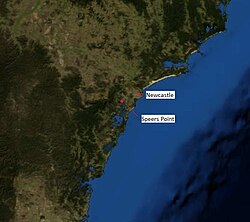
In contrast, the Siberian Shelf in the Arctic Ocean is the largest in the world, stretching 1,500 km in width. Other extensive shelves include the Sunda Shelf in the South China Sea, which connects Borneo, Sumatra, and Java to mainland Asia, as well as the North Sea and the Persian Gulf.
Geologists categorize these margins into two types:
- Passive Margins: Found mostly along Atlantic coasts, these are wide and shallow, characterized by thick sedimentary wedges from long-term erosion.
- Active Margins: These are narrow and steep, often shaped by frequent earthquakes that push sediment into the deep sea.
The following table provides a comparison of margin widths across different oceans:
| Ocean | Active Margin (Mean/Max) | Passive Margin (Mean/Max) | Total Margin (Mean/Max) |
|---|---|---|---|
| Arctic Ocean | 0 / 104.1 | 389 / 389 | 104.1 / 389 |
| Indian Ocean | 19 / 175 | 47.6 / 238 | 37 / 238 |
| North Atlantic | 28 / 259 | 115.7 / 434 | 85 / 434 |
| North Pacific | 39 / 412 | 34.9 / 114 | 39 / 412 |
| South Atlantic | 24 / 55 | 123.0 / 453 | 104 / 453 |
| South Pacific | 214 / 357 | 96.1 / 778 | 110 / 778 |
Sediments and Shelf Seas
Continental shelves are covered in terrigenous sediments—materials derived from the erosion of land. Surprisingly, most of this is not from current river flow; 60–70% is relict sediment deposited during the last ice age. These sediments grade from coarse sand near the coast to fine silts and clays in deeper waters, accumulating at a rate of 15–40 cm per millennium.
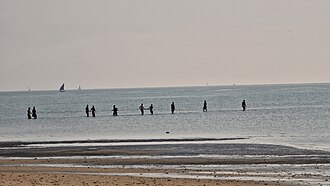
The waters overlying these shelves, known as shelf seas, are influenced by tides, wind, and river inflows. In temperate regions, these seas exhibit different regimes: some are well-mixed by tidal turbulence, while others are stratified by surface heating and freshwater inflow. These Regions of Freshwater Influence (ROFIs), such as the Rhine Outflow in the North Sea, create complex dynamics that vary on tidal cycles.
Biological and Economic Importance
Because sunlight can penetrate the shallow waters, continental shelves are teeming with life, unlike the "biotic desert" of the abyssal plain. The water column is known as the neritic zone, while the sea floor is the sublittoral zone. However, only about 30% of the shelf sea floor receives enough light to support benthic photosynthesis (photosynthesis occurring on the ocean floor).
Economically, the continental shelf is the most exploited part of the ocean. Its accessibility makes it the primary site for offshore drilling, hydrocarbon extraction, and the mining of metallic and non-metallic ores.
Legally, the 1982 United Nations Convention on the Law of the Sea (UNCLOS) defines the shelf as the seabed adjacent to a country's shores. It establishes an exclusive economic zone (EEZ) of 200 nautical miles, though states with physical shelves extending further may claim additional rights up to 350 nautical miles. This legal definition differs from the geological one; for example, inhabited volcanic islands may have a legal shelf even if they lack a geological one.
Frequently Asked Questions
What is the difference between a continental shelf and a continental slope?
The continental shelf is the shallow, gently sloping submerged edge of a continent. The continental slope is the much steeper descent that begins at the shelf break and leads down toward the continental rise and the deep ocean floor.
Why are continental shelves so biologically productive?
Their shallow depth allows sunlight to reach much of the water column and the sea floor, enabling photosynthesis. Additionally, the mixing of nutrients caused by shallower waters and current speeds supports a high density of marine life.
How does UNCLOS define the continental shelf legally?
Legally, the shelf extends to the limit of the continental margin, but it is guaranteed to be no less than 200 nautical miles and no more than 350 nautical miles from the baseline of a coastal state.
What are terrigenous sediments?
Terrigenous sediments are deposits derived from the erosion of landmasses. On continental shelves, a significant portion of these are relict sediments deposited during previous ice ages when sea levels were lower.
What is a passive margin versus an active margin?
A passive margin is a wide, shallow shelf typically found on coasts not adjacent to active plate boundaries (like the Atlantic). An active margin is narrow and steep, often associated with subduction zones and frequent earthquake activity (like the west coast of South America).