Colonnaded Street of Berytus: A Glimpse into Roman and Byzantine Beirut
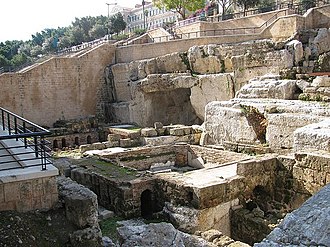
In the heart of downtown Beirut, Lebanon, lies the remnant of a sophisticated urban past. The Colonnaded Street, a vital artery of the Roman-era city known as Berytus, serves as a testament to the commercial prosperity and architectural grandeur of the Roman and Byzantine periods. Unearthed during extensive excavations in the mid-1990s, this site reveals how ancient urban planning integrated commerce, art, and infrastructure.
Key Facts
- Location: Downtown Beirut, Lebanon (ancient Berytus).
- Length: The excavated street spans 400 meters.
- Key Features: Mosaic pavements, numbered shops, and sidewalks.
- Era: Roman and Byzantine periods, with mosaics dating primarily to the 5th and 6th centuries AD.
- Major Event: A devastating earthquake in 551 AD destroyed much of the city.
The Discovery of the Byzantine Mosaics
During excavations in the Souks area in 1996, archaeologists discovered approximately 700 square meters of Byzantine mosaics (intricate floor patterns made from small pieces of colored stone or glass). These mosaics were recovered from five large villas and the Colonnaded Street itself. While most of the designs featured geometric patterns, some incorporated figurative elements, showcasing the artistic preferences of the 5th and 6th centuries AD.
The street was not merely a thoroughfare but a commercial hub. Excavations revealed more than ten shops located within a portico—a porch leading to the entrance of a building, or a covered walkway with columns. These shops were uniquely identified by Greek letters (such as Alpha, Beta, Gamma, and Delta) embedded in the mosaic floors. Because the street ran from east to west, these letters were written from right to left.
Architecture and Urban Layout
The Colonnaded Street was a sophisticated piece of engineering, featuring dedicated sidewalks and a surface paved with successive layers of mosaics depicting natural motifs and geometric shapes. This primary road connected the city center to the Hippodrome of Berytus (a stadium used for horse and chariot racing) located in Wadi Abu Jamil.
Archaeological evidence suggests the street's layout was specific; excavations in December 1995 indicated that the road surface ended along the Souk Tawileh line, where it turned north at a 100-degree angle. This suggests that the colonnaded structure did not continue eastward along the same line as the western section. Additionally, five columns discovered in 1963 near the Maronite Cathedral of Saint George are believed to have been part of the city's grander colonnade system.
| Feature | Details |
|---|---|
| Total Length | 400 meters |
| Mosaic Area | 700 square meters |
| Shop Identification | Greek letters (Alpha, Beta, Gamma, Delta, etc.) |
| Primary Connection | City Center to Hippodrome of Berytus |
| Destruction Date | 551 AD (Earthquake) |
Preservation and Legacy
To ensure the history of Berytus remains visible to the public, reproductions of the salvaged mosaics—specifically those featuring the letters Beta, Gamma, and Delta—have been integrated into Souk al-Franj. These panels are carefully aligned with the original path of the ancient street, allowing visitors to visualize the scale and organization of the Roman shopping district.
Frequently Asked Questions
What was the purpose of the Greek letters on the mosaic floors?
The Greek letters served as address markers for the individual shops located along the colonnaded portico, allowing for an organized system of commercial identification.
When was the Colonnaded Street discovered?
The street and its associated mosaics were brought to light during archaeological investigations of the Beirut Souks site in the mid-1990s.
What caused the destruction of Roman Berytus?
The Roman city of Berytus was largely destroyed by a powerful earthquake in 551 AD.
Where did the Colonnaded Street lead?
The street connected the center of the city to the Hippodrome of Berytus, located in the Wadi Abu Jamil area.
What types of designs are found in the mosaics?
The majority of the mosaics feature geometric patterns, though some include natural motifs and figurative designs.