Chronobiology: The Science of Biological Rhythms
Every living organism operates on a schedule. From the blooming of a flower to the sleep-wake cycles of humans, life is governed by biological rhythms—periodic, cyclic phenomena that allow organisms to adapt to solar and lunar cycles. The study of these timing processes is known as chronobiology (derived from the Greek chrónos for "time" and biology for the science of life).
While often associated with sleep, chronobiology is a multidisciplinary field. It integrates comparative anatomy, physiology, genetics, molecular biology, and behavior to understand how timing affects everything from reproduction and ecology to evolution and epigenetics. In some specialized contexts, the terms chronomics and chronome are used to describe the quantitative aspects and molecular mechanisms of these cycles.
Key Facts
- Circadian Rhythms: Biological cycles that repeat roughly every 24 hours.
- Ultradian Rhythms: Cycles shorter than 24 hours, such as the 90-minute REM cycle or 3-hour growth hormone production.
- ipRGCs: Specialized retinal ganglion cells that detect light to synchronize the internal clock.
- SCN: The suprachiasmatic nucleus, the brain's primary pacemaker for circadian rhythms.
- Diurnal vs. Nocturnal: Diurnal organisms are active during the day, while nocturnal organisms are active at night.
The History of Biological Timing
The observation of biological clocks dates back centuries. In the 18th century, French scientist Jean-Jacques d'Ortous de Mairan first observed circadian cycles in the movement of plant leaves. Shortly after, in 1751, Carl Linnaeus created a "flower clock," arranging specific plant species in a circle to tell time based on when their flowers opened. For instance, the hawk's beard opened at 6:30 am, while the hawkbit opened at 7 am.
Modern chronobiology advanced significantly in 1960 when Patricia DeCoursey developed the phase response curve while studying light responses in rodents. This tool remains fundamental to the field today.
The Mechanism of Light Perception
The body synchronizes its internal clock with the external environment primarily through light. This process involves intrinsically photosensitive retinal ganglion cells (ipRGCs). Unlike standard rods and cones used for vision, ipRGCs contain a photopigment called melanopsin, allowing them to detect light directly.
ipRGCs act as a relay, receiving inputs from rods and cones while also sensing light independently. They project this information to the suprachiasmatic nucleus (SCN), enabling the organism to entrain, or align, its internal rhythms with the light-dark cycle of the environment.
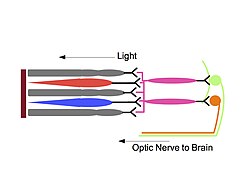
Molecular Diversity in ipRGCs
Research by Hattar and colleagues revealed that ipRGCs are not uniform. Specifically, M1 ipRGCs consist of molecularly distinct subpopulations. Some target the olivary pretectal nucleus (OPN) to control pupil reflexes, while others target the SCN to regulate circadian rhythms. Experiments using Melanopsin-Cre mice showed that ablating OPN-projecting cells removed pupil reflexes but left circadian entrainment intact, proving that these cells operate via "labeled lines" for specific functions.
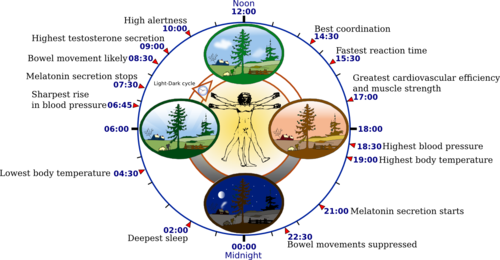
Psychological and Cognitive Impacts of Light
Light exposure does more than regulate sleep; it influences mood and memory. ipRGCs project to the limbic system, which governs emotion and memory, as well as the SCN and the ventrolateral preoptic area.
Impact on Mood and Behavior
In studies comparing mice on a standard 24-hour cycle (T24) to those on a disrupted 3.5-hour light-dark cycle (T7), researchers found that T7 mice exhibited depression-like symptoms. These included sucrose anhedonia (decreased preference for sugar) and increased immobility in the forced swim test (FST). These mice also showed elevated levels of serum corticosterone, a stress hormone associated with depression, though their overall sleep amount remained the same.
Impact on Learning and Memory
The hippocampus, essential for spatial navigation and converting short-term memories to long-term ones, also receives projections from ipRGCs. T7 mice demonstrated significant cognitive impairment in the Morris water maze (MWM), taking longer to find platforms and failing to show a preference for the correct quadrant. They also exhibited impaired long-term potentiation (LTP) and poor recognition memory for novel objects.
Clinical and Social Implications
Disruptions to biological rhythms are linked to various neurological and physical health conditions:
- ADHD: Studies from 2013 and 2017 indicate that individuals with Attention Deficit Hyperactivity Disorder often experience a delayed sleep phase and correlations with Seasonal Affective Disorder.
- Physical Health: Gout attacks occur more than twice as often during the night and early morning. Additionally, circadian disruption (such as night shift work) can lead to osteoporosis by interfering with nocturnal bone remodeling.
- Digital Behavior: Research published in PLoS ONE (2018) and Chronobiology International (2021) found that Twitter content follows diurnal patterns, which persisted even during the 2020 UK lockdown.
| Rhythm Type | Duration | Examples / Effects |
|---|---|---|
| Circadian | ~24 Hours | Sleep-wake cycle, SCN regulation, hormone release |
| Ultradian | < 24 Hours | REM cycles (90 min), Nasal cycle (4 hours) |
| Disrupted | Irregular | Depression-like symptoms, impaired hippocampal learning |
Frequently Asked Questions
What is the difference between circadian and ultradian rhythms?
Circadian rhythms occur on a roughly 24-hour cycle, such as the sleep-wake cycle. Ultradian rhythms are shorter than 24 hours, such as the 90-minute REM cycle or the 3-hour cycle of growth hormone production.
How does light affect the biological clock?
Light is detected by ipRGCs in the retina via the pigment melanopsin. These cells send signals to the suprachiasmatic nucleus (SCN) in the brain, which acts as the master clock to synchronize the body's internal rhythms with the external day-night cycle.
Can circadian disruption lead to physical illness?
Yes. For example, disruption of circadian rhythms through night shift work has been linked to osteoporosis due to the interference with bone remodeling that normally occurs at night. Gout attacks also show a strong diurnal pattern, peaking in the night and early morning.
How does light exposure influence mood and memory?
ipRGCs project to the limbic system and the hippocampus. Abnormal light exposure can lead to increased corticosterone levels and depression-like symptoms, as well as impaired spatial learning and memory consolidation.