Diurnality: The Science of Daytime Activity in Nature
In the natural world, life is governed by cycles. One of the most fundamental patterns is diurnality, a behavioral trait where plants and animals are primarily active during the day and sleep or remain inactive at night. While humans are the most prominent example of diurnal beings, this pattern is found across a vast array of species, from towering sunflowers to agile primates.
The timing of an organism's activity is not random; it is shaped by environmental factors such as temperature, the ability to find food using sight, the risk of being hunted by predators, and seasonal changes. These activities often follow circadian rhythms—endogenous (internal) cycles that operate on a 24-hour period. These rhythms are typically synchronized by a zeitgeber, an external cue such as sunlight that resets the internal clock.
To understand diurnality, it is helpful to compare it to other activity patterns:
- Nocturnal: Active during the night.
- Crepuscular: Active primarily during twilight (dawn and dusk).
- Cathemeral: Active at sporadic times throughout both day and night.
Key Facts
- Diurnality is characterized by daytime activity and nighttime rest.
- The suprachiasmatic nucleus (SCN) in the hypothalamus controls circadian rhythms in most animals.
- Evolutionary shifts between diurnality and nocturnality often impact vision, specifically color perception.
- Environmental stressors like extreme cold or hunger can trigger "temporal niche switching," pushing nocturnal animals toward diurnality.
- Plants are considered diurnal if their flowers open during the day to attract specific pollinators.
The Evolution of Daytime Activity
While many early animals were diurnal, evolution led some to become nocturnal to avoid predators and reduce competition for resources. This shift required significant biological adaptations, particularly in vision. Many mammals became dichromats, losing two of the four cone opsins required for full color vision.
When certain lineages, such as simiiformes (including humans), transitioned back to diurnality, trichromatic color vision became a major evolutionary advantage. Research using chromatin distribution analysis of rod nuclei in simian eyes suggests that primates switched between diurnality and nocturnality multiple times, with the move toward diurnality being the most frequent transition.
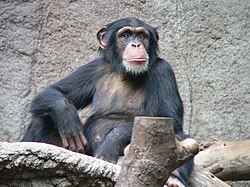
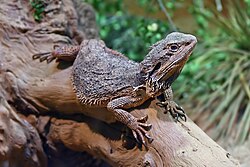
This evolutionary trend is still visible today. Diurnality is reappearing in various lineages, including reptiles and small rodents like the golden mantle squirrel and the Nile grass rat. Geckos provide a striking example; once thought to be exclusively nocturnal, approximately 430 gecko species now exhibit diurnal activity. For instance, Mediodactylus amictopholis, which lives at higher altitudes, likely switched to diurnality to absorb more heat during the day and conserve energy during cold seasons.
The Role of Light and the Brain
Light is the primary driver of activity patterns. The photoperiod (the light-dark cycle) varies by geography and serves as the strongest influence on the SCN. The SCN processes visual information to trigger a cascade of hormones that regulate physiological and behavioral functions.
Light can also create "masking effects," where external light overrides the internal circadian clock. Positive masking increases the activity of a diurnal animal, while negative masking decreases the activity of a nocturnal one. For example, when exposed to the same light intensity, a diurnal Nile grass rat shows increased activity, while a nocturnal mouse shows decreased activity.
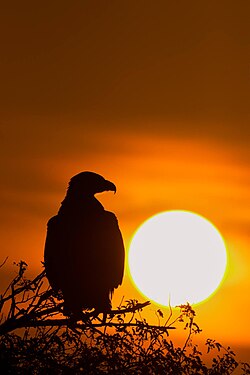
Even subtle changes in light can shift behavior. In South America, nocturnal owl monkeys show increased nighttime activity during periods of high moonlight. Conversely, when moonlight is scarce, their foraging efficiency drops, forcing them to be more active during the day to find food.
Environmental Influences and Energy Conservation
Beyond light, temperature and food availability play critical roles. The circadian thermos-energetics (CTE) hypothesis suggests that animals expending more energy than they consume may shift toward the light cycle to save heat. Nocturnal animals often struggle with metabolic energy loss due to lower nighttime temperatures.
Laboratory studies on nocturnal mice have shown that a combination of hunger and cold stress can induce a switch to diurnality. This "temporal niche switching" is most successful when the animal has a sheltered place to rest and when the risk of predation is low—essentially, when the risk of freezing or starving outweighs the risk of being eaten.
Diurnality in Plants and Technology
In botany, diurnality refers to the timing of flower opening, which is usually synchronized with the activity of preferred pollinators. Sunflowers open during the day to attract bees, while the night-blooming cereus opens at night for sphinx moths. Similarly, the baobab blooms in the late afternoon to attract fruit bats.
The concept of diurnality also extends to human technology and operations. Most business hours, public transport schedules, and website traffic patterns follow a diurnal cycle. Operations planners use these predictable peaks and troughs to schedule system maintenance during low-usage periods.
![Humans are diurnal, and organize their work and business mainly in the day.[a]](/images/8a/97/8a9737377d7ce3cb94728ff3207ca99089180413bc0819c47d4f35048d6c4b3e.jpg)
| Term | Primary Activity Period | Example Organism |
|---|---|---|
| Diurnal | Daytime | Humans, Sunflowers |
| Nocturnal | Nighttime | Mice, Night-blooming cereus |
| Crepuscular | Dawn and Dusk | Various mammals/birds |
| Cathemeral | Sporadic (Day & Night) | Various species |
Frequently Asked Questions
What is the difference between diurnality and a circadian rhythm?
Diurnality is the specific behavioral pattern of being active during the day. A circadian rhythm is the internal, biological 24-hour clock that regulates this and other physiological processes, regardless of external cues.
How does light "mask" an animal's internal clock?
Masking occurs when environmental light directly influences behavior, overriding the internal rhythm. Positive masking increases activity in diurnal animals, while negative masking suppresses activity in nocturnal animals.
Why would a nocturnal animal evolve to become diurnal?
Animals may switch to diurnality to conserve metabolic energy in cold environments (as per the CTE hypothesis), to better utilize visual resources, or to avoid competition and predation.
How does diurnality affect vision in primates?
The transition back to diurnality in primate lineages was associated with the development of trichromatic color vision, which provided a significant adaptive advantage for foraging and survival during the day.
Do plants exhibit diurnality?
Yes. Plants are considered diurnal when they open their flowers during the day, typically to align with the foraging schedules of their specific pollinators, such as bees.