Chitterlings: A Global Culinary History of Intestines and Offal
Across the globe, culinary traditions have long emphasized the philosophy of "nose-to-tail" eating, ensuring that no part of the animal goes to waste. Among the most distinct of these delicacies are chitterlings (known in American English as chitlins), the edible intestines of livestock. Depending on the cut and the method of preparation, these offal dishes can range from tender and gelatinous to springy and crisp.
While often associated with specific regional cuisines, chitterlings are a universal ingredient, serving both as a primary component of a meal and as the essential casing for various traditional sausages.
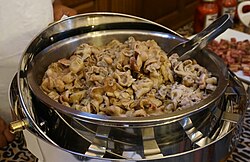
Terminology and Anatomy
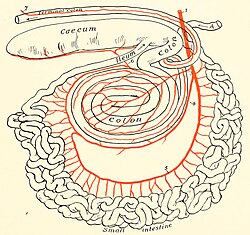
In culinary terms, "chitterlings" serves as an umbrella term for both the small and large intestines. The large intestine is specifically referred to as the bung. In Western butchery, the large intestine is further categorized into three distinct sections:
- The Caecum: Divided into the "cap" (the widest part) and the "afterend" (leading to the ileum and colon).
- The Colon: Referred to as the "middles," characterized by a ribbed texture caused by the haustra (small pouches in the colon wall).
- The Rectum: Known as the "fatend," which is the smoothest cut of the bung.
Key Facts
- Definition: Chitterlings are the small and large intestines of livestock eaten as offal.
- Preparation: Rigorous cleaning is mandatory to remove feces and reduce the natural ammonia odor.
- Industrial Use: The mucosa (inner lining) of the intestine is sometimes separated for the production of heparin.
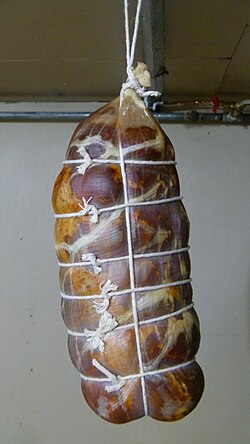
- Sausage Utility: Different sections of the bung are used for specific sausages; for example, the bung cap is used for capocollo.
- Global Reach: Popular in the Southern United States, Europe, Latin America, and East Asia.
Etymology and Historical Usage
The term "chitterling" first appeared in Middle English around 1400 as cheterling. Interestingly, by the late 1500s, the word had expanded beyond the kitchen; it was used to describe an ornate type of neck ruff, so named because its frilled edges resembled the folds of animal entrails.
Historically, chitterlings were often a food of necessity. In medieval England, they were a staple for low-income families well into the 19th century. Literary references, such as those in Thomas Hardy's Tess of the D'Urbervilles, highlight chitterlings as the most basic option for the poor. Early English cookbooks, including The Lady's Companion (1743) and Hannah Glasse's Art of Cookery (1784), documented recipes for calf's chitterlings, often used as casings for bacon and offal sausages.
Preparation and Safety
Because of their biological function, chitterlings require stringent cleaning to prevent contamination from orofecal pathogens such as Escherichia coli, Yersinia enterocolitica, and Salmonella. Thorough washing is essential to remove feces and mitigate the strong scent of ammonia.
To further refine the flavor and ensure sterilization, cooks may boil the bung in an acid, such as vinegar. In industrial settings, the mucosa may be removed via extended boiling. If not used for food, the bung is typically rendered into lard, meat meal, pet food, or incinerated.
The Role of Chitterlings in Sausage Making
The submucosa—the layer between the mucosa and the muscular wall—is the primary material for sausage casings. Different cuts provide different structural benefits:
- Beef Bung Cap: Used for wide-format sausages like capocollo (also known as coppa or gabagool) and stuffed derma.
- Pork Fatend: The preferred casing for North American braunschweiger.
- Middle Casing: Used for andouille and salamis due to its straightness.
Regional Traditions Around the World
Europe
In the Balkans, Greece, and Turkey, lamb intestines are used to make kokoretsi (or kokoreç), which are stuffed and grilled on a spit. In France, tricandilles (boiled and grilled small intestines) are considered an expensive delicacy in Gironde, while andouillette and andouille are specialized chitterling sausages. Spain features gallinejas (fried sheep intestines) in Madrid and zarajo (braided sheep intestines) in Cuenca.
Latin America and the Caribbean
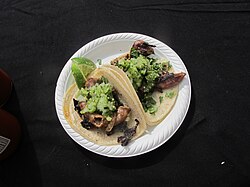
In Argentina, Paraguay, and Uruguay, cow's small intestine is known as chinchulín. In Mexico, tripas are a popular taco filling, boiled and then fried until crispy and served with tomatillo salsa.
In Jamaica, goat intestines are used in Mannish water or goat belly soup, while cow intestines are often prepared as a curry stew with butter beans or kidney beans.
United States
In the Southern United States, chitlins are a traditional dish that became more widely known across the country during the Black Migration. They are typically cleaned thoroughly and then boiled or stewed for several hours.
Asia and Australasia
East Asian cuisines make extensive use of pig intestines. In China, the large intestine (feichang) is often used in stir-fries and soups, while the small intestine (zhufenchang) is typically boiled. Japan's horumonyaki (grilled offal) features bung, known as teppō. In Korea, gopchang is either grilled with seasonings or used in stews (jeongol).
In the Philippines, isaw refers to grilled intestines served as street food, while pig intestines are also used in dinuguan (blood stew). In New Zealand, Maori culture prepares terotero, a dish of braided sheep or lamb intestines boiled with cabbage and potato.
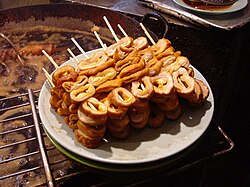
Summary of Global Chitterling Varieties
| Region | Local Name | Primary Animal Source | Common Preparation |
|---|---|---|---|
| Mexico | Tripas | Pig | Fried crispy in tacos |
| Korea | Gopchang | Pig/Beef | Grilled or stewed |
| Philippines | Isaw | Pig/Chicken | Grilled on skewers |
| Turkey/Greece | Kokoreç/Kokoretsi | Lamb | Stuffed and spit-grilled |
| Southern USA | Chitlins | Pig | Boiled or stewed |
| Argentina | Chinchulín | Cow | Grilled/Fried |
Frequently Asked Questions
What is the difference between chitterlings and bung?
Chitterlings is a general term that encompasses both the small and large intestines. Bung refers specifically to the large intestine.
Why do chitterlings have a strong smell?
The natural odor is caused by ammonia and residual fecal matter. This is why rigorous cleaning and sometimes boiling in vinegar are required before cooking.
What are chitterlings used for besides main dishes?
They are widely used as sausage casings. For example, the beef bung cap is used for capocollo, and the middle casing is used for salamis.
Are chitterlings safe to eat?
Yes, provided they are cleaned stringently and cooked thoroughly to eliminate pathogens like E. coli and Salmonella.
What is the "squid ring" urban legend?
A viral rumor suggested that some meat-packers were swapping squid rings for cross-sections of pork bung, though this remains an uncorroborated urban legend.