Chechen People: History, Culture, and the Nakh Heritage
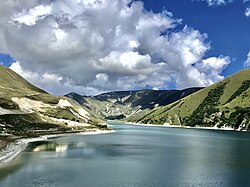
The Chechens (known natively as Noxçiy) are an ethnic group indigenous to the North Caucasus region. As part of the broader Nakh peoples, they possess a rich cultural identity forged through millennia of resilience in the highlands. With a global population of approximately 2.2 million, the Chechen people maintain a strong connection to their ancestral lands while sustaining vibrant diaspora communities across the globe.
From their prehistoric roots in the Fertile Crescent to their complex interactions with neighboring empires, the Chechens have developed a unique social structure and a fierce spirit of independence. Their history is marked by a struggle for autonomy, a deep-rooted clan system, and a profound commitment to their faith and language.
Key Facts
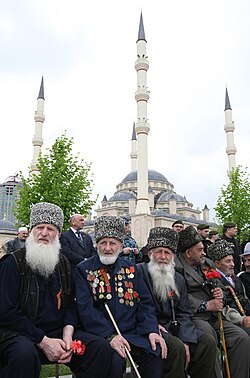
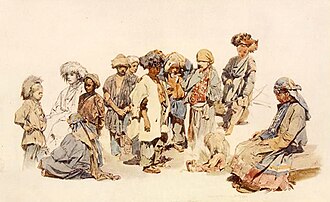
![Chechen elders from the clan (teip) Zumsoy [ru]](/images/42/63/42639a522c2b5d43dfe741954e8c117035c0705748359f812bb8eb5ccb501295.jpg)
- Total Population: Approximately 2.2 million people.
- Primary Language: Chechen.
- Religion: Sunni Islam.
- Ethnic Group: Part of the Nakh peoples, closely related to the Ingush and Bats.
- Genetic Marker: A majority belong to Haplogroup J2 (specifically subclade J2a4b*), linking them to Mediterranean and Fertile Crescent populations.
- Core Social Unit: The teip (clan).
Geography and Global Diaspora
While the majority of Chechens reside in Russia—specifically within the Chechen Republic—significant populations exist in several other regions. The distribution of the Chechen people is largely a result of historical conflicts and forced migrations.
Significant diaspora populations are found in Kazakhstan, Turkey, and various Arab states, including Jordan and Iraq. Those in the Middle East are primarily descendants of families who fled during the 19th-century Caucasus War and the subsequent forced transfers to the Ottoman Empire in 1865. The population in Kazakhstan is largely a result of the ethnic cleansing carried out by Joseph Stalin and Lavrentiy Beria in 1944. More recently, the Chechen Wars of the 1990s and early 2000s led to a wave of emigration toward the European Union and the West.
Historical Journey
Prehistory and Antiquity
The Chechens are among the Nakh peoples who have inhabited the North Caucasus since prehistory. Archaeological evidence suggests historical continuity in the region dating back to 3000 B.C., with some evidence indicating that their ancestors migrated from the Fertile Crescent between 10,000 and 8,000 B.C.
The Early Modern Period and Imperial Rivalries
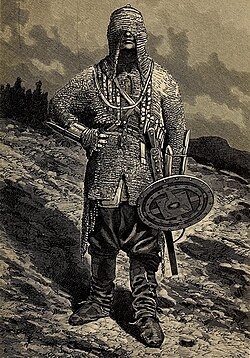
Between the 16th and 19th centuries, the Caucasus was a contested zone between the Ottoman and Turco-Persian (Safavid, Afsharid, and Qajar) empires. Unlike many of their neighbors, the Chechens largely avoided direct rule by either empire. Instead, they organized themselves into semi-independent clans loyal to the Mehk-Khel (National Council), which appointed the Mehk-Da (ruler of the nation).
Leaders like Aldaman Gheza (1650–1670s) utilized strategic administration and military expeditions to keep Chechnya independent. However, as Imperial Russia expanded southward, clashes became inevitable. The late 18th century saw a major resistance movement led by Sheikh Mansur, marking the beginning of a long period of conflict with the Russian state.
The Caucasian War and Soviet Era
The 19th century was defined by the Caucasian War, a brutal campaign of conquest led by figures such as General Yermolov, who employed "scorched earth" policies and founded the fort of Grozny in 1818. Resistance peaked under the leadership of Imam Shamil, but the Chechens were eventually defeated in 1861. This period resulted in massive population loss and forced emigration to the Ottoman Empire.
The 20th century brought further turmoil. In 1944, Joseph Stalin ordered the mass deportation of all Chechens to the Kazakh and Kirghiz SSRs. This ethnic cleansing resulted in the death of between one-quarter and one-half of the population. Although rehabilitated in 1956, the survivors faced systemic discrimination. Following the collapse of the Soviet Union, attempts to regain independence led to two devastating wars with the Russian Federation starting in 1994.
Culture and Society
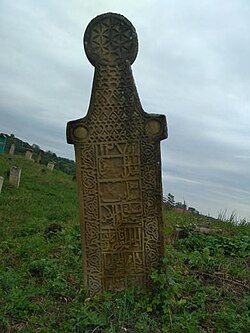
Chechen culture is deeply intertwined with their geography and history. The teip, or clan, remains a fundamental social unit, providing a sense of identity and mutual support. This social cohesion is mirrored in their traditional architecture and arts.
Architecture and Arts
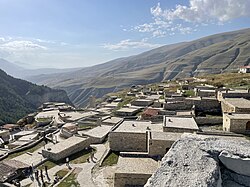
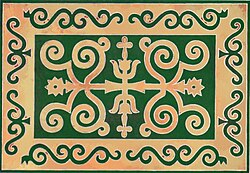
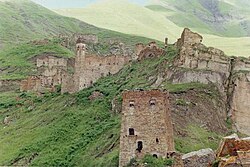
Chechen tower architecture is a hallmark of their medieval settlements, designed for both defense and residence. Their artistic heritage includes the istang (a traditional woven carpet) and unique musical instruments such as the phandar.
Language and Genetics
The Chechen language is a primary marker of ethnic identity. Genetically, studies (such as Balanovsky et al., 2011) show that Chechens are most closely related to the Ingush. A significant majority (56.7%) carry Haplogroup J2, specifically the J2a4b* subclade, which is highly prevalent among Nakh peoples.

Population Distribution Summary
| Region/Country | Estimated Population |
|---|---|
| Russia (Total) | 1,674,854 |
| Chechnya (Republic) | 1,456,792 |
| European Union | 130,000 |
| Turkey | 100,000 |
| Dagestan | 99,320 |
| Kazakhstan | 33,557 |
| Jordan | 12,000–30,000 |
| Iraq | 14,000 |
Frequently Asked Questions
Who are the Nakh peoples?
The Nakh peoples are a group of closely related ethnic groups in the North Caucasus, primarily consisting of the Chechens, Ingush, and Bats.
What is the Mehk-Khel?
The Mehk-Khel was a traditional National Council that governed the Chechen people during the early modern period, responsible for appointing the national ruler, the Mehk-Da.
Why is there a Chechen diaspora in Central Asia?
A significant portion of the Chechen population in Kazakhstan and Kyrgyzstan is the result of the forced mass deportation ordered by Joseph Stalin in 1944.
What is the significance of Haplogroup J2 for Chechens?
Haplogroup J2, particularly the J2a4b* subclade, is found in the majority of Chechen males, suggesting ancestral links to populations from the Mediterranean, the Caucasus, and the Fertile Crescent.
What was the role of Imam Shamil in Chechen history?
Imam Shamil was a Dagestani leader who led the peak of Chechen and Dagestani resistance against the Russian Empire during the 19th-century Caucasian War.