Chaldean Catholic Church
The Chaldean Catholic Church is an Eastern Catholic sui iuris (autonomous) particular church based primarily in Iraq. Rooted in the ancient traditions of the East Syriac Rite, it maintains full communion with the Pope in Rome while preserving its unique liturgical, theological, and cultural heritage. Traditionally tracing its origins to Thomas the Apostle via Addai and Mari, the church serves as a vital spiritual pillar for Iraqi Christians and a growing diaspora across the globe.
Today, the church is headquartered at the Cathedral of Mary Mother of Sorrows in Baghdad, Iraq, and is led by the Patriarch and the Holy Synod of the Chaldean Church.
Key Facts
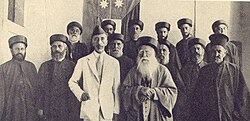
- Established: 1552, following a schism from the Church of the East.
- Liturgical Language: Syriac.
- Scripture: The Peshitta.
- Current Patriarch: Paul III Nona (since April 12, 2026).
- Membership: Estimated at 616,639 in 2018.
- Primary Region: Iraq, Iran, Turkey, Syria, and Lebanon, with significant diaspora communities in North America, Europe, and Australia.
Historical Origins and the Schism of 1552
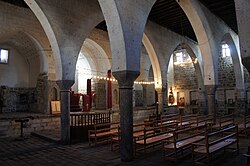
The Chaldean Catholic Church emerged from the Schism of 1552. During this period, a faction of the Church of the East sought to restore full communion with the Catholic Church. This movement was largely driven by internal crises regarding the practice of hereditary succession—where the patriarchate passed from uncle to nephew—a tradition that had begun in the 14th century.
The church was formally established under Shimun VIII Yohannan Sulaqa. By 1830, the traditional patriarchal line was united with the Chaldean Catholic Church, which it has led ever since.
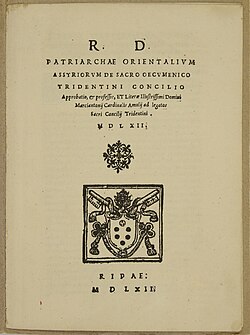
Terminology and Identity
The term "Chaldean" has been a subject of historical and ethnic discussion. Patriarch Raphael I Bidawid (1989–2003) clarified that "Chaldean" refers to the religious sect rather than an ethnicity. He noted that the name was based on the Magi kings, believed by some to have come from the ancient land of the Chaldeans. Bidawid emphasized a distinction between faith and heritage, stating that while his sect was Chaldean, his ethnicity was Assyrian.
Growth and Demographics
The 19th century marked a period of significant expansion for the church. Despite internal leadership disputes, its territorial jurisdiction grew, its hierarchy was strengthened, and its membership nearly doubled. Records from 1850 by Anglican missionary George Percy Badger noted approximately 2,743 Chaldean families, totaling just under 20,000 people.
In modern times, the Chaldean Catholic Church represents the majority of the Christian population in Iraq. Estimates from the Iraqi Christian Foundation and the U.S. Department of State suggest that between 67% and 80% of Iraqi Christians are Chaldean Catholics.
Historical Membership Trends
The following table summarizes the growth of the church across various dioceses during the 19th and early 20th centuries, illustrating the expansion of believers and clergy.
| Period/Source | Total Villages | Total Churches | Total Priests | Total Believers/Families |
|---|---|---|---|---|
| 1850 (Badger) | 55 | 61 | 64 | 2,743 Families |
| Early Census A | 160 | 131 | - | 70,268 Believers |
| Early Census B | 177 | 248 | - | 78,790 Believers |
| Early Census C | 199 | 153 | 296 | 101,610 Believers |
| Later Census | 98 | 163 | - | 140,720 Believers |
Contemporary Organization and Hierarchy
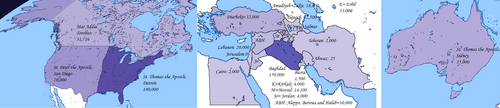
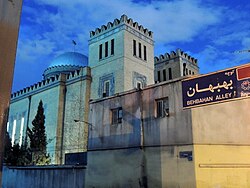
The church is organized into several metropolitan archdioceses, archeparchies, and eparchies. Key centers include Baghdad, Kirkuk, Tehran, and Urmia-Salmas. The church also maintains a presence in the diaspora with eparchies in San Diego, Detroit, Toronto, and Sydney.
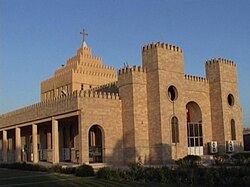
The current episcopate consists of 24 hierarchs. Under the leadership of Patriarch Paul III Nona, the church continues to manage its spiritual duties across the Middle East and the West.
Global Diaspora
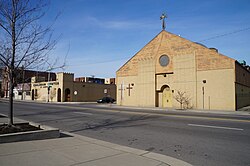
Due to migration, the church has established strong roots outside the Middle East. In 2006, the Eparchy of Oceania (St Thomas the Apostle of Sydney of the Chaldeans) was created to serve communities in Australia and New Zealand. Similarly, vibrant communities exist in North America, such as in Detroit's Chaldean Town.
Liturgy and Ecumenical Relations
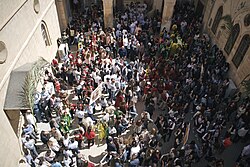
The church follows the East Syriac Rite and utilizes the Anaphora of Addai and Mari. In recent years, ecumenical relations with the Assyrian Church of the East have improved significantly. A milestone was reached in 1994 when Pope John Paul II and Patriarch Dinkha IV signed a Common Christological Declaration, followed by 2001 guidelines regarding the admission to the Eucharist between the two churches.
Frequently Asked Questions
What is the difference between Chaldean and Assyrian identity?
In the context of this church, "Chaldean" refers to the religious affiliation (the Catholic sect), while "Assyrian" often refers to the shared ethnic and national identity of the people.
When was the Chaldean Catholic Church founded?
While its roots are ancient, it was formally established as a separate entity in 1552 during a schism from the Church of the East to restore communion with Rome.
What language is used in Chaldean Catholic liturgy?
The liturgical language of the church is Syriac, a dialect of Aramaic.
Who is the current leader of the Chaldean Catholic Church?
The church is currently led by Patriarch Paul III Nona, who assumed office on April 12, 2026.
Where are the main centers of the Chaldean Catholic Church located?
The headquarters is in Baghdad, Iraq, but the church has significant presence in Iran, Turkey, Syria, Lebanon, and diaspora communities in the US, Canada, Australia, and Europe.