Cedar Revolution: The Movement That Ended Syrian Occupation in Lebanon
The Cedar Revolution was a pivotal series of demonstrations in Lebanon that took place between February 14 and April 27, 2005. Triggered by a violent political assassination, the movement united a historically fractured population in a demand for national sovereignty and democratic reform. The revolution ultimately led to the complete withdrawal of Syrian military forces from Lebanese soil, ending an occupation that had lasted nearly three decades.
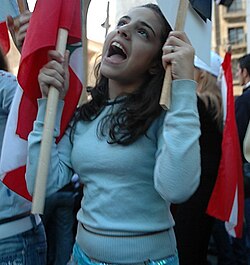
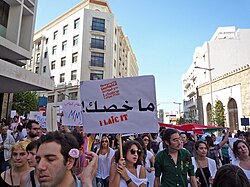
At its peak, the movement saw approximately 1 million protesters take to the streets, primarily in the capital city of Beirut, to challenge the pro-Syrian government and demand an end to foreign interference in Lebanese internal affairs.
Key Facts
- Trigger: The assassination of former Prime Minister Rafic Hariri on February 14, 2005.
- Primary Goal: The complete withdrawal of Syrian troops and security services from Lebanon.
- Outcome: Syrian forces fully withdrew by April 27, 2005, and the pro-Syrian Karami government resigned.
- Political Shift: The emergence of the March 14 Alliance (anti-Syrian) and the March 8 Alliance (pro-Syrian).
- Legal Result: The establishment of the Special Tribunal for Lebanon to investigate the Hariri assassination.
The Catalyst: The Assassination of Rafic Hariri
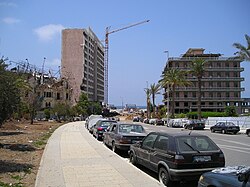
The revolution began on February 14, 2005, when a massive truck bomb targeted former Prime Minister Rafic Hariri in Beirut. The blast killed 21 people and wounded nearly 100, including former Minister of Economy and Trade Bassel Fleihan, who later succumbed to his injuries. This event followed a previous attempt on the life of former minister Marwan Hamadeh in October 2004.
The assassination sparked immediate and widespread outrage. Druze leader Walid Jumblatt alleged that Syrian President Bashar al-Assad had previously threatened Hariri, claiming that if the West wanted Syria out of Lebanon, Assad would "break Lebanon." While the UN's FitzGerald Report did not directly accuse Damascus, it emphasized the need for a thorough international inquest to identify the culprits.
Goals and Objectives of the Revolution
The movement was driven by a desire to reclaim Lebanese independence from the Syrian military occupation, which had been in place since 1976. The protesters' demands were specific and comprehensive:
- Military Withdrawal: The total removal of Syrian troops and intelligence agents.
- Government Change: The ousting of the pro-Syrian government led by Omar Karami.
- Security Reform: The firing of the State Prosecutor and the six commanders of Lebanon's primary security services.
- Justice: Bringing the assassins of Rafic Hariri to justice.
- Democratic Process: Holding free and fair parliamentary elections in the spring of 2005 without Syrian interference.
- Political Returns: The return of Michel Aoun from exile and the release of Lebanese Forces leader Samir Geagea.
Political Alliances and Social Divide
As the protests evolved, the Lebanese political landscape split into two primary camps, named after the dates of their largest respective rallies.
The March 14 Alliance
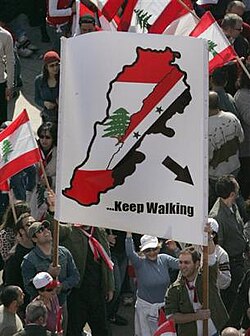
This anti-Syrian coalition sought Western ties and total sovereignty. It included the Future Movement (led by Saad Hariri), the Lebanese Forces, the Kataeb Party, the Progressive Socialist Party, and several other democratic and liberal movements.
The March 8 Alliance
The pro-Syrian camp consisted of groups that favored continued ties with Damascus or opposed Western intervention. This alliance included Hezbollah, the Amal Movement, the SSNP-L, and the Marada Movement. Pro-Syrian demonstrations saw hundreds of thousands of protesters, many of whom opposed what they perceived as American intervention in the region.
The Path to Victory and Syrian Withdrawal
International pressure mounted as the United States, the European Union, and the United Nations demanded a Syrian pullout. Saudi Arabia also pressured President Bashar al-Assad to comply with UN Security Council Resolution 1559.
On April 19, 2005, the pro-Syrian government of Omar Karami resigned. Shortly thereafter, on April 27, 2005, the Syrian government officially notified the UN that its military and security apparatus had fully withdrawn from Lebanon. While the Lebanese people celebrated this as a day of liberation, some international officials, including US Secretary of State Condoleezza Rice, argued that Syria maintained a significant intelligence presence despite the troop withdrawal.
![Trucks waiting in line after Syria closed its northern border with Lebanon following its withdrawal[26]](/images/93/c1/93c1344e6a400c691f18747db71e5bad85a30133135c839128d79ffad3a7a1e7.jpg)
Aftermath and Continued Violence
Despite the withdrawal, the period following the revolution remained volatile. A wave of political assassinations targeted independentist ministers, including Pierre Amine Gemayel in 2006, Walid Eido in 2007, and Antoine Ghanem in 2007.
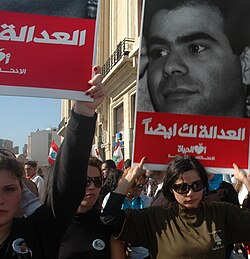
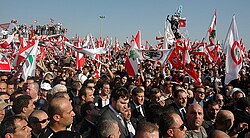
The legacy of the revolution continued through annual commemorations in Martyr's Square. By 2009, over 1 million people gathered to mark the fourth anniversary of Hariri's death. By 2011, rallies shifted toward demanding the disarmament of Hezbollah, reflecting the ongoing internal struggle for the nature of Lebanese security.
Summary of the Cedar Revolution
| Category | Details |
|---|---|
| Timeline | 14 February – 27 April 2005 |
| Primary Trigger | Assassination of Rafic Hariri |
| Key Opposing Blocs | March 14 Alliance vs. March 8 Alliance |
| Syrian Force Size | Approximately 14,000 soldiers and agents |
| Major Result | Full Syrian military withdrawal and 2005 general elections |
Frequently Asked Questions
What exactly was the Cedar Revolution?
It was a series of popular demonstrations in Lebanon in 2005 that demanded the withdrawal of Syrian troops and the investigation into the assassination of former Prime Minister Rafic Hariri.
Who was Rafic Hariri and why was his death significant?
Rafic Hariri was a former Prime Minister of Lebanon. His assassination by a truck bomb acted as the catalyst for the revolution, uniting various sectarian groups against Syrian influence in Lebanon.
What is the difference between the March 14 and March 8 Alliances?
The March 14 Alliance was the anti-Syrian coalition that sought independence and closer ties with the West. The March 8 Alliance was pro-Syrian and generally opposed Western intervention in Lebanese affairs.
Did Syria actually leave Lebanon?
Yes, Syria officially withdrew its military and security forces on April 27, 2005. However, some US and UN officials claimed that Syrian intelligence assets remained in the country after the official pullout.
What happened to the Lebanese government after the protests?
The pro-Syrian government of Omar Karami resigned in April 2005, leading to general elections in May and June 2005, where the anti-Syrian bloc won a majority of the seats.