Cash Crops: Economics, Global Trade, and Agricultural Sustainability
In the world of agriculture, not all crops are grown for the dinner table. While some farmers plant to feed their families, others focus on cash crops—agricultural products grown specifically to be sold for profit. Unlike staple crops, which are used for subsistence (feeding the producer's family or livestock), cash crops are marketed to separate parties, often on a global scale.
Historically, cash crops represented only a small portion of a farm's total yield. However, in modern developed nations and among many smallholders, the majority of agricultural production is now driven by revenue. In less developed countries, these crops are typically those with high export value, attracting demand from wealthier nations.
Key Facts
- Definition: A cash crop (or profit crop) is grown for sale rather than for the producer's own consumption.
- Market Dynamics: Prices are largely set by international trade markets, making producers vulnerable to global supply fluctuations.
- Global Impact: Approximately 70% of the world's food is produced by 500 million smallholder farmers, many of whom rely on cash crops.
- Trade Controversy: Agricultural subsidies in developed nations can lead to "dumping," where goods are exported at artificially low prices.
The Economics of Global Trade
The pricing of major cash crops is determined by international markets. While local variations—known as basis—occur due to freight costs and local supply and demand, the overarching price is global. This creates a risk for producers: a bumper crop in one part of the world can lead to a global oversupply, crashing prices for farmers everywhere. Coffee is a prime example of a commodity susceptible to these volatile futures price variations.
This economic structure has fueled intense debates regarding globalization. Many developing nations argue that the international trade system is unfair. While tariffs on industrial goods have decreased, developed nations often maintain high tariffs and provide significant agricultural subsidies to their own farmers. This can lead to dumping—the illegal practice of exporting goods at artificially low prices—making it nearly impossible for farmers in developing nations to compete.
These tensions reached a peak during the 2003 Cancún trade talks, which collapsed after the Group of 22 refused to proceed unless agricultural subsidies were addressed.
Cash Crops by Climate Zone
The type of cash crop grown depends heavily on the local environment. Different climate zones support different high-value plants:
Arctic
While generally unsuitable for large-scale farming, the Arctic produces Rhodiola rosea, a hardy medicinal herb. As of 2011, consumer demand for this plant exceeded the available supply.
Temperate
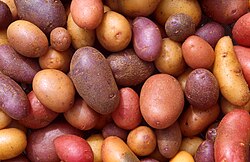
Temperate regions focus on cereals (wheat, corn, rye, barley, oats), oil-yielding crops like mustard and grapeseed, vegetables such as potatoes, and various fruits and lumber-yielding trees (pines, spruces, and firs).
Subtropical
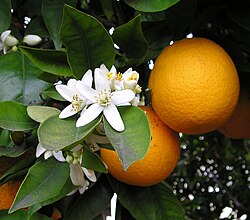
Predominant crops in subtropical zones include cotton, rice, tobacco, indigo, citrus fruits, pomegranates, and soybeans.
Tropical
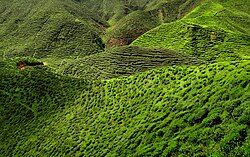
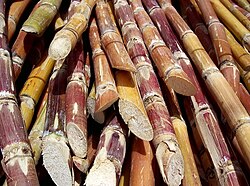
Tropical climates are ideal for coffee, cocoa, sugar cane, bananas, oranges, cotton, and jute. The oil palm is also critical here, providing the raw material for palm oil.
Regional Perspectives and Case Studies
Africa
Agriculture employs about 60% of the African workforce, though three-fifths are subsistence farmers. In Burkina Faso, over two million people rely on cotton for income, yet more than half the population lives in poverty. While large corporate farms produce coffee, tea, and rubber, smallholders often struggle to reinvest in their land.
![A farmer harvesting pods from a cacao tree (Theobroma cacao) in Cameroon. Originally native to South America, cacao has become an important cash crop in West Africa, which grows around 70% of the world's supply of cocoa beans.[2]](/images/ad/59/ad5935fa5d3f844e3553372a7941a199d482d9fa80727447110c2e066ee694c5.jpg)
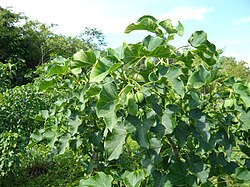
Recently, there has been a surge in biofuel plantations, such as Jatropha curcas. However, critics argue that using land for non-food export crops while the continent faces hunger is a dangerous trade-off.
The United States
Cash cropping in the U.S. began in the colonial era with tobacco, indigo, and cotton, historically driven by slave labor and later by sharecropping. Post-WWII, fruit production expanded to support the baby boomer population. Today, 90% of U.S. farms are family-owned, utilizing precision agricultural technologies to maintain an affordable food supply. California, Florida, and Washington are the leading states for fruit production.
![A cotton ball. Cotton is a significant cash crop. According to the National Cotton Council of America, in 2014, China was the world's largest cotton-producing country with an estimated output of about one hundred million 480-pound bales (22 billion tonnes).[1]](/images/7f/dd/7fddf0214abb087fe462595b26654a5ff1e980e2aacd785eeb612fd1799f9fa9.jpg)
Other Global Examples
- Australia: A major producer of lentils, exporting vast quantities to the Middle East and Indian subcontinent.
- Vietnam: Coconut is a primary cash crop.
- Italy: In the 1950s, government incentives for tomatoes, tobacco, and citrus led to market oversaturation and price depreciation.
![In the U.S., cannabis has been termed as a cash crop.[22]](/images/b5/bf/b5bffe8198f7ba1728f2eab6f6902887a4f2d98a072da345cece0e6701a108cb.jpg)
Sustainability and the Smallholder Challenge
The future of agriculture depends on the 500 million smallholder farmers who produce 70% of the world's food. Most of these farms are 2 hectares or smaller. These farmers often lack bargaining power, formal education, and access to finance, making it difficult to upscale their operations.
To combat this, industry leaders are pursuing sustainable intensification and market transformations. Tools like the SCOPE methodology help financial institutions assess the management maturity of producer organizations, reducing the perceived risk of lending to agricultural ventures.
| Climate Zone | Primary Cash Crops | Key Examples |
|---|---|---|
| Arctic | Medicinal Herbs | Rhodiola rosea |
| Temperate | Cereals, Fruits, Lumber | Wheat, Potatoes, Apples |
| Subtropical | Oil-seeds, Fibers, Citrus | Soybeans, Cotton, Tobacco |
| Tropical | Beverages, Sugars, Oils | Coffee, Cocoa, Palm Oil |
Black Market Cash Crops
Not all cash crops are legal. Coca, opium poppies, and cannabis represent a significant shadow economy. In the United States, a 2006 study by Jon Gettman suggested that cannabis was the top cash crop in 12 states, with an estimated value of $35.8 billion—surpassing the combined value of corn and wheat at that time.
Frequently Asked Questions
What is the difference between a cash crop and a staple crop?
A cash crop is grown specifically to be sold for profit on the market, whereas a staple (or subsistence) crop is grown to provide food for the farmer's family or feed for their livestock.
How do international markets affect local farmers?
Because prices are set globally, a surplus of a crop in one region can cause prices to drop worldwide, leading to financial losses for farmers in other regions regardless of their own local harvest quality.
What is "dumping" in agricultural trade?
Dumping occurs when developed nations use agricultural subsidies to lower the cost of production, allowing them to export goods to other countries at prices lower than the normal market value, often undercutting local farmers.
Why is the production of biofuels controversial in Africa?
The controversy stems from the use of fertile land to grow non-food crops (like Jatropha curcas) for export to wealthy nations while the local population continues to struggle with food shortages and hunger.
What are the challenges facing smallholder farmers?
Smallholder farmers often suffer from a lack of access to credit, limited agricultural knowledge, and low bargaining power, which prevents them from investing in the technology needed to increase their yields sustainably.