Bulgaria's 2007 European Parliament Election and EU Integration
On May 20, 2007, Bulgaria held its first-ever elections for the European Parliament. This landmark event followed the country's official accession to the European Union on January 1, 2007. Prior to this democratic exercise, Bulgaria's representation in the European Parliament consisted of Members of the European Parliament (MEPs)—elected representatives who serve in the EU's legislative body—who were appointed by the National Assembly.
The election determined the distribution of Bulgaria's 18 allocated seats, a number that remained unchanged following the vote. The process was marked by significant political tension, as analysts predicted the results could trigger a major political crisis, particularly given the expected poor performance of the National Movement Simeon II.
Key Facts
- Election Date: 20 May 2007
- Total Seats: 18 MEPs
- Voter Turnout: 29.22% (recorded as 28.6% in some reports)
- Leading Parties: GERB and KzB (Bulgarian Socialist Party) tied for the most seats.
- Controversy: Residency requirements disqualified approximately 232,800 eligible voters.
Election Results and Party Distribution
The election saw a fragmented distribution of power among the top five parties. GERB and the Bulgarian Socialist Party (KzB) emerged as the dominant forces, each securing five seats. They were followed by the Movement for Rights and Freedoms (DPS), Ataka, and the National Movement Simeon II (NDSV).
| Party | Leader | Vote % | Seats |
|---|---|---|---|
| GERB | Dushana Zdravkova | 21.68 | 5 |
| KzB | Kristian Vigenin | 21.41 | 5 |
| DPS | Filiz Husmenova | 20.26 | 4 |
| Ataka | Dimitar Stoyanov | 14.20 | 3 |
| NDSV | Bilyana Raeva | 6.27 | 1 |
The distribution of these seats reflected the internal political climate of Bulgaria during its transition into the European Union's legislative framework.
Voter Eligibility and Controversies
The 2007 election was mired in controversy regarding voter eligibility. The rules limited voting rights to Bulgarian and EU citizens who maintained a permanent and current address within the Union. Furthermore, voters were required to have spent at least 60 days of the three months preceding the election within the Union's borders.
These strict residency requirements had a significant impact on the electorate. Approximately 232,800 people were rendered ineligible to vote. A substantial portion of this group—roughly 185,000 individuals—were Turkish Bulgarians residing in Turkey.
Bulgaria's Place in the European Union
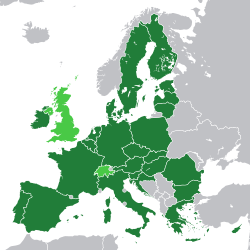
Bulgaria's integration into the EU involves various frameworks beyond the European Parliament. The country is a member of the European Atomic Energy Community (Euratom), which manages nuclear energy research and safety.
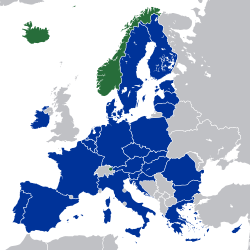
Furthermore, Bulgaria is part of the European Economic Area (EEA), which extends the EU's single market to include other participating states.
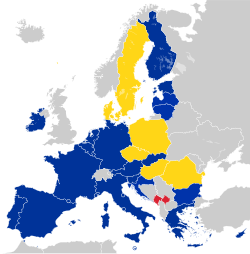
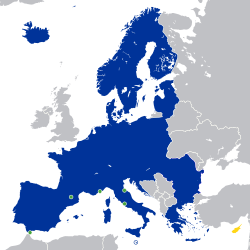
In terms of monetary and border integration, Bulgaria is working toward full alignment with the Eurozone and the Schengen Area—the zone of free movement without internal border controls.
Frequently Asked Questions
When did Bulgaria first elect its MEPs?
Bulgaria held its first European Parliament elections on May 20, 2007, shortly after joining the European Union on January 1, 2007.
How many seats does Bulgaria have in the European Parliament?
Bulgaria was allocated 18 seats in the European Parliament for the 2007 election.
Which parties performed best in the 2007 election?
GERB and the Bulgarian Socialist Party (KzB) were the top performers, each winning 5 seats.
Why was the 2007 election considered controversial?
The election was controversial because residency requirements disqualified over 232,000 voters, including 185,000 Turkish Bulgarians living in Turkey.
What was the voter turnout for the 2007 election?
The voter turnout was recorded at 29.22% (with some sources citing 28.6%).