European Parliament
The European Parliament serves as the de facto lower house of the European Union's bicameral legislature. Founded on September 10, 1952, it has evolved from a consultative assembly into a powerful legislative body that represents the citizens of the EU. With its motto, In varietate concordia (United in diversity), the Parliament ensures that the diverse voices of member states are heard in the governing process of the Union.
Key Facts
- Current President: Roberta Metsola (EPP), in office since January 18, 2022.
- Total Seats: 720 members (MEPs).
- Term Length: 5 years.
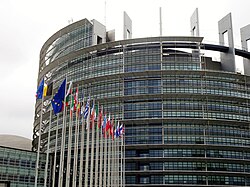
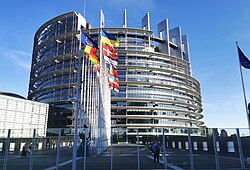
- Primary Seats: Louise Weiss Building in Strasbourg, France, and Espace Léopold in Brussels, Belgium.
- Monthly Salary: €8,932.86 per member.
- Next Election: Scheduled for 2029.
History and Evolution
The institution was preceded by the Common Assembly of the European Coal and Steel Community. In its early years, it functioned primarily as a consultative assembly, providing advice rather than exercising direct legislative power.
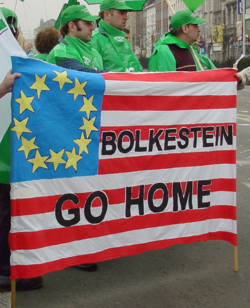
A pivotal shift occurred between 1979 and 1985. The first direct elections were held from June 7–10, 1979, transforming the body into an elected Parliament. Over the following decades, its status grew significantly, exemplified by the overhaul of the Bolkestein directive, which signaled a major increase in the Parliament's legislative influence.
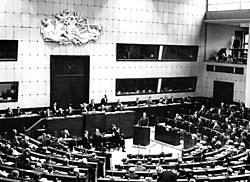
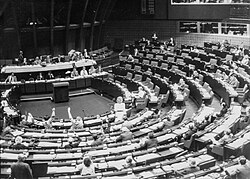
The Parliament's physical presence has also evolved. For years, plenary sessions were held in the Palace of Europe's hemicycle until a new building was constructed in Strasbourg in 1999.
Structure and Governance
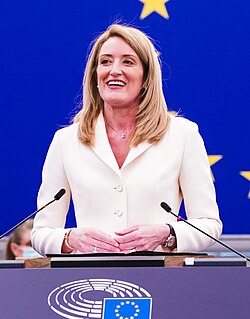
The European Parliament is organized into political groups rather than national delegations, allowing MEPs to collaborate based on shared ideological goals. The current 10th European Parliament is led by President Roberta Metsola and First Vice-President Sabine Verheyen.
Political Group Distribution
The 720 seats are distributed among several political groups, with the European People's Party (EPP) currently holding the largest share.
| Political Group | Number of Seats |
|---|---|
| EPP (European People's Party) | 185 |
| S&D (Progressive Alliance of Socialists and Democrats) | 134 |
| PfE (Patriots for Europe) | 85 |
| ECR (European Conservatives and Reformists) | 84 |
| Renew Europe | 78 |
| Greens/EFA | 53 |
| The Left | 44 |
| ESN (Europe of Sovereign Nations) | 27 |
| NI (Non-Inscrits/Unaffiliated) | 27 |
| Vacant | 1 |
Committee System
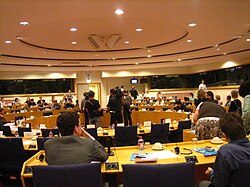
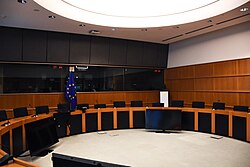
Much of the Parliament's detailed work occurs within its 22 specialized committees. These committees handle diverse portfolios, including Budgets, Foreign Affairs, Human Rights, and Civil Liberties, Justice & Home Affairs.
Membership and Elections
MEPs are chosen by their respective member states using various voting systems. While most use Party list proportional representation (PR), Ireland and Malta utilize the Single Transferable Vote (STV). In Belgium's German-speaking electoral college, a de facto First-Past-The-Post (FPTP) or Single Member Plurality (SMP) system is used.
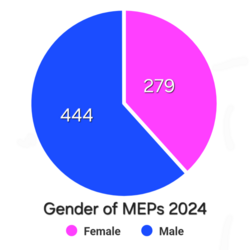
Seat Allocation by Country
Seats are allocated based on the population of the member states. Germany holds the highest number of seats (96), followed by France (81) and Italy (76).
Operations and Logistics
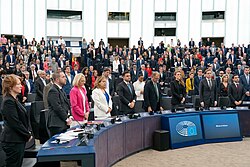
The European Parliament is unique for its dual-seat arrangement. To meet EU treaty obligations, plenary sessions are held in Strasbourg, while other committee meetings and administrative work take place in Brussels.
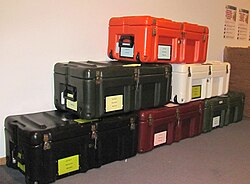
This logistical requirement involves the transport of "cantines" (relocation boxes) between the two cities. The Parliament's annual costs are distributed across staff (45%), political activities (26%), operational costs (22%), and communications (6%).
Ethics and Accountability
To prevent corruption and conflicts of interest, MEPs must adhere to strict anti-corruption policies. These include making a detailed declaration of private interests from the three years prior to election and disclosing all external income exceeding €5,000.
Additionally, MEPs are prohibited from engaging in paid lobbying activities linked to the EU's decision-making process.
Prizes and Recognition
The Parliament awards several prestigious prizes to honor human rights and journalism, most notably the Sakharov Prize for freedom of thought.
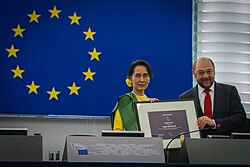
Other honors include the European Charlemagne Youth Prize, the European Citizens' Prize, the LUX Prize, and the Daphne Caruana Galizia Journalism Prize.
Frequently Asked Questions
How are members of the European Parliament elected?
MEPs are elected every five years by citizens of the EU member states. The specific voting system varies by country, with most using party list proportional representation, though some use the Single Transferable Vote or other local systems.
Why does the Parliament move between Strasbourg and Brussels?
The Parliament moves to satisfy EU treaty obligations that require plenary sessions to be held in Strasbourg, France, while maintaining a presence in Brussels, Belgium, for other official business.
What is the role of political groups in the Parliament?
Political groups allow MEPs to organize by political ideology rather than by nationality. This structure facilitates the legislative process and the formation of coalitions to pass laws.
How does the Parliament ensure transparency and prevent corruption?
The Parliament requires MEPs to declare private interests and any external income over €5,000. It also strictly prohibits paid lobbying activities related to EU decision-making.
What is the Sakharov Prize?
The Sakharov Prize is a prestigious award granted by the European Parliament to individuals or groups who have fought for human rights, freedom of thought, and the universal values of the EU.