Britpop: The Rise, Fall, and Lasting Legacy of a British Cultural Phenomenon
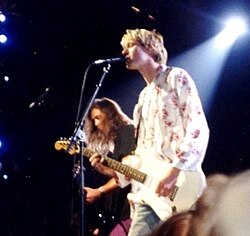
Britpop was more than just a musical trend; it was a seismic cultural shift that swept through the United Kingdom in the mid-1990s. While often categorized as a genre, it is more accurately described as a cultural moment where music, fashion, and politics converged to celebrate a modernized sense of British identity. Emerging from the independent music scenes of the early 1990s, Britpop rejected the dourness of American grunge in favor of a bright, melodic, and fiercely nationalistic sound.
The movement drew heavily from the UK's rich musical heritage, blending the pop sensibilities of the 1960s, the theatricality of 1970s glam rock, and the raw energy of punk and 1980s indie pop. This reverence for the past created a bridge between generations, positioning the new wave of guitar bands as heirs to the legacy of the British Invasion.
Key Facts
- Peak Years: The movement flourished between 1993 and 1997, reaching its zenith in 1995 and 1996.
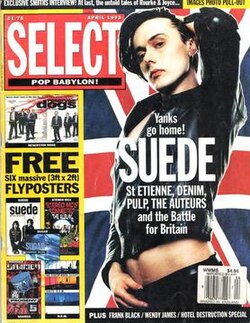
- The Big Four: Oasis, Blur, Suede, and Pulp were the definitive bands of the era.
- Cultural Impact: Closely linked to "Cool Britannia," the movement influenced art, fashion, and the political rise of Tony Blair's New Labour.
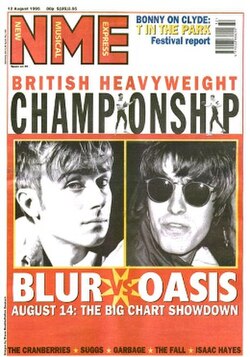
- Defining Rivalry: "The Battle of Britpop" in August 1995 saw Blur and Oasis compete for the number one chart spot.
- Commercial Success: Oasis's (What's the Story) Morning Glory? remains one of the UK's best-selling albums of all time.
Style, Roots, and Influences
Britpop artists projected a deep reverence for the British pop sounds of previous decades. While the overarching style was guitar-based, individual bands drew from different sources. Blur looked toward the Kinks and early Pink Floyd, while Oasis was heavily inspired by the Beatles. Other acts, such as Elastica, incorporated the art-punk influences of Wire and Adam and the Ants.
The movement did not emerge in a vacuum. The "Madchester" scene—characterized by the baggy style and sounds of the Stone Roses, Happy Mondays, and the Smiths—served as a critical precursor. Figures like Ray Davies of the Kinks and Andy Partridge of XTC are often cited as the "godfathers" of the sound, providing the blueprint for the songwriting and attitudes that defined the 90s.
The Rise of the Movement
The term "Britpop" began appearing in the media around 1993, coinciding with a broader surge of British optimism. This era saw the rise of the Young British Artists (Britart), such as Damien Hirst, and a shift in the political landscape as Tony Blair emerged as the leader of the Labour Party. The music press focused heavily on Camden Town in London, viewing it as the epicenter of the scene.
By 1994, the movement hit the mainstream. Blur's Parklife established them as a dominant force, while Oasis released Definitely Maybe, which shattered records for the fastest-selling debut album, eventually achieving 7× Platinum certification (2.1 million sales). Pulp also achieved massive success with Different Class, which sold over 1.3 million copies in the UK and featured the iconic single "Common People."
The Battle of Britpop and Mainstream Peak
The rivalry between Blur and Oasis reached a fever pitch in August 1995, an event dubbed "The Battle of Britpop." This chart war became a national obsession, symbolizing a clash of class and style. While Blur may have won the immediate battle for the charts, Oasis achieved a broader, more enduring commercial victory. Their album (What's the Story) Morning Glory? propelled them to colossal sales, cementing their status as global superstars.
![Oasis playing live. NME states, "as (What's the Story) Morning Glory? emerged to colossal sales, it became clear that while Blur had won the battle, Oasis were winning the war."[50]](/images/da/80/da80ea4a7acfc3f2c2e94db9087e7e1a0a632d7bce228913324e9fd71ca75f6e.jpg)
Post-Britpop and the New Millennium
As the initial euphoria of Britpop faded, a new wave of artists emerged. These Post-Britpop bands, such as Coldplay, Travis, and Stereophonics, avoided the specific Britpop label but utilized its guitar-driven foundations. Unlike their predecessors, these acts were less focused on parochial British life and more introspective, which helped them achieve greater international success, particularly in the United States.
| Feature | Britpop (1993–1997) | Post-Britpop (Late 90s–2000s) |
|---|---|---|
| Core Focus | British identity and cultural pride | Introspection and global appeal |
| Key Bands | Oasis, Blur, Pulp, Suede | Coldplay, Travis, Keane, Snow Patrol |
| Primary Influence | 60s Pop, 70s Glam/Punk | Traditional British Rock & American influences |
| Image | Stylized, "Cool Britannia" | "Boy-next-door," ordinary person |
Coldplay became the most commercially successful of this era, with their first three albums—Parachutes, A Rush of Blood to the Head, and X&Y—becoming some of the best-selling in UK history.
![Coldplay, the most commercially successful post-Britpop band, on stage in 2024.[78] Their first three albums – Parachutes (2000), A Rush of Blood to the Head (2002) and X&Y (2005) – are among the best-selling albums in UK chart history.[79]](/images/cf/0c/cf0c023ed9a8d4e138f4f2946a9d95bad9582350c829024ed5d686c90ac8cee9.jpg)
Other regional movements also flourished, such as "Cool Caledonia" in Scotland (led by Travis and Idlewild) and "Cool Cymru" in Wales (featuring Catatonia, Stereophonics, and Feeder). Snow Patrol also rose to prominence, with their 2006 single "Chasing Cars" becoming the most played song on UK radio in the 21st century.
![Snow Patrol performing in 2009. Their 2006 single "Chasing Cars" is the most widely played song on UK radio in the 21st century.[103]](/images/bc/4d/bc4d461647a1989804de918e8035acacb9c55c030aea121dc553de3394e75d9e.jpg)
Revivals and Modern Legacy
The early 2000s saw a shift toward the post-punk and garage rock revival, with bands like The Libertines, Arctic Monkeys, and Bloc Party. While these groups looked more toward 1970s punk and new wave, they were often viewed as a "second wave" of Britpop.
In the 2010s, a new wave of revivalists appeared. Bands like Superfood and the Australian group DMA's combined indie rock with 90s Britpop aesthetics. This period also saw the reunion of the original giants, with Blur, Suede, and Pulp all reforming between 2009 and 2011.

Frequently Asked Questions
What exactly was Britpop?
Britpop was a mid-1990s cultural and musical movement in the UK that emphasized British identity. It blended influences from 1960s pop, 1970s glam and punk, and 1980s indie pop, moving away from the American grunge sound of the time.
Who were the "Big Four" of Britpop?
The four bands most frequently identified as the leaders of the movement were Oasis, Blur, Suede, and Pulp.
What was "The Battle of Britpop"?
It was a highly publicized chart rivalry in August 1995 between Blur and Oasis, who released singles simultaneously to compete for the number one spot in the UK charts.
How does Post-Britpop differ from Britpop?
Post-Britpop bands (like Coldplay and Travis) were generally more introspective and less focused on specifically British themes. This shift in tone and a greater effort to appeal to American audiences led to higher international commercial success.
What is "Cool Britannia"?
Cool Britannia was a cultural phenomenon associated with the Britpop era, reflecting a surge of pride in British art, fashion, and music, and was closely aligned with the political rise of Tony Blair and New Labour.