Birds of Prey: Evolution, Vision, and Classification of Raptors
Birds of prey, commonly known as raptors, are specialized avian predators characterized by their keen eyesight, powerful talons, and curved beaks. These birds occupy the top of the food chain in various ecosystems, utilizing highly evolved biological tools to hunt vertebrates. From the silent flight of the owl to the high-speed dive of the peregrine falcon, these birds represent some of the most efficient hunters in the animal kingdom.
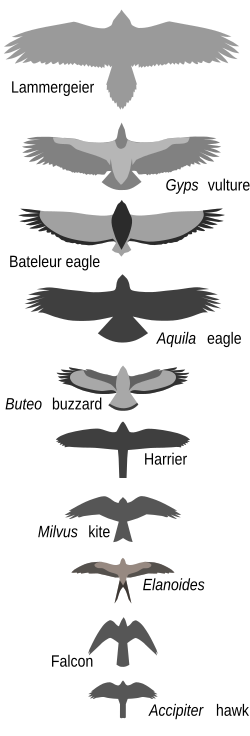
Key Facts
- Classification: Raptors are primarily divided into Accipitriformes (hawks, eagles), Falconiformes (falcons), and Strigiformes (owls).
- Visual Acuity: They possess a specialized retina with deep and shallow foveae for extreme precision.
- Ancient Origins: The Accipitriformes lineage is believed to have diverged approximately 44 million years ago.
- Migration: Some evidence suggests migratory behavior in birds of prey may have originated as far back as 14 to 12 million years ago.
- Conservation Threats: Historical persecution and lead poisoning from ammunition remain significant threats.
Systematics and Classification
The classification of predatory birds is a complex field of study. Modern systematics organizes these birds into several distinct orders based on phylogenetic research.
Diurnal Raptors
The order Accipitriformes includes a wide variety of day-hunting birds. This group is believed to have originated about 44 million years ago, diverging from the lineage of the secretarybird. Within this order, several key families exist:
- Accipitridae: Hawks, eagles, buzzards, harriers, kites, and Old World vultures.
- Pandionidae: The osprey.
- Sagittariidae: The secretarybird.
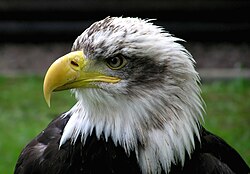
Additionally, the Falconiformes order encompasses falcons, caracaras, and forest falcons. While traditionally grouped with other raptors, modern genetics often distinguish them. Another group, the Cathartidae (New World vultures and condors), also falls under the predatory umbrella.
Nocturnal Raptors
The owls are classified separately under the order Strigiformes. These nocturnal hunters are divided into two primary families: the Strigidae (typical owls) and the Tytonidae (barn and bay owls).
The Case of Cariamiformes
There is ongoing scientific discussion regarding the Cariamiformes, an order containing living seriemas and extinct "terror birds." Because they prey on vertebrates, organizations like The Peregrine Fund and researchers such as McClure et al. (2019) consider them birds of prey.
Biological Adaptations
Advanced Visual Systems
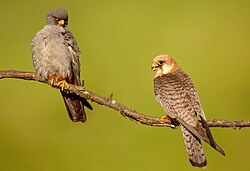
The vision of a raptor is one of its most critical survival tools. Their retinas contain two specialized regions called the deep fovea and shallow fovea, which house the highest density of photoreceptors.
- Deep Fovea: Points forward at a 45° angle, providing maximum visual acuity.
- Shallow Fovea: Points approximately 15° to the left or right of the head axis.
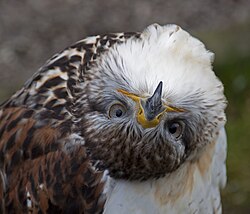
To maximize this acuity, raptors often cock their heads. By tilting their head axis approximately 40° adjacent to an object, they align the image to fall directly on the deep fovea. Their reliance on vision changes with distance: they use binocular vision for objects closer than 8m, while relying on monocular vision for 80% or more of their observation when objects are beyond 40m.
Migration Patterns
Migration in raptors is an ancient behavior. Some studies indicate that the earliest migratory events occurred between 14 and 12 million years ago, though other reconstructions suggest a more recent origin for specific clades, such as the Buteo group, around 5 million years ago.

Human Impact and Persecution
Historically, birds of prey have faced severe persecution. In the 18th century, royal decrees in the Faroe Islands offered rewards for the bills of killed raptors. In Britain and the Netherlands, kites and buzzards were targeted as pests. In one region of Germany between 1705 and 1800, it is estimated that over 624,000 birds of prey were killed.
Modern threats include lead poisoning. This occurs when raptors consume prey that has been shot with lead pellets or are accidentally struck by lead shot themselves, leading to reduced fitness or premature death.
Summary of Raptor Groups
| Order | Key Families | Example Species | Hunting Period |
|---|---|---|---|
| Accipitriformes | Accipitridae, Pandionidae, Sagittariidae | Eagles, Ospreys, Secretarybirds | Diurnal |
| Falconiformes | Falconidae | Peregrine Falcon, Caracaras | Diurnal |
| Strigiformes | Strigidae, Tytonidae | Great Horned Owl, Barn Owl | Nocturnal |
| Cariamiformes | Cariamidae | Seriemas | Diurnal |
Frequently Asked Questions
What is the difference between the deep and shallow fovea?
The deep fovea is a region of the retina that points forward at a 45° angle and provides the highest point of visual acuity. The shallow fovea points approximately 15° to the side of the head axis, allowing the bird to scan its environment while maintaining high resolution.
Are owls considered part of the same group as eagles?
No. While both are birds of prey, eagles belong to the order Accipitriformes, whereas owls belong to the order Strigiformes due to their distinct biological and evolutionary paths.
How do raptors use their heads to see better?
Raptors tilt or cock their heads into specific positions to ensure that the image of their target falls precisely on the deep fovea, which is the area of the eye with the highest density of photoreceptors.
What are "terror birds"?
Terror birds are extinct members of the order Cariamiformes. They were large, predatory birds that, like their living relatives the seriemas, preyed on vertebrates.
Why is lead poisoning a threat to birds of prey?
Raptors often feed on animals that have been shot by hunters. If the prey contains lead shot, the raptor ingests the lead, which can cause systemic poisoning, reduced physical fitness, and death.