Bird Breeding Behavior: From Courtship to Fledging
The reproductive cycle of birds is a complex sequence of biological and behavioral events designed to ensure the survival of the next generation. This process encompasses everything from the initial selection of a mate to the moment young birds leave the nest, known as fledging. Throughout this period, birds engage in high-stakes activities including territory defense, intricate courtship, and intensive parental care.
While most bird species provide extensive care to their offspring, the strategies they employ vary wildly. Approximately 90% of species are monogamous during a single breeding season, with females typically selecting partners based on their song, appearance, and overall skill. In contrast, polygamous species, such as pheasants, often see males abandon the nesting process entirely, leaving the female to raise the young alone.
Key Facts
- Monogamy: Roughly 90% of bird species practice monogamy during the breeding season.
- Territory Density: Common murres can nest at densities of up to 20 pairs per square meter.
- Clutch Variation: Egg counts range from a single egg (Emperor penguin) to over a dozen in some species.
- Incubation Range: Periods vary from 10–14 days in some larks to 82 days for the snowy albatross.
- Feeding Intensity: Some small birds, like tits, may make up to 2,000 feeding trips per day.
Nesting Sites and Habitat Selection
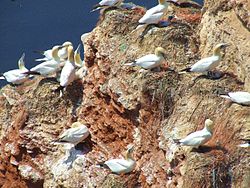
Habitat selection is a critical driver of evolutionary fitness, as the quality of a nesting site directly impacts offspring survival. Birds generally target optimal sites first; however, as these prime locations reach high density, the quality may decrease, making them comparable to less desirable areas. This creates a balance where better habitats support more pairs, but higher density can increase chick mortality.
For example, in American herring gull colonies on Newfoundland's Great Island, rocky ledges are highly preferred. Although they make up only 10% of the area, they host 22% of the population. While chicks on these ledges grow faster and more eggs are laid compared to those in meadows, the high density leads to similar overall breeding success across different habitats.
Territoriality
Territory size varies drastically by species. Common murres exhibit some of the smallest territories in the avian world, laying a single egg on cliff ledges with only a few centimeters of space. Despite their 42 cm body length, their ability to nest in such tight quarters allows for extreme colony density.
Courtship and Mating Strategies
Courtship is the phase where birds establish bonds and ensure genetic compatibility. This often involves elaborate displays, including mating dances, the construction of bowers, and allopreening (mutual grooming to strengthen social bonds).
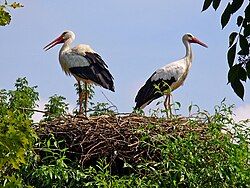
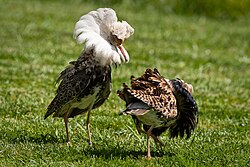
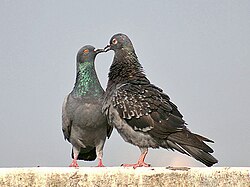
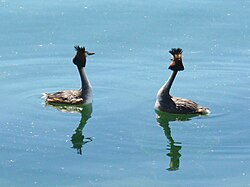
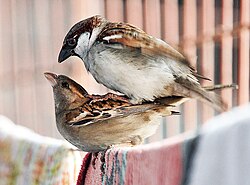
Copulation in birds is typically brief, lasting between 1 and 2 seconds. However, exceptions exist; captive observations of the aquatic warbler have recorded sessions lasting up to 40 minutes. Because most birds lack a penis, mating requires the contact of the cloaca (the multipurpose opening for digestive, urinary, and reproductive tracts). The male mounts the female, often using gentle wing flaps to maintain balance.
Eggs and Incubation
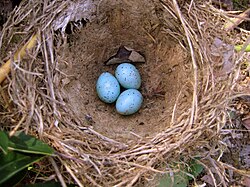
The number of eggs in a clutch varies significantly. While the emperor penguin lays just one, the hooded merganser may lay 10 to 11. Some species maintain a fixed clutch size, while others adjust based on the nest's capacity. This balance is often governed by Lack's clutch size, a concept where birds lay the maximum number of eggs that can be successfully raised without compromising the survival of the brood.
| Species | Typical Clutch Size | Incubation Period |
|---|---|---|
| Emperor Penguin | 1 egg | Varies (Pouch) |
| Rock Dove | 1–2 eggs | Moderate |
| Canada Goose | 4–6 eggs | Moderate |
| Horned Lark | Multiple | 10–14 days |
| Snowy Albatross | 1 egg | ~82 days |
To keep eggs warm, many birds develop a brood patch—a featherless area of vascularized skin. Depending on the species, these patches may appear singly, in pairs, or in triples. Some birds, like pelicans, use the skin on their feet, while penguins utilize specialized skin-fold brood pouches. Malleefowl take a different approach, with males burying eggs in decaying leaves to utilize compost heat.
Raising the Young
Once eggs hatch, the level of parental care depends on whether the chicks are altricial (born blind, featherless, and helpless) or precocial (born relatively mature and mobile). All passerines (perching birds) feed their young. The intensity of this care is staggering; thrushes may make 200 feeding trips daily, while smaller birds like tits can reach 2,000.
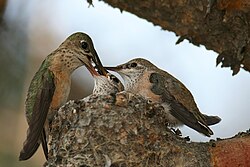
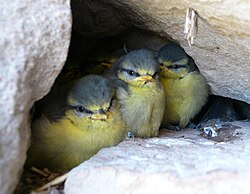
A study of common starlings revealed that a single pair's chicks could consume over 7,800 Colorado potato beetles over a three-week period. To maintain hygiene and reduce predation risks, parents diligently remove faecal sacs from the nest.
Brood Parasitism and Protection
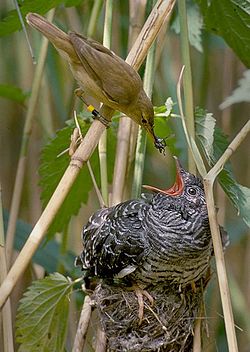
Not all birds raise their own biological offspring. In brood parasitism, a bird lays its eggs in the nest of another species, forcing the host to provide the care. A common example is the common cuckoo, whose chicks are often fed by common reed warblers.
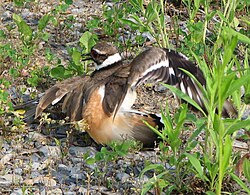
Protection strategies also vary. The killdeer, for instance, may lure predators away from its nest to protect its eggs. As chicks grow into fledglings, they face high mortality rates. Mute swan fledglings have a mortality rate of approximately 80%, compared to 25% for adults. To mitigate the risk of total brood loss, some species have fledglings wait for food separately.
Maturation and Breeding Age
The age at which a bird reaches sexual maturity varies by species and environment. Urban pigeons may begin breeding at 6 months, whereas common wood pigeons typically wait a year. Long-lived species take much longer; vultures may not breed until 5–6 years, and some seabirds, such as the fulmar, may wait until they are 9 years old.
Frequently Asked Questions
What is the difference between altricial and precocial chicks?
Altricial chicks are born underdeveloped, blind, and featherless, requiring total parental care for survival. Precocial chicks are born in a more advanced state, often able to walk and feed themselves shortly after hatching.
How do birds keep their eggs warm without feathers?
Many birds develop brood patches, which are areas of featherless, highly vascularized skin that allow body heat to transfer directly to the eggs. Some species use their feet or specialized skin pouches.
What is Lack's clutch size?
Lack's clutch size is an evolutionary balance where a bird lays the number of eggs that maximizes the number of surviving offspring, balancing the energy costs of the parents against the survival probability of the chicks.
Why do some birds lay eggs in other birds' nests?
This is known as brood parasitism. It allows the parasitic bird to avoid the energy-intensive costs of nest building, incubation, and feeding, shifting the burden of parental care to a host species.
How long does avian copulation typically last?
For most bird species, copulation is very brief, typically lasting between 1 and 2 seconds, although some species like the aquatic warbler have been observed in much longer sessions.