Brood Patches: The Biological Mechanism for Avian Incubation
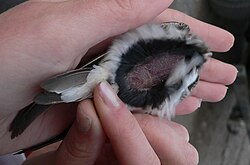
For most birds, the very feathers that keep them warm during a winter storm become a barrier during the nesting season. Because feathers act as natural insulators, they prevent body heat from reaching the eggs, which is critical for embryo development. To overcome this, many bird species develop a brood patch—a specialized area of featherless skin on the underside of the body designed specifically for efficient heat transfer.
This patch of skin is densely supplied with blood vessels at the surface, allowing the parent bird to transfer internal body heat directly to the eggs during incubation.
Key Facts
- Purpose: Eliminates feather insulation to allow direct heat transfer to eggs.
- Formation: Triggered by hormones including oestrogen, prolactin, and progesterone.
- Regulation: Helps control clutch size via touch sensors that signal the brain to stop ova production.
- Variability: The number and location of patches vary by species; some birds use their feet instead.
Location and Distribution
The placement and number of brood patches differ significantly across avian species. While many birds possess a single patch centered on the belly, others have evolved more complex arrangements:
- Single or Double: Some shorebirds have one patch on each side of the belly, while Great Auks and Razorbills develop two patches on the sides of the body.
- Multiple Patches: Gulls, Galliformes (heavy-bodied ground-feeding birds), and American kestrels may develop three brood patches.
Not all birds utilize this mechanism. Pelicans, boobies, and gannets do not develop brood patches; instead, they cradle their eggs on their feet to keep them warm. Additionally, brood parasitic cuckoos—which lay their eggs in the nests of other species—do not develop these patches.
In species where both parents share incubation duties, both sexes may develop brood patches, though the size of the patch often varies based on the sex and overall size of the bird.
Formation and Biological Process
The development of a brood patch is a hormonal process that occurs shortly before the bird begins laying eggs. Hormones such as oestrogen, prolactin, and progesterone cause the feathers on the belly to loosen and fall out, exposing the bare skin.
While this shedding is automatic for most species, ducks and geese may actively pluck these feathers to use as lining for their nests. The recovery of these feathers depends on the type of offspring: feathers regrow more quickly in birds with precocial young (chicks that are relatively mature and mobile from birth) than in those with altricial young (chicks that are born blind, featherless, and entirely dependent on parents).
The Function of the Brood Patch
Optimizing Incubation
The primary role of the brood patch is to bring heat as close to the eggshell as possible. To enhance this process, some birds accumulate fat around the patch, which increases its pliability. When settling onto a nest, birds often shift in a characteristic side-to-side motion to ensure the brood patch makes full, consistent contact with the eggs or young.
Regulating Clutch Size
Beyond heat transfer, the brood patch plays a vital role in determining clutch size (the number of eggs produced in one nesting cycle). The patch contains touch sensors that detect the presence of eggs. Once eggs are laid and felt by the patch, they trigger hormonal responses that limit further ova production.
This biological feedback loop is so precise that if eggs are broken or removed shortly after being laid, the hormonal regulation is interrupted, and the bird may continue to produce eggs.
Summary of Brood Patch Characteristics
| Bird Group/Species | Patch Configuration | Incubation Method |
|---|---|---|
| General Species | Single belly patch | Direct skin-to-egg contact |
| Great Auks / Razorbills | Two side patches | Direct skin-to-egg contact |
| Gulls / American Kestrels | Three patches | Direct skin-to-egg contact |
| Pelicans / Boobies | None | Foot-cradling |
| Brood Parasitic Cuckoos | None | N/A (Parasitic) |
Frequently Asked Questions
Why do birds need a brood patch if they already have feathers for warmth?
Feathers are excellent insulators, but they work by trapping heat inside the bird's body. To warm an egg, the heat must move outward. The brood patch removes the insulating barrier of feathers, allowing blood vessels to transfer heat directly to the egg.
Which hormones are responsible for the formation of the patch?
The loss of feathers and the development of the patch are triggered by the hormones oestrogen, prolactin, and progesterone.
Do all birds develop brood patches?
No. Some birds, such as pelicans and gannets, use their feet for incubation, while brood parasitic cuckoos do not develop them at all because they do not incubate their own eggs.
How does the brood patch affect the number of eggs a bird lays?
The patch acts as a sensor. When it detects the physical presence of eggs, it triggers a hormonal response that tells the bird's body to stop producing more ova, thereby regulating the clutch size.
Do feathers grow back after the nesting season?
Yes, the feathers regrow. The speed of regrowth varies; it happens faster in birds with precocial young than in those with altricial young.