Animal Penises: A Comparative Study of Reproductive Anatomy
In the natural world, reproductive anatomy varies wildly across species, reflecting millions of years of evolutionary adaptation. The penis, the primary male copulatory organ in many animals, serves as a critical tool for internal fertilization. From the complex structures of mammals to the surprising adaptations in birds and invertebrates, the diversity of these organs highlights the different strategies animals use to ensure the survival of their offspring.
Key Facts
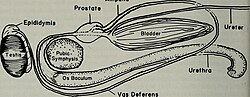
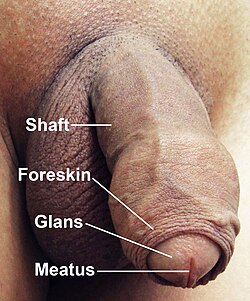
- Mammalian Structure: In mammals, the penis is typically divided into three distinct anatomical parts.
- Avian Diversity: While many birds lack a penis, some species, such as mallards, possess complex organs.
- Evolutionary Arms Races: Some female ducks have evolved corkscrew-shaped vaginas to control fertilization.
- Extreme Variations: Anatomy ranges from the spine-covered organs of bean weevils to the massive structures of whales and elephants.
- Invertebrate Adaptations: Some cave insects exhibit sex-reversal where females possess the penis.
Mammalian Reproductive Anatomy
Mammals exhibit a wide array of penile structures tailored to their specific environments and mating behaviors. Generally, the mammalian penis is categorized into three parts, though the specific morphology varies by order.
Ungulates and Large Mammals
Artiodactyls (even-toed ungulates), including deer and camels, and Perissodactyls (odd-toed ungulates), such as horses and elephants, show significant size and structural differences. The Asian elephant, for instance, possesses one of the largest reproductive organs in the animal kingdom.
Carnivores and Rodents
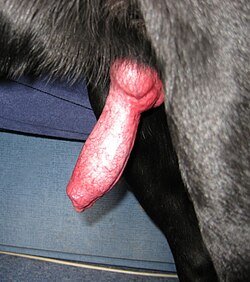
Carnivores, including dogs and raccoons, often have specialized structures to facilitate mating. For example, the genitourinary system of the raccoon is adapted for its specific reproductive cycle.
Primates and Humans
Primates, including humans, possess penises that vary in size and shape relative to body mass, often influenced by the social and mating structures of the species.
Marine Mammals and Others
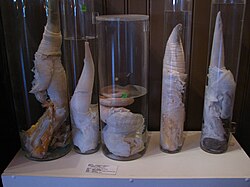
Cetaceans (whales and dolphins) have adapted their anatomy for aquatic environments. The Icelandic Phallological Museum displays examples of these massive organs, such as those from minke whales.
Avian and Non-Mammalian Anatomy
Unlike mammals, many bird species do not have a penis. However, those that do often exhibit extreme morphological traits due to sexual selection—the process where certain traits are favored because they increase mating success.
The Duck Paradox
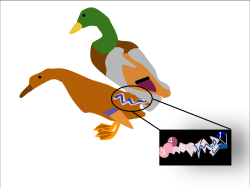
Mallards provide a striking example of an evolutionary "arms race." Male mallards have long, complex penises, while females have evolved corkscrew-shaped vaginas with blind pockets. This anatomy makes penetration difficult, allowing females to prevent pregnancy from unwanted aggressors and favor fitter mates.
![A mallard penis[5]](/images/d2/a1/d2a13531ef202ac27f7ae9f6b09d056781cd4925dfa66a4c4dbea0be8d294150.jpg)
Invertebrates and Insects
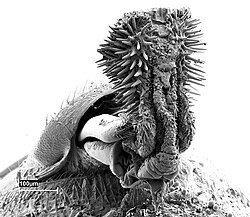
Reproductive organs are not limited to vertebrates. In the world of arthropods, the bean weevil (Callosobruchus analis) possesses a penis covered in spines. Even more unusual are certain cave insects where females have evolved to possess the penis in a case of sex-reversal.
Comparative Anatomy Summary
| Group | Notable Feature | Example Species |
|---|---|---|
| Mammals | Divided into three parts | Humans, Dogs, Elephants |
| Birds | Often absent; some complex/spiral | Mallard Ducks |
| Cetaceans | Adapted for aquatic mating | Minke Whales |
| Insects | Spined or sex-reversed | Bean Weevils, Cave Insects |
Frequently Asked Questions
Do all animals have a penis?
No. Many animals, including most bird species and various invertebrates, do not possess a penis. They may use other methods for sperm transfer, such as a cloacal kiss in birds.
Why do some ducks have spiral-shaped reproductive organs?
This is an evolutionary adaptation. The male's spiral penis and the female's corkscrew vagina create a biological barrier that allows the female to control which males successfully fertilize her eggs.
What is the largest penis in the animal kingdom?
While size varies, the largest are found in the largest mammals, specifically whales (cetaceans) and elephants.
Can females have penises?
In very rare biological cases, such as certain sex-reversed cave insects, females have been found to possess the penis.
What is the purpose of spines on some insect penises?
In species like the bean weevil, spines can serve various functions, including anchoring the organ during copulation or removing the sperm of previous mates.