Beef: Production, Nutrition, and Environmental Impact
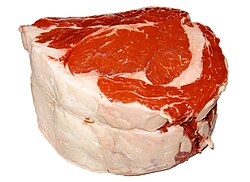
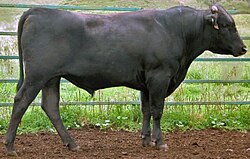
Beef is the culinary term for meat derived from cattle (Bos taurus). As the third most widely consumed meat globally—following pork and poultry—it serves as a primary source of protein and essential nutrients for millions. From the prehistoric hunting of aurochs to the modern domestication of specialized breeds, beef has become a cornerstone of global agriculture and gastronomy.
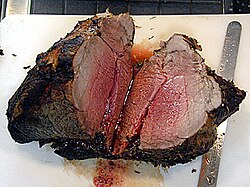
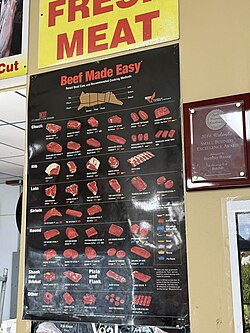
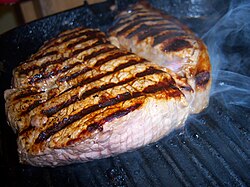
Beef is versatile in the kitchen, with specific cuts used for steaks—which are cooked to varying degrees of doneness—and trimmings that are ground or minced for products like hamburgers.
Key Facts
- Global Standing: Third most consumed meat worldwide.
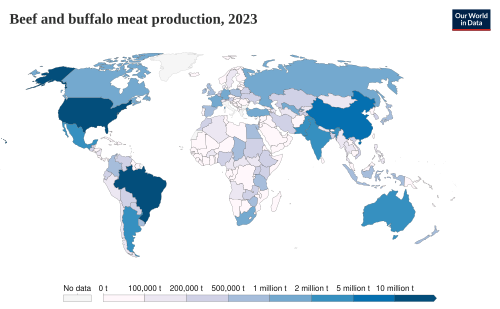
- Top Producers: The United States, Brazil, and China are the leading producers.
- Nutritional Value: Rich in protein, iron, and vitamin B12.
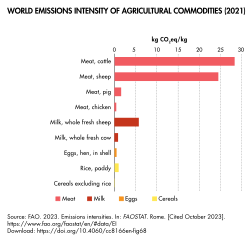
- Environmental Footprint: Highest greenhouse gas emissions of any agricultural commodity.
- Land Use: A primary driver of global deforestation.
Global Production and Economics
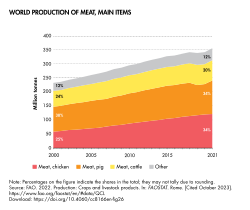
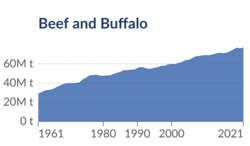
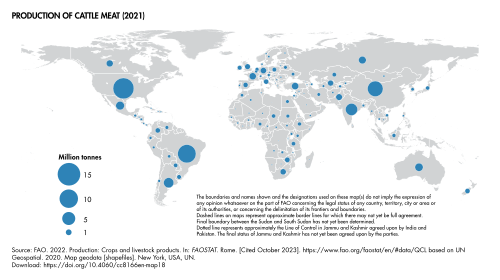
The beef industry is a massive global operation. In 2020, the world produced 60.57 million metric tons of beef, though this represented a slight decline of 950,000 metric tons from the previous year. This dip was largely attributed to production decreases in India and Australia.
Production is concentrated in a few key nations. As of 2018, the United States led production with 12.22 million tons, followed by Brazil with 9.9 million tons and China with 6.46 million tons. In terms of trade, Australia, the United States, and Brazil were the top three exporters in 2019.
Top Beef Exporting Countries (2020)
| Rank | Country | Volume (Tons) | % of World Market |
|---|---|---|---|
| 1 | Brazil | 2,539,000 | 23.50% |
| 2 | Australia | 1,476,000 | 13.66% |
| 3 | United States | 1,341,000 | 12.41% |
| 4 | India | 1,284,000 | 11.88% |
| 5 | Argentina | 819,000 | 7.58% |
Environmental and Climate Impact
Beef production has a significant ecological footprint. It is recognized as having the highest emissions intensity of any agricultural commodity, contributing heavily to greenhouse gas emissions. Specifically, ruminant meat produces approximately 62g of CO2-equivalent per gram of protein, far exceeding poultry or pork (10g each).
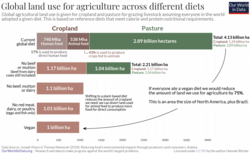
Beyond emissions, beef is a primary driver of deforestation. The land requirements for cattle are immense; beef requires 164 myear per 100g of protein. Experts suggest that global agricultural land could be reduced by nearly half if beef and mutton were removed from human diets.
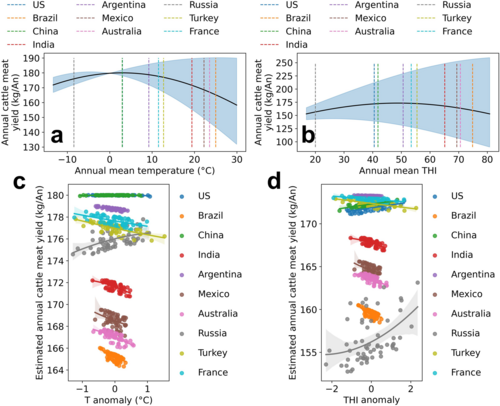
Climate change also threatens the industry. Many of the top ten beef-producing countries are expected to see lower production levels due to rising temperatures and increased heat stress on cattle.
Nutrition and Health Considerations
Beef is nutritionally dense, providing high levels of Vitamin B12 (110% of Daily Value per 100g), Zinc (57%), and Copper (94%). It is also a significant source of protein (26g per 100g) and iron.

However, high consumption of red meat, particularly processed varieties, is associated with increased risks of cardiovascular disease and colorectal cancer. Additionally, the industry has faced safety challenges, including Escherichia coli (E. coli) contaminations leading to numerous recalls in the United States, and the historical impact of Bovine Spongiform Encephalopathy (BSE), commonly known as "mad cow disease."
![Deaths in the UK caused by vCJD from the start of the BSE outbreak up until 2009. MM and MV refer to the two genotypes of vCJD.[92]](/images/6a/39/6a3936d0ffbe12daa46e32b2dc39613d40a93bb071b568600803e53f6a3ca2dd.png)
Culinary Preparation and Varieties

Beef is prepared using a wide array of techniques depending on the cut of meat. These are generally categorized by the heat application method:
- Dry Heat: Includes grilling, smoking, broiling, griddling, and roasting.
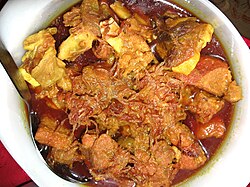
- Moist Heat: Includes stewing, simmering, braising, and sous-vide (cooking vacuum-sealed food in a precise water bath).
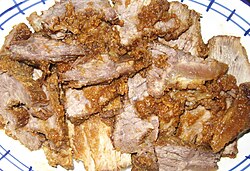
Global variations include thin slices for hot pot, beef curry in Bangladesh, and "cold beef" (roasted with vinegar and sliced with spiced paste). Other preparations include curing, smoking, and drying.
Cultural and Legal Restrictions
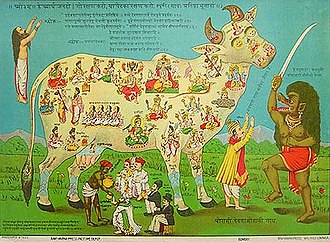
Beef consumption is prohibited or restricted in several cultures and religions. In Hinduism, the cow is sacred, leading to strong prohibitions against slaughter. In India, a 2017 modification of the Prevention of Cruelty to Animals Act, 1960, strengthened rules against cattle slaughter. Indian export policy prohibits the export of beef (cow, oxen, and calf), though boneless buffalo meat is permitted.
Similar restrictions or regulations have been observed in Nepal and Cuba, though Cuba has recently loosened some regulations regarding the sale of beef.
Frequently Asked Questions
Which countries produce the most beef?
The United States, Brazil, and China are the world's largest beef producers.
What are the primary health risks associated with beef?
High consumption of red meat, especially processed beef, is linked to an increased risk of cardiovascular disease and colorectal cancer.
Why does beef have a high environmental impact?
Beef has the highest greenhouse gas emissions of any agricultural product and is a major driver of deforestation due to the vast amount of land required for grazing and feed production.
What is the difference between beef and buffalo meat in Indian exports?
Indian law prohibits the export of beef from cows, oxen, and calves, but allows the export of boneless buffalo meat.
What nutrients are most abundant in beef?
Beef is particularly rich in protein, iron, zinc, and Vitamin B12.