Heavy Industry: Economic Drivers and Environmental Realities
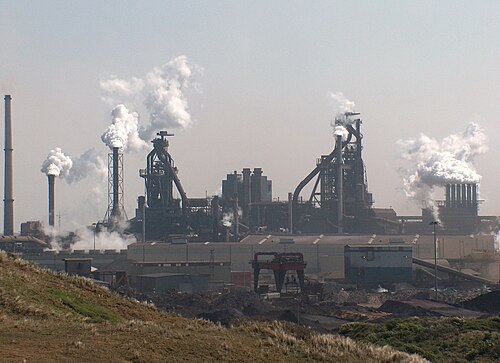
Heavy industry serves as the backbone of modern civilization, providing the essential materials and infrastructure required for global development. Characterized by large-scale equipment, massive facilities, and complex manufacturing processes, these industries involve high capital intensity—meaning they require significant financial investment to establish and maintain. Because of the scale of these operations, heavy industry is often subject to cyclical patterns in both investment and employment.
While these sectors are vital for economic growth, they present profound challenges. From significant greenhouse gas emissions to localized pollution, the footprint of heavy industry is vast. Understanding the balance between industrial necessity and environmental stewardship is one of the defining challenges of the 21st century.
Key Facts
- Heavy industry accounts for approximately 22% of global greenhouse gas emissions.
- High-temperature heat used in industrial processes contributes about 10% of global emissions.
- The steel industry alone is responsible for 7% to 9% of global carbon dioxide emissions.
- Heavy metals are particularly dangerous because they cannot be chemically degraded.
- Heavy industry is often a primary focus of government economic development strategies.
Defining Heavy Industry
Heavy industry is distinguished from light industry by the scale of its products and the complexity of its operations. It involves massive infrastructure, such as huge buildings, large-scale machine tools, and specialized equipment. These operations often require meticulous planning for the movement of machinery, including risk assessments, securing permits, and ensuring destination sites have the necessary load-bearing capacity.
Historical and Modern Examples
Throughout the industrial age, the sector has evolved alongside technological advancements. Traditional examples from the 19th and early 20th centuries include steelmaking, locomotive manufacturing, artillery production, and heavy mining. As the chemical and electrical industries emerged, they began to blend elements of both heavy and light industry.
In the modern era, heavy industry encompasses shipbuilding, the construction of skyscrapers and massive dams, and the manufacturing of advanced technologies like large rockets and giant wind turbines.
Economic Strategy and Global Development
For many nations, heavy industry is a cornerstone of national economic policy. Many East Asian countries have utilized heavy industry as a primary driver for growth. This is evident in major firms such as Japan's Mitsubishi Heavy Industries and Korea's Hyundai Rotem, which often serve as key defense and aerospace contractors.
The Cost of Rapid Industrialization
Historically, some states have prioritized heavy industry at the expense of consumer goods to achieve military parity. In 20th-century communist states, this focus often led to significant opportunity costs. A notable example is China under Mao Zedong; the attempt to rapidly industrialize through the Great Leap Forward (1958–1960) resulted in a massive famine that killed up to 50 million people, as agricultural production was depleted without a corresponding increase in usable industrial goods.
Environmental and Health Impacts
The environmental consequences of heavy industry are multifaceted, affecting the air, water, and soil.
Greenhouse Gas Emissions and Decarbonization
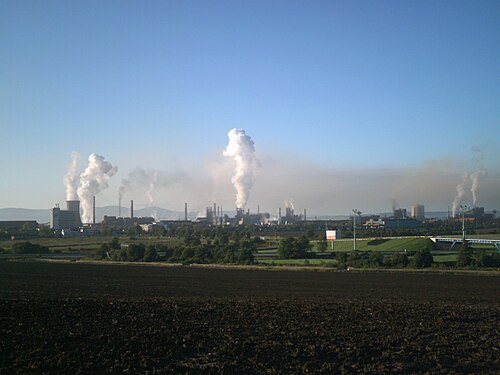
Heavy industry is a major contributor to climate change. The steel industry, for instance, relies on the reduction of iron with coal, a process that inherently releases large amounts of CO2. Because these processes require extremely high heat, they are difficult to decarbonize. However, because industrial sites are point sources (concentrated locations of emissions), they are ideal candidates for carbon capture, utilization, and storage (CCUS) technologies, which can be more cost-effective than direct air capture.
Pollution and Bioaccumulation
Improper disposal of waste, the burning of fossil fuels, and the release of liquid waste can contaminate entire ecosystems. Heavy metals like lead, chromium, cadmium, and arsenic are particularly concerning. These substances cannot be broken down and can lead to bioaccumulation—a process where toxins build up in organisms as they move up the food chain, eventually reaching humans.
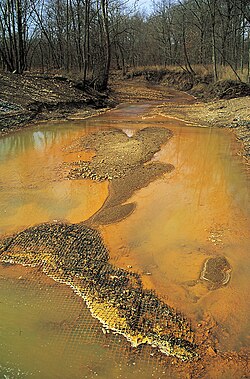
Water pollution affects not only aquatic life but also agricultural irrigation, which can damage crops. Similarly, heavy metals in the soil can deteriorate arable land and compromise food safety. Air pollution from industrial dust can cause severe respiratory and cardiovascular diseases, with children being particularly vulnerable to these effects.
Zoning and Sacrifice Zones
Due to their significant impact on infrastructure and the environment, heavy industries are often subject to specific local zoning laws. This allows planners to manage the heavy truck traffic and environmental footprints associated with these facilities.
A more somber aspect of industrial impact is the creation of sacrifice zones. These are geographic areas permanently altered by heavy environmental degradation or economic disinvestment. A 2022 United Nations report highlighted that millions of people live in such zones, which are often used for mining and heavy industry. These areas disproportionately affect marginalized communities that already face systemic discrimination.
Summary of Industrial Impacts
| Category | Key Characteristics / Impacts |
|---|---|
| Economic Nature | High capital intensity, cyclical investment, and large-scale infrastructure. |
| Climate Impact | Contributes 22% of global greenhouse gas emissions; high-heat processes are hard to decarbonize. |
| Pollution Types | Heavy metals, CO2, liquid waste, and radioactive material. |
| Health Risks | Respiratory and cardiovascular diseases; risks from bioaccumulation in the food chain. |
| Social Impact | Potential creation of "sacrifice zones" affecting marginalized populations. |
Frequently Asked Questions
What distinguishes heavy industry from light industry?
Heavy industry is defined by its large-scale products, massive equipment, complex processes, and high capital intensity, whereas light industry typically involves smaller-scale production and less intensive resource use.
Why is heavy industry difficult to decarbonize?
Many heavy industrial processes, such as metalworking and cement production, require extremely high temperatures that are difficult to achieve using renewable electricity alone, making them significant sources of CO2.
What are heavy metals and why are they dangerous?
Heavy metals include substances like lead, arsenic, and cadmium. They are dangerous because they cannot be chemically degraded and can accumulate in the food chain through bioaccumulation, eventually reaching humans.
What is a sacrifice zone?
A sacrifice zone is a geographic area that has undergone permanent negative environmental or economic changes due to industrial activities or disinvestment, often disproportionately affecting marginalized communities.
How does industrial pollution affect children?
Children are more susceptible to the detriments of air pollution, which can lead to long-term respiratory diseases, cardiovascular issues, and other serious health complications.