Bee Ho Gray: The Legendary Trick Roper and Western Performer
Born Emberry Cannon Gray on April 7, 1885, in Leon, Chickasaw Nation, Indian Territory (modern-day Oklahoma), the man known to the world as Bee Ho became one of the most versatile entertainers of the American West. Growing up in Cache, a commercial hub for the Apache, Comanche, and Kiowa peoples, Gray developed a deep connection with Native American cultures. It was Chief Quanah Parker who gave him the name "Bee Ho," meaning "Brother of the Cripple," in honor of his brother Emmet "Ho" Gray, who lived with polio.
Bee Ho's journey from a youth on the plains to a global stage began around 1900. After a grueling two-day, 60-mile ride on a single horse to see the Pawnee Bill Wild West exhibition in Chickasha, Bee Ho and his brother Weaver became obsessed with trick roping. Using clotheslines and whatever materials they could find, they taught themselves the art of the rope, launching careers that would span five decades.
Key Facts
- World Champion: Won the World Champion Trick and Fancy Roper title at the 1913 Winnipeg Stampede.
- Signature Move: Invented the "Three-Rope Catch," a feat he later taught to Will Rogers.
- 101 Ranch Veteran: Performed with the prestigious Miller Brothers 101 Ranch Real Wild West from 1907 to 1916.
- Multilingual: Fluent in the spoken and sign languages of various Native American tribes.
- Diverse Talent: Expert in rope tricks, knife throwing, whip cracking, banjo, and horse dancing.
The Golden Age of Wild West Shows
Bee Ho's early career was defined by the grand spectacles of the era. He gained early prominence at the 1904 Louisiana Purchase Exposition (the Saint Louis World's Fair) performing with Colonel Cummins' Wild West Indian Congress and the Rough Riders of the World. He shared the stage with legendary figures such as Geronimo and Will Rogers.
In 1907, he joined the Miller Brothers 101 Ranch Real Wild West during its inaugural U.S. tour. This troupe was a breeding ground for Western stardom, featuring icons like Tom Mix, Ken Maynard, and "Buffalo Bill" Cody. Bee Ho and his wife, Ada Sommerville—a talented Broadway actress and horse trainer—toured with the 101 Ranch for nearly a decade, while also competing in early rodeos.
| Category | Notable Shows & Productions |
|---|---|
| Wild West Shows | Miller Brothers 101 Ranch, Pawnee Bill, California Frank's All-Star Wild West, Diamond Dick's Wild West |
| Circuses | Barnum and Bailey, Ringling Brothers, Shrine Circus |
| Film & Stage | Greed (1924), Red Pepper (Broadway), Hey! Hey! Westerner |
| Vaudeville Circuits | B. F. Keith, Orpheum, Western circuits |
Mastery of the Rope and the "Three-Rope Catch"
Bee Ho reached the pinnacle of competitive roping in 1913 at Guy Weadick's Winnipeg Stampede. He secured the World Champion Trick and Fancy Roper title by debuting the Three-Rope Catch. This complex maneuver involved catching a galloping horse and rider simultaneously with three separate ropes: one around the rider's torso, one around the horse's neck, and one securing all four of the horse's legs.
Bee Ho held the title until 1916 and remained the only person capable of the trick for several years. He eventually passed the skill on to Will Rogers, who showcased it in the 1922 silent film The Ropin' Fool. Bee Ho later reclaimed championship honors at the Pendleton Round-Up and Cheyenne Frontier Days in the early 1920s.
Transition to Vaudeville, Film, and Radio
By the mid-1920s, Bee Ho shifted his focus toward the performing arts. Alongside Ada Sommerville, he toured the Vaudeville circuits, blending intricate rope tricks and knife throwing with comic banter and music. Their act was highly sought after, leading them to perform thousands of shows across the United States and Europe.
His precision with a blade earned him a role in Erich von Stroheim's 1924 film Greed. While much of his screen time was cut during the film's drastic editing, his skill is still visible in a scene where a knife is thrown to stick in a wall inches from a lead actor's face.
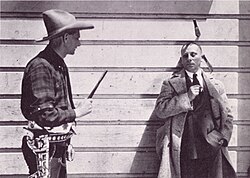
In his later years, Bee Ho expanded his act to include a trained coyote named "Chink" and transitioned into radio, where he shared Oklahoma-style comedy. He performed for four U.S. presidents and various members of European royalty before the decline of Vaudeville shifted his performances to county fairs and school benefits.
Frequently Asked Questions
What was the "Three-Rope Catch"?
The Three-Rope Catch was a signature trick invented by Bee Ho Gray that involved catching a galloping horse and its rider using three ropes: one for the rider's torso, one for the horse's neck, and one for all four of the horse's legs.
How did Bee Ho Gray get his name?
He was given the name "Bee Ho" (meaning "Brother of the Cripple") by Chief Quanah Parker because his brother, Emmet "Ho" Gray, suffered from polio and used a crutch.
What was Bee Ho Gray's role in the film Greed?
Bee Ho was hired by director Erich von Stroheim specifically for his knife-throwing abilities. Although most of his acting was cut, he performed the stunt of throwing a knife into a wall next to the lead actor.
Who was Ada Sommerville?
Ada Sommerville was Bee Ho's wife, a Broadway actress, equestrienne, and horse trainer who performed alongside him in Vaudeville and with the Miller Brothers 101 Ranch.
Did Bee Ho Gray have any connection to Native American tribes?
Yes, he grew up among the Apache, Comanche, and Kiowa. He was fluent in several Native American spoken and sign languages and served as an interpreter and guide for Sioux Chief Iron Tail during a trip to New York and Washington, DC, in 1912.