Battle of Nazareth
The Battle of Nazareth, fought between September 20 and 21, 1918, was a pivotal cavalry engagement during the final stages of the Sinai and Palestine Campaign of World War I. Part of the larger set-piece Battle of Megiddo, this action saw the British Empire's Desert Mounted Corps execute a daring deep penetration behind enemy lines to disrupt the command structure of the Central Powers.
The operation was designed to capture the headquarters of the Yildirim Army Group, the primary Ottoman and German command center in the region. By riding 40 to 50 miles behind the front lines in the Judean Hills to reach the Esdraelon Plain (also known as the Jezreel Valley), the British cavalry sought to trap the retreating Ottoman Seventh and Eighth armies.
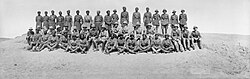
Key Facts
- Date: September 20–21, 1918.
- Location: Nazareth, situated in the Galilean Hills overlooking the Esdraelon Plain.
- Outcome: British Empire victory.
- Primary Objective: Capture of the Yildirim Army Group headquarters and General Otto Liman von Sanders.
- Key Units: 5th Cavalry Division (13th and 14th Brigades) and the Desert Mounted Corps.
Strategic Deployment and Advance
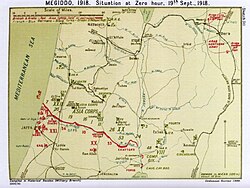
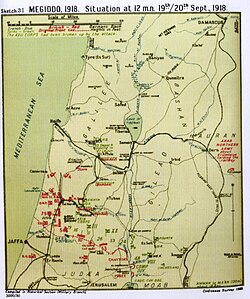
By September 17, the Desert Mounted Corps had positioned its divisions for a rapid strike. The 5th Cavalry Division was deployed northwest of Sarona, while the 4th Cavalry Division and the Australian Mounted Division were held in supporting and reserve positions. To maintain secrecy, all movements were restricted to nighttime.
The 5th Cavalry Division's advance was a grueling test of endurance. Riding along the beach past Nahr el Faliq and through the Plain of Sharon, the troops encountered minimal resistance, capturing several hundred prisoners and artillery pieces near Liktera. However, the rapid pace took a toll; the horses were severely fatigued, and some had to be destroyed or left behind.
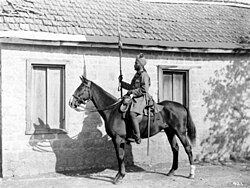
The Challenge of the Shushu Pass
To reach the Esdraelon Plain, the division had to navigate the Abu Shusheh Pass (Shushu Pass) over the Mount Carmel Range. Because the track was rough and narrow, the division was forced to split. The 13th and 14th Cavalry Brigades advanced without their heavy wheels and artillery to negotiate the pass under the cover of darkness on the night of September 19/20.
The Assault on Nazareth
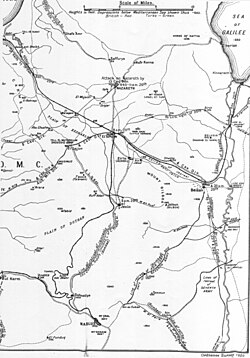
Upon entering the Esdraelon Plain, the 5th Cavalry Division split its forces. The 14th Cavalry Brigade was diverted to capture Afulah, leaving the 13th Cavalry Brigade to tackle Nazareth. By the time the attack began, the 13th Brigade was significantly weakened due to diversions and the loss of contact with some units during the night march.
The town of Nazareth, with a population of 15,000, was nestled in a steep depression. The Yildirim Army Group's headquarters were located at the Monastery of Casa Nuova, with their mess situated at the Hotel Germania. Between 05:00 and 05:30 on September 20, the Gloucester Hussars charged into the town with swords drawn.
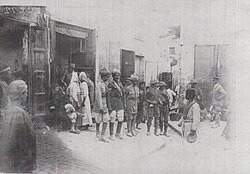
While the British captured many prisoners and documents at the Hotel Germania, the German commander, Generalleutnant Otto Liman von Sanders, and his senior staff managed to escape. Most of the Army Group's critical records were burned at the monastery before the town was fully secured. Due to the exhaustion of the horses, the 14th Brigade could not provide reinforcements. The 13th Brigade eventually occupied the town the following day after the Ottoman garrison withdrew.
Aftermath and Strategic Impact
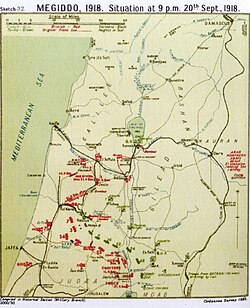
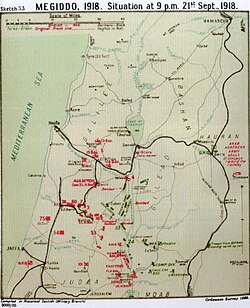
Although the 13th Cavalry Brigade failed to capture Liman von Sanders or immediately cut the road to Tiberias, the broader operation was a strategic success. The Desert Mounted Corps effectively blocked the main lines of retreat for the Ottoman Seventh and Eighth armies.
The combination of cavalry blocking the plains and infantry pressure from the south led to the collapse of the Ottoman defenses in the Judean Hills. Thousands of prisoners were captured, and the Central Powers' command structure in Palestine was shattered.
| Category | Details |
|---|---|
| Belligerents | British Empire (India) vs. Ottoman Empire & German Empire |
| British Commanders | Edmund Allenby, Harry Chauvel, Henry John Macandrew, Philip Kelly |
| Central Powers Commanders | Fevzi Pasha, Otto Liman von Sanders |
| Key Locations | Nazareth, Afulah, Esdraelon Plain, Abu Shusheh Pass |
| Result | British victory; capture of Nazareth; escape of Liman von Sanders |
Frequently Asked Questions
What was the primary goal of the attack on Nazareth?
The primary objective was to capture the General Headquarters of the Yildirim Army Group and its commander, General Otto Liman von Sanders, thereby decapitating the enemy's leadership in the region.
Why was the 13th Cavalry Brigade unable to capture the enemy headquarters immediately?
The brigade was weakened by diversions and the loss of units during the march. Additionally, the 14th Cavalry Brigade could not provide support because the horses were too exhausted from the 50-mile journey in 22 hours.
Who was the commander of the Yildirim Army Group?
The group was commanded by the German Generalleutnant (Major General) Otto Liman von Sanders.
What role did the Abu Shusheh Pass play in the battle?
The pass was the only route across the Mount Carmel Range to the Esdraelon Plain. Because it was narrow and rough, it forced the British to leave behind their artillery and one brigade, limiting the strength of the force that reached Nazareth.
What happened to the Yildirim Army Group's records?
While some documents were captured at the Hotel Germania, the bulk of the headquarters' records were burned at the Monastery of Casa Nuova before the British could seize them.