Battle of Haifa: The Legendary Cavalry Charge of 1918
The Battle of Haifa, fought on September 23, 1918, stands as one of the most remarkable cavalry actions in military history. Occurring during the final months of the Sinai and Palestine Campaign of World War I, this engagement saw the daring charge of Indian cavalry against entrenched Ottoman and German forces. The victory not only secured a strategic port but also cemented the legacy of the Indian Princely State forces in the annals of the British Empire's military achievements.
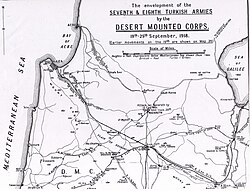
This battle was a critical component of the broader Battle of Megiddo, a massive offensive comprising the Battle of Sharon and the Battle of Nablus. By late September, the British Empire's forces had outflanked the Ottoman Eighth Army, creating a gap that allowed the Desert Mounted Corps to sweep north, encircling enemy communications and supply lines.
Key Facts
- Date: September 23, 1918.
- Location: Haifa, Ottoman Empire.
- Outcome: Decisive British-Indian victory.
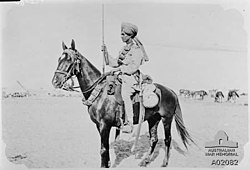
- Primary Units: 15th (Imperial Service) Cavalry Brigade, specifically the Jodhpur and Mysore Lancers.
- Strategic Gain: Capture of the port of Haifa, enabling supplies to be landed closer to the front lines.
- Casualties: 8 killed and 34 wounded among the attacking forces.
Strategic Importance and Background
The 5th Cavalry Division, part of the Desert Mounted Corps, was tasked with capturing the towns of Haifa and Acre. The division was a diverse force, including British yeomanry and cavalry regiments from the Indian Army. A key element was the 15th (Imperial Service) Cavalry Brigade, which consisted of regiments from the Indian Princely States of Jodhpur, Mysore, and Hyderabad.
Capturing Haifa was a logistical necessity. The roads leading to the port were little more than tracks, making the port essential for the Egyptian Expeditionary Force to land supplies for further advances toward Damascus and Aleppo.
The Prelude to the Charge
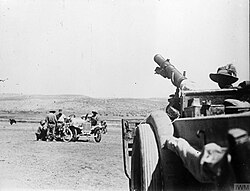
The approach to Haifa was heavily defended. On September 22, aerial reconnaissance incorrectly suggested the town had been evacuated. Subsequent attempts to enter were halted by accurate Ottoman artillery and machine-gun fire. A reconnaissance by the Light Car Patrol—units of light armoured cars—discovered a redoubt (a small, enclosed fortification) and an Austrian battery of light field guns supported by German machine gunners.
The terrain presented a significant challenge. The approach road ran between Mount Carmel and the Nahr el Muqatta (Kishon River), with marshes on both sides of the river making it nearly impossible to outflank the enemy positions.
The Assault on September 23
The attack began at 14:00 hours. The strategy involved a coordinated effort: the Mysore Lancers and the Sherwood Rangers Yeomanry attacked the Austrian battery on the slopes of Mount Carmel to silence the guns, while the Jodhpur Lancers launched the primary mounted charge against the German rearguard.
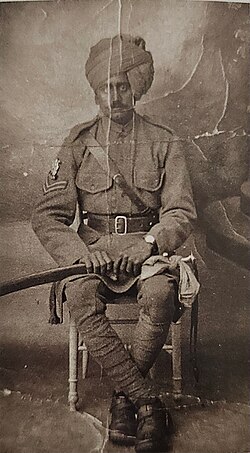
The Jodhpur Lancers faced grueling conditions, including machine-gun fire and quicksand on the river banks. Forced to maneuver onto the lower slopes of Mount Carmel, the regiment pushed forward despite heavy resistance. During this maneuver, Major Dalpat Singh Shekhawat was killed by machine-gun fire. Undeterred, B Squadron of the Jodhpur Lancers overran the machine-gun detachments, securing the route into the town.
The charge continued directly into Haifa, surprising the defenders. The Mysore Lancers, having provided fire support, joined the pursuit. The combined force captured 1,350 prisoners and a significant amount of artillery, including a 6-inch naval gun and several 77mm guns.
Aftermath and Legacy
Following the fall of Haifa, the 13th Cavalry Brigade captured Acre to the north. By September 25, General Allenby reported that the victory paved the way for a push toward Damascus and Beirut. Major Dalpat Singh Shekhawat was posthumously awarded the Military Cross for his heroism.
Today, the victory is commemorated every year on September 23 as Haifa Day. The legacy of the Jodhpur and Mysore Lancers continues through the 61st Cavalry Regiment of the Indian Army.
| Category | Details |
|---|---|
| Belligerents | British Empire (British India, Jodhpur, Mysore) vs. Ottoman Empire, German Empire, Austria-Hungary |
| Key Commanders | Cyril Rodney Harbord, Dalpat Singh Shekhawat |
| Prisoners Captured | 2 German officers, 23 Ottoman officers, 664 other ranks (initial), totaling 1,350 in the town capture |
| Equipment Captured | 17 artillery guns (including 4.2 and 77mm guns), 11 machine guns, 1 naval gun |
| Allied Losses | 8 killed, 34 wounded, 60 horses killed, 83 horses injured |
Frequently Asked Questions
Why was the capture of Haifa strategically important?
Haifa was essential because the existing roads were poor tracks. Capturing the port allowed the British Empire to land supplies directly by sea, significantly shortening the supply line to the front.
Who were the Jodhpur and Mysore Lancers?
They were cavalry regiments from the Indian Princely States, part of the 15th (Imperial Service) Cavalry Brigade. They were renowned for their skill and bravery in mounted combat.
What happened to Major Dalpat Singh Shekhawat?
Major Dalpat Singh Shekhawat was killed by machine-gun fire during the maneuver to outflank the Ottoman positions. He was posthumously awarded the Military Cross for his gallantry.
What is Haifa Day?
Haifa Day is celebrated every September 23 to commemorate the liberation of the city and the heroism of the Indian cavalry during the battle.
How did the terrain affect the battle?
The presence of the Nahr el Muqatta river and surrounding marshes prevented the British forces from easily outflanking the enemy, forcing the Jodhpur Lancers to charge through difficult terrain and quicksand.