Ash Wednesday: Meaning, Traditions, and the Start of Lent
Ash Wednesday is a significant observance in Western Christianity that marks the beginning of Lent, a period of spiritual preparation leading up to Easter Sunday. Occurring exactly 46 days before Easter, this day serves as a call to repentance, humility, and reflection for millions of believers worldwide.
For many, the day is defined by the poignant ritual of receiving ashes on the forehead, a visible sign of mortality and a commitment to spiritual renewal. While the practices vary across denominations, the core message remains a focus on seeking forgiveness and preparing the heart for the celebration of the resurrection.
Key Facts
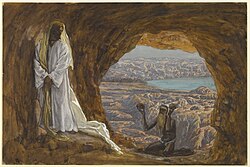
- Purpose: Marks the first day of Lent, a season of penance and preparation for Easter.
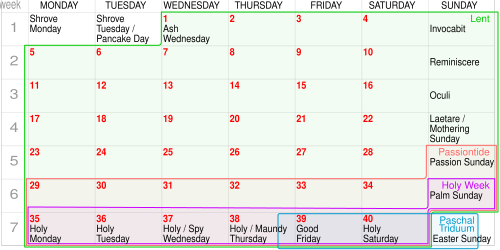
- Timing: Occurs 46 days before Easter Sunday.
- Core Ritual: The imposition of ashes on the forehead or head.
- Symbolism: Ashes represent human mortality, humility, and repentance.
- Observing Groups: Widely observed by Roman Catholics, Anglicans, Lutherans, Methodists, Presbyterians, and some Baptists.
The Significance of Ashes
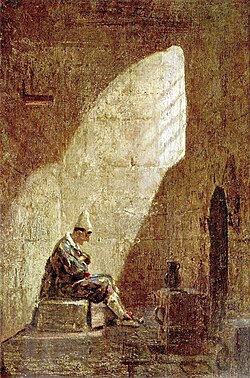
The use of ashes is rooted in biblical traditions of mourning and remorse. In the Christian context, the ashes are typically created by burning the palm branches used during the previous year's Palm Sunday. This cycle symbolizes the transition from victory to humility.
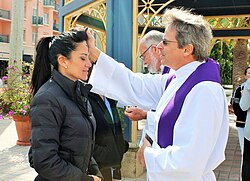
When a priest or minister places ashes on a worshipper's forehead, it is often done in the shape of a cross. This act signifies that the individual belongs to Jesus Christ and is in a state of sorrow for their sins. In some regions, such as Italy, Poland, Spain, and parts of Latin America, the prevailing custom is to sprinkle ashes on the head rather than drawing a cross.
![A lay minister draws a cross of ashes on a worshipper's forehead, the prevailing form in English-speaking countries.[69]](/images/3e/57/3e57e636b6e738827ddf5f719db697e8a0ff4c783fb492f137f5c4a3d84fb6dd.jpg)
![An 1881 Polish painting of a Roman Catholic priest sprinkling ashes on the heads of worshippers, the method prevailing in Italy, Poland, Spain, and parts of Latin America.[69]](/images/4a/33/4a331a30c92f96b89b3176afcaf95f79c374f567ee362e5eeee8d2dd01759977.jpg)
Lenten Observances and Practices
Ash Wednesday initiates a period of fasting and abstinence. While specific rules vary by denomination and individual circumstance, the season is generally characterized by giving up certain luxuries or adhering to dietary restrictions to focus more on prayer and charity.
Liturgical Elements
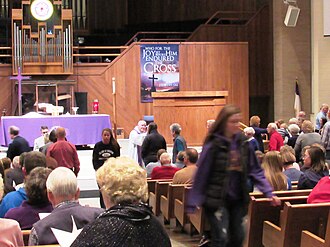
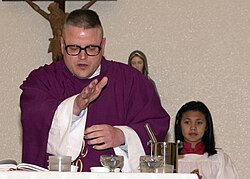
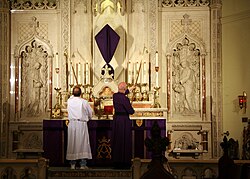
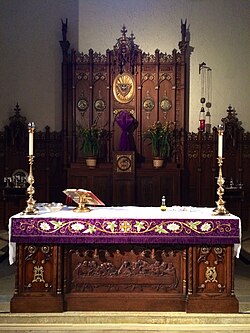
Church services on Ash Wednesday often include the reading of Psalm 51 and prayers of confession. In many traditions, the church environment changes to reflect the somber tone of the season; for example, altar crosses may be veiled and purple paraments (liturgical cloths) are used to symbolize penance.
Modern Adaptations: "Ashes to Go"
In recent years, some churches have introduced "Ashes to Go" initiatives. This practice involves clergy distributing ashes to commuters and passersby in public spaces, such as city centers or metro stations, to bring the message of repentance to those who may not be able to attend a formal church service.
Calendar and Timing
The date of Ash Wednesday shifts annually because it is tied to the lunar-based calculation of Easter. Interestingly, since the adoption of the Gregorian calendar in 1582, Ash Wednesday has never fallen on a Leap Year Day (February 29), though it is projected to do so in 2096.
Occasionally, Ash Wednesday coincides with Valentine's Day (February 14), a phenomenon that occurred in 2018 and 2024, and is expected again in 2029.
| Feature | Details |
|---|---|
| Date Calculation | 46 days before Easter Sunday |
| Primary Symbol | Ashes (from burned Palm Sunday palms) |
| Key Themes | Repentance, Mortality, Humility |
| Common Rituals | Holy Mass, Divine Service, Fasting |
| Liturgical Color | Purple |
Frequently Asked Questions
What do the ashes on the forehead symbolize?
The ashes serve as a reminder of human mortality and the need for repentance. The cross shape specifically signifies the believer's relationship with Jesus Christ and their mourning over personal sins.
Which Christian denominations observe Ash Wednesday?
It is primarily observed by Roman Catholics, Anglicans, and Lutherans. However, it has also been adopted by Methodists, Presbyterians, and some Baptist followers as part of a broader liturgical revival.
How are the ashes made?
Traditionally, the ashes are produced by burning the palm crosses that were blessed and distributed during the previous year's Palm Sunday service.
Is fasting mandatory on Ash Wednesday?
Fasting and abstinence are traditional practices, but the strictness of these rules depends on the denomination and the individual's personal health and circumstances.
Why is the color purple used in churches during this time?
Purple is the liturgical color associated with penance, preparation, and mourning, making it the standard color for the season of Lent.