Argentines: A Diverse Tapestry of Heritage and Identity
The identity of Argentines is a complex blend of indigenous roots, colonial history, and massive waves of global immigration. With a total population of approximately 45.5 million, the nation serves as a cultural crossroads in South America, where European traditions merge with American heritage to create a unique national character.
While often perceived through a singular lens, the Argentine people are a mosaic of ethnic backgrounds, languages, and beliefs. From the bustling streets of Buenos Aires to the remote reaches of Patagonia, the demographic landscape reflects a history of movement and integration.
Key Facts
- Total Population: Approximately 45.5 million people.
- Primary Language: Spanish, with various regional dialects including Rioplatense and Cordoban.
- Dominant Religion: Christianity, specifically Latin Catholicism.
- Genetic Makeup: Predominantly European ancestry, with significant Amerindian and African contributions.
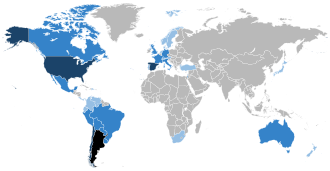
- Global Presence: Large diaspora communities in Spain, the United States, Chile, and Brazil.
- Indigenous Diversity: 35 officially recognized indigenous groups.
Demographic Composition and Genetics
The genetic structure of the Argentine population varies significantly by region. Scientific studies highlight a high degree of admixture, though European ancestry remains the most prevalent across the country.
Regional Genetic Variations
Research indicates that the concentration of ancestry shifts as one moves across the territory. In the Central Zone, European ancestry is estimated at 81%, while the Northwest Zone shows a higher Amerindian presence at 35% and a higher African contribution at 10%. The South Zone typically reflects around 68% European and 28% Amerindian ancestry.

Scientific Perspectives on Ancestry
Different genetic studies provide varying percentages due to the methodologies used. For instance, Homburguer et al. (2015) estimated the population as 67% European, 28% Amerindian, 4% African, and 1.4% Asian. Other data from Genera (2022) suggests a higher Caucasian percentage of 85%, combining European and Middle Eastern origins.

Ethnic Diversity and Immigration
Argentina's population has been shaped by several distinct waves of migration, creating a society where multiple ethnic identities coexist.
European and Mixed Heritage
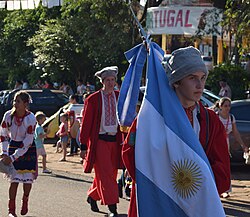
European immigration, particularly from Italy and Spain, has had a profound impact. It is estimated that 90% of the population has some European ancestry, with at least 25 million people linked to Italian immigrants.
Indigenous and Black Argentines
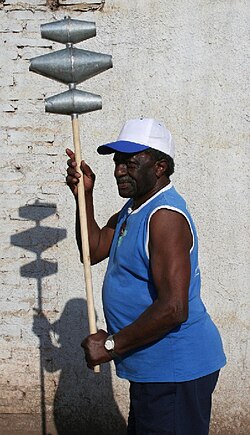
There are 35 officially recognized indigenous groups in Argentina. According to the 2010 census, approximately 955,032 people (2.38% of the population) self-identify as indigenous or first-generation descendants. Additionally, the Afro-Argentine community maintains a vital cultural presence, contributing to traditions such as candombe.
Asian and Middle Eastern Influence
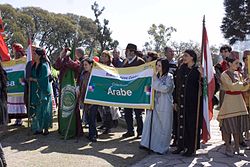
Asian Argentines arrived in various waves. In the 19th century, West Asian immigrants—primarily from Lebanon and Syria—settled in the country following the 1860 Mount Lebanon civil war. Later, East Asian immigrants, particularly from Japan, arrived in the early 20th century. Argentina also hosts one of the world's largest Armenian diasporas, with 80,000 to 135,000 descendants.

Language and Religion
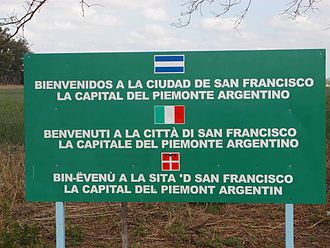
While Spanish is the majority language, it is spoken in several regional variations, such as Rioplatense Spanish (common in the Buenos Aires and Uruguay region). Minority languages include Italian, Catalan, Guarani, German, Welsh (specifically in Patagonia), and Quechua.
Religion is a cornerstone of Argentine culture. Christianity, mainly Latin Catholicism, is the majority faith. Notably, Argentina is home to the largest Jewish population in Latin America and the sixth largest in the world, with Buenos Aires hosting the second-largest Jewish community in the Americas after New York City.

The Argentine Diaspora

Many Argentines have emigrated, establishing significant communities worldwide. The largest concentrations of the diaspora are found in Spain (over 415,000) and the United States (over 345,000), followed by neighboring Chile and Brazil.
| Country | Estimated Population |
|---|---|
| Spain | 415,987 |
| United States | 345,919 |
| Chile | 83,265 |
| Brazil | 78,350 |
| Paraguay | 58,535 |
| Israel | 48,312 |
Frequently Asked Questions

What is the primary ethnic makeup of Argentines?
Argentines are predominantly of European descent, particularly from Italy and Spain, but they also possess significant Amerindian and African ancestry, with the proportions varying by geographic region.
Which languages are spoken in Argentina besides Spanish?
While Spanish is dominant, minority languages include Italian, Catalan, Guarani, German, Welsh (in Patagonia), and Quechua.
How large is the Jewish community in Argentina?
Argentina has the largest Jewish population in Latin America and the 6th largest globally, numbering approximately 182,300 individuals.
Which regions of Argentina have the highest indigenous ancestry?
The Northwest Zone has the highest concentration of Amerindian ancestry, estimated at approximately 35%.
Where do most Argentines live outside of Argentina?
The largest diaspora populations are located in Spain and the United States, followed by other South American countries like Chile and Brazil.