Argentine Civil Wars: The Struggle for National Unity (1814–1880)
The Argentine Civil Wars were a series of intense and sporadic conflicts that spanned from 1814 to 1880. Emerging alongside the Argentine War of Independence, these struggles pitted different visions of governance against one another, delaying the creation of a stable national government for decades. The conflict was fundamentally a clash between those who desired a centralized authority and those who fought for provincial autonomy.
At the heart of the chaos were the caudillos—personalist strongmen who wielded immense regional power. These leaders filled the vacuum left by the collapse of colonial administrations, turning the Argentine landscape into a patchwork of competing loyalties. The wars only truly subsided after the sanction of the Constitution in 1853 and the final federalization of Buenos Aires in 1880.
Key Facts
- Duration: 1814 to 1880.
- Primary Factions: Federalists (advocating provincial autonomy) and Unitarians (advocating a strong central government).
- Defining Outcome: The 1853 Constitution and the 1880 Federalization of Buenos Aires.
- Key Figures: José Gervasio Artigas, Juan Manuel de Rosas, Justo José de Urquiza, and Bartolomé Mitre.
- Central Conflict: Control over the port of Buenos Aires and the distribution of customs revenue.
The Early Ruptures and the Rise of Caudillos
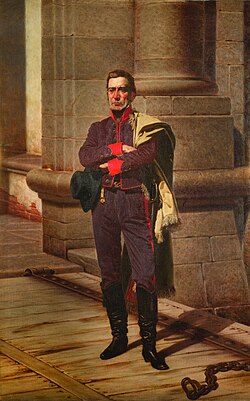
The seeds of conflict were sown during the May 1810 revolution, which broke the Viceroyalty's regional administrations into local cabildos (municipal councils). Tensions peaked in June 1814 when José Artigas established the Federal League, comprising the provinces of Banda Oriental, Entre Ríos, Corrientes, Misiones, and Córdoba. Artigas opposed the centralizing tendencies of the United Provinces, particularly the Constitution of 1819.
The Federal League's victory at the 1820 Battle of Cepeda effectively dissolved the central government, leaving the provinces under the rule of caudillos. However, this victory was short-lived; the League dissolved shortly after due to internal disagreements and the Portuguese invasion of the Banda Oriental.
The Brazilian Conflict and the First Presidency
By 1824, fear of Brazilian aggression forced the provinces to convene a federal congress. This led to the election of Bernardino Rivadavia as the first president of the United Provinces. Rivadavia pushed for the Constitution of 1826, but his centralist approach alienated several provinces. Following a stagnant war with Brazil and political instability, Rivadavia resigned in 1827.
The Era of Rosas and the Federal Pact
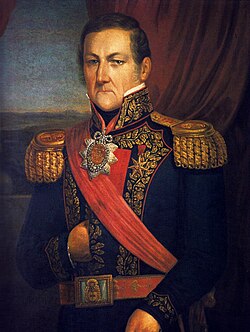
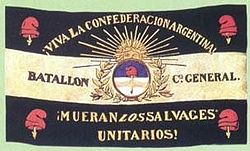
The 1830s saw the formalization of two opposing cliques: the Federalists and the Unitarians. In 1829, Juan Manuel de Rosas assumed the governorship of Buenos Aires, while the Unitarian leader José María Paz campaigned to subjugate the interior provinces, dismissing provincial governors as mere caudillos.
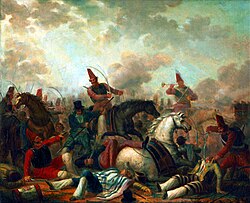
In 1831, the provinces of Buenos Aires, Santa Fe, Corrientes, and Entre Ríos formed the Federal Pact. This alliance defeated the Unitarian Liga del Interior at the Battle of La Ciudadela. Under the leadership of Rosas, the "Argentine Confederation" emerged. Rosas wielded the "sum of public power," effectively suspending the separation of powers and dominating foreign affairs through the port of Buenos Aires.
The Fall of Rosas
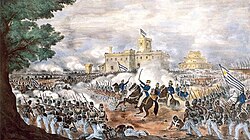
The dominance of Rosas ended when Justo José de Urquiza, the governor of Entre Ríos, demanded a formal constitution and the sharing of customs revenue. This led to the Platine War, culminating in the 1852 Battle of Caseros, where a Brazilian-led alliance deposed Rosas and sent him into exile.
The Secession of Buenos Aires and Final Unification
Despite the fall of Rosas, unity remained elusive. Buenos Aires refused to ratify the 1852 San Nicolás Agreement and seceded to form the State of Buenos Aires. The primary point of contention was the Buenos Aires Customs, the nation's chief source of revenue. This secessionist state rejected the 1853 Constitution and maintained its own separate government.
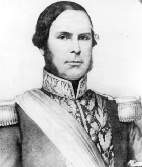
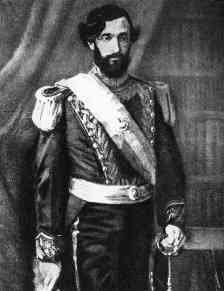
Conflict renewed in 1859, leading to the Battle of Cepeda. Although Urquiza won, he opted for negotiation via the Pact of San José de Flores. However, Bartolomé Mitre eventually abrogated this pact, leading to the 1861 Battle of Pavón. Mitre's victory allowed him to capture the interior provinces and eventually become the republic's first president in 1862.
The Path to 1880
The final decades were marked by the suppression of remaining Federalist revolts, such as those led by Chacho Peñaloza and Ricardo López Jordán. The process of unification concluded in 1880 with the election of General Julio Roca and the defeat of Buenos Aires Governor Carlos Tejedor. This resulted in the Federalization of Buenos Aires, removing the city's special privileges and establishing the hegemony of the National Autonomist Party (PAN).
Summary of Major Conflicts and Outcomes
| Period/Year | Key Event/Conflict | Primary Outcome |
|---|---|---|
| 1814–1820 | Federal League vs. Directory | Dissolution of the United Provinces government |
| 1831 | Federal Pact vs. Unitarian League | Victory for Federalists; rise of the Argentine Confederation |
| 1852 | Battle of Caseros | Overthrow and exile of Juan Manuel de Rosas |
| 1853 | Sanction of the Constitution | Establishment of the legal framework for the Republic |
| 1861 | Battle of Pavón | Victory for Mitre; unification of interior provinces |
| 1880 | Federalization of Buenos Aires | End of open civil resistance and national unification |
Frequently Asked Questions
What was the main difference between Federalists and Unitarians?
Federalists advocated for a decentralized system where provinces maintained significant autonomy and power. Unitarians sought a strong central government based in Buenos Aires to manage the nation's affairs.
Who were the caudillos?
Caudillos were regional military and political strongmen who exercised personalist control over their respective provinces during the period of central government collapse.
Why was the port of Buenos Aires so important?
As the country's only major port, it controlled all foreign trade and customs revenue, making it the primary source of wealth and a central point of conflict between the city and the interior provinces.
What was the significance of the Battle of Caseros?
The Battle of Caseros in 1852 marked the end of Juan Manuel de Rosas' long period of dominance, leading to his exile and paving the way for the 1853 Constitution.
How did the civil wars finally end?
The conflicts ended through a combination of military victories by the central government, the adoption of the 1853 Constitution, and the final 1880 federalization of Buenos Aires, which stripped the city of its autonomous privileges.