The Resilient Return of the Johnson Canyon Columbine
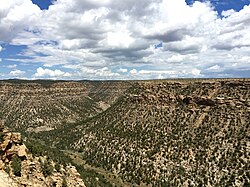
In the rugged landscapes of southwestern Colorado, a rare botanical mystery once threatened to vanish forever. Aquilegia micrantha var. mancosana, a unique variety of the columbine plant, spent decades presumed extinct in the wild. Known for its unusual physical characteristics and a complex history of scientific naming, this perennial herb has recently emerged from the shadows of its canyon home, proving that nature often holds onto its secrets longer than we expect.
Key Facts
- Scientific Name: Aquilegia micrantha var. mancosana
- Family: Ranunculaceae (Buttercup family)
- Unique Feature: Lacks the traditional nectar spurs found in most columbines.
- Primary Habitat: A specific cavernous niche in Johnson Canyon, Ute Mountain Tribal Park, Colorado.
- Status: Once presumed extinct, it was rediscovered in 2008 at its original type locality.
A Botanical Oddity: Physical Description
Most members of the Aquilegia genus are easily identified by their distinctive nectar spurs—tubular outgrowths on the petals that hold nectar for pollinators. However, A. micrantha var. mancosana breaks this rule. Instead of long spurs, it features small, white, sac-like outgrowths, making its flowers look more like those of the Anemone or Clematis genera.
The plant is a perennial herb characterized by:
- Stems: Growing between 30 cm (12 in) and 50 cm (20 in) tall.
- Leaves: Unique rhombic (diamond-shaped) outlines with acute tips, sprouting from long, narrow petioles (leaf stalks).
- Flowers: Broad, pink or white blooms measuring approximately 2 cm (0.79 in) across, described as having a "delicate texture" and a "sweet strong perfume."
- Roots: Long, woody roots situated beneath a tuft base covered by brown sheaths of dead leaves.
Reproductive Structures
Like all Aquilegia, this variety is bisexual, meaning each flower contains both male and female reproductive organs. The ovaries are viacid-pubescent (covered in fine hairs), and the styles range from 5 mm to 7 cm in length. The plant produces glossy black seeds and fruits that closely resemble those of the parent species, A. micrantha.
The Mystery of the "Extinct" Columbine
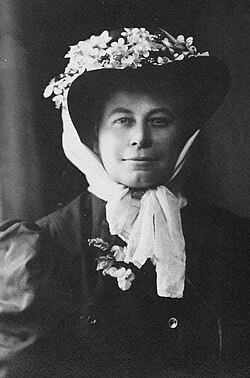
The history of this plant is as dramatic as its appearance. It was first collected in June 1891 by Alfred Wetherill in a cavern within Johnson Canyon. The specimen was passed to the renowned American botanist Alice Eastwood, who initially named it Aquilegia ecalcarata.
Following Eastwood's observations in 1892, the plant seemed to vanish. While some cultivated specimens survived in a Denver garden, the wild population was not seen again for over a century. By the mid-20th century, it was widely presumed extinct in the wild, though it remained a fixture in botanical texts and Colorado floras.
The mystery was solved in June 2008, when botanist Stephen O. Myers collected two specimens from the same canyon location where it had been found in the 1890s. This discovery confirmed that the variety had survived in its highly specific, moisture-rich canyon niche.
Habitat and Distribution
The distribution of A. micrantha var. mancosana is incredibly limited. It is known to inhabit only a "niche-like cavern" at the head of Johnson Canyon in the Ute Mountain Tribal Park, Colorado. While early descriptions suggested the plant lived in a "sunless" environment, modern botanists note that as a columbine, it still requires sunlight to survive.
The plants appear to cling to the canyon walls, specifically on the west side of the canyon at an elevation of approximately 6,138 ft (1,871 m), where they can access the limited moisture that seeps through the rock.
A Complex Taxonomic History
The scientific naming of this plant has been a source of "nomenclature chaos," as Eastwood once described it. Because different botanists applied different names over the decades, its classification has shifted frequently:
- 1891: Described by Eastwood as A. ecalcarata.
- 1902: Given the names A. eastwoodiae and A. mancosana.
- 1920: Briefly reassigned to the genus Semiaquilegia as S. eastwoodiae.
- 1897: Eastwood eventually renamed it A. micrantha var. mancosana, linking it to the closely related A. micrantha.
While various scientists have proposed different classifications, the name A. micrantha var. mancosana has remained the most widely accepted standard among botanists. Interestingly, some modern databases, such as Kew Botanic Gardens' Plants of the World Online, currently treat it as a synonym for Aquilegia micrantha var. micrantha.
Summary of Scientific Classification
| Rank | Classification |
|---|---|
| Kingdom | Plantae |
| Clade | Angiosperms (Flowering plants) |
| Order | Ranunculales |
| Family | Ranunculaceae |
| Genus | Aquilegia |
| Species | A. micrantha |
| Variety | A. m. var. mancosana |
Frequently Asked Questions
What makes this columbine different from others?
The most significant difference is that it lacks the long nectar spurs typically found in the Aquilegia genus. Instead, it has small, white, sac-like outgrowths.
Where can this plant be found in the wild?
It is extremely rare and is only known to grow in a specific cavernous area within Johnson Canyon, located in the Ute Mountain Tribal Park in southwestern Colorado.
Was this plant thought to be extinct?
Yes. After its initial observation in the 1890s, it was not seen in the wild again until 2008, leading many to believe it had disappeared from the natural world.
What does the name "Aquilegia" mean?
The name may derive from the Latin word aquila (eagle), referring to petals that look like eagle talons, or from aquam legere, meaning "to collect water."
What does the species name "micrantha" mean?
The name micrantha comes from the Greek words for "small" and "flower," describing the plant's small-flowered nature.