Aquilegia vulgaris: The Comprehensive Guide to the Common Columbine
Known by many names—including the common columbine, European crowfoot, and granny's bonnet—Aquilegia vulgaris is a captivating perennial flowering plant. Belonging to the Ranunculaceae family, this species is celebrated for its striking architectural flowers and its remarkable ability to adapt to diverse environments. From its native European meadows to curated gardens across the globe, A. vulgaris stands out as the most morphologically variable member of its genus.
Key Facts
- Scientific Name: Aquilegia vulgaris
- Common Names: Common columbine, European crowfoot, granny's bonnet
- Native Range: Europe (possibly originating in the Balkans)
- Flower Characteristics: Typically blue or purple with distinct nectar spurs
- Toxicity: Contains cyanogenic glycosides; toxic to humans and animals
- Growth Habit: Perennial herbaceous plant forming bushy clumps
Botanical Description
Aquilegia vulgaris is a perennial herbaceous plant characterized by a thick rootstock that may be simple or branched. The plant typically produces one or two aerial stems that grow between 50 cm and 90 cm tall. These stems are pubescent (covered in small, whitish hairs) and often emerge from a bushy clump at the base.
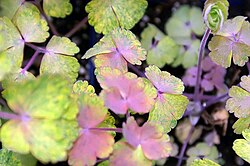
The foliage is equally distinctive. The basal leaves—those attached to the base of the plant—can reach up to 40 cm in length. These leaves are biternate, meaning each leaflet is further subdivided into three. While the top of the leaf blade is glabrous (smooth or lacking hairs), the underside is glaucous (a pale blue-grey color) and pubescent. Cauline leaves, which grow along the stem, are similar but become smaller and simpler as they ascend.
Flower Structure and Reproduction
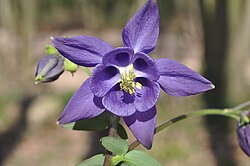
The flowers of A. vulgaris are a marvel of natural engineering, typically measuring 30 mm to 60 mm in diameter. In the wild, they are most commonly blue or purple, though white and reddish variants occur. The flowers have a nodding orientation, facing downward to protect their pollen.
A defining feature of the genus is the presence of nectar spurs—elongated, nectar-bearing structures extending from the petals. These obconical spurs range from 12 mm to 20 mm in length and are adapted to specific pollinators. The flower also consists of five petaloid sepals that are ovate to ovate-lanceolate in shape, creating a cup-like inner structure.
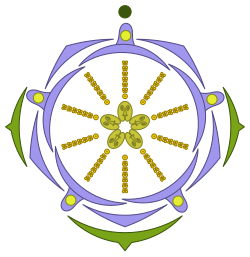
The reproductive system includes multiple stamens measuring 9 mm to 13 mm. Following pollination, the plant produces follicles (dry fruits that split along one side) between 15 mm and 25 mm long. These follicles contain numerous shiny black seeds, each weighing approximately 1.53 mg.
Distribution and Ecology
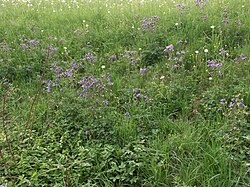
While originally native to Europe, A. vulgaris has expanded its reach significantly. It is now found in Asia (including Uzbekistan and the Russian Far East), Oceania, and the Americas. In North America, the species has become naturalized, meaning it grows wild and reproduces successfully outside its original native range, particularly in cooler environments.
In its natural habitat, the plant relies heavily on pollinators. European populations are frequently visited by bumblebees (Bombus), whose long tongues are perfectly suited to reach the nectar stored deep within the spurs. In cultivated settings, hummingbirds have also been observed visiting the flowers.
However, the plant faces threats from pests. Aphids often attack columbines, which can lead to stunted growth, deformed flowers, and the accumulation of sticky honeydew on the basal leaves.
Phytochemistry and Safety
Despite its beauty, A. vulgaris contains potent chemical compounds. It possesses cyanophores (cells that produce a blue color) and contains cyanogenic glycosides, specifically dhurrin and triglochinin. These compounds often taste bitter and are toxic to humans and animals.
Ingestion can lead to severe health issues. Recorded cases show that consuming fresh leaves can cause respiratory distress, convulsions, and heart failure, while consuming flowers has led to limb weakness, drowsiness, and cyanosis (a bluish discoloration of the skin due to lack of oxygen). While modern herbal medicine sometimes uses the plant as a diuretic or astringent, and historical figures like Nicholas Culpeper suggested seed-infused wine for childbirth, caution is required due to its toxicity.
Cultivation and Varieties
Humans have cultivated A. vulgaris for nearly two millennia. Archaeological evidence from Roman Britain suggests the plant was grown in gardens as early as the 2nd century AD. Today, it is a staple in gardens across USDA hardiness zones 3 through 10, thriving in both sunny and partially shaded areas.
Gardeners often grow cultivars (cultivated varieties) rather than the wild form. These include:
- Single-flowering: 'Nivea' (white flowers, grey-green foliage), 'Heidi' (pink flowers, purple-red stems), and 'Hensol Harebell' (mauve-blue flowers).
- Double-flowered: These are divided into groups such as the Flore Pleno group (rounded petals) and the Veraeneana group (marbled green and gold foliage).
- Stellata group: These feature star-shaped flowers with pointed petals. A famous example is 'Nora Barlow', a multicoloured variety named after the botanist and granddaughter of Charles Darwin.
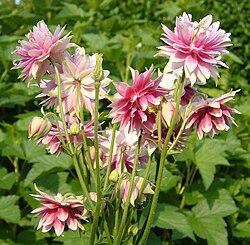
In garden settings, these plants typically live for three to four years. To extend their lifespan, gardeners often practice deadheading—the removal of spent flowers to prevent the plant from spending energy on seed production.
Cultural and Symbolic Significance
Throughout history, A. vulgaris has carried diverse symbolic meanings. In ancient Greece and Rome, the phallic appearance of the spurs linked the plant to fertility goddesses Aphrodite and Venus.
In Christian art, the plant took on a sacred meaning. The three-lobed leaves were associated with the Trinity, and the dove-like appearance of the flowers symbolized the Holy Spirit. Flemish painters of the 15th century frequently included columbines in religious works to represent purity or the Seven gifts of the Holy Spirit.
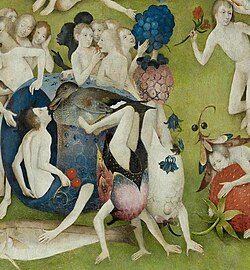
Conversely, the plant has also symbolized darker themes. In William Shakespeare's Hamlet, the flower is used by Ophelia as a symbol of deception and an omen of death. Similarly, in Hieronymus Bosch's The Garden of Earthly Delights, the columbine represents bodily pleasures.
Summary Table: Aquilegia vulgaris Overview
| Feature | Details |
|---|---|
| Plant Type | Perennial herbaceous flowering plant |
| Typical Height | 50 cm to 90 cm |
| Flower Colors | Blue, purple (wild); white, red, pink (cultivars) |
| Key Structures | Nectar spurs, biternate leaves, follicles |
| Primary Pollinators | Bumblebees, hummingbirds (cultivated) |
| Toxicity | High (Cyanogenic glycosides) |
| Hardiness Zones | USDA Zones 3–10 |
Frequently Asked Questions
Is the common columbine poisonous?
Yes, Aquilegia vulgaris contains cyanogenic glycosides such as dhurrin and triglochinin, which are toxic to humans and animals. Ingestion can cause symptoms ranging from drowsiness and limb weakness to severe respiratory distress and heart failure.
How long do columbine plants live in a garden?
In garden settings, A. vulgaris typically has a lifespan of three to four years, behaving similarly to a biennial plant. However, they produce numerous seedlings that allow the population to persist.
What are the "spurs" on a columbine flower?
The spurs are elongated, nectar-bearing structures that extend from the petals. They are an evolutionary adaptation that limits nectar access to specific pollinators, such as bumblebees with long tongues.
Where did Aquilegia vulgaris originate?
The species is native to Europe and is believed to have possibly originated in the Balkans. It has since spread naturally and through human cultivation to Asia, Oceania, and the Americas.
How can I make my columbines live longer?
You can extend the lifespan of the plant by "deadheading," which is the process of removing dead flowers before they can produce seeds. This prevents the plant from exhausting its energy reserves on seed production.