Apidae: The Diverse and Essential Family of Bees
The family Apidae represents one of the most significant groups of insects on Earth. As the largest family within the superfamily Apoidea, it contains at least 5,700 species of bees. From the familiar honey bees found in gardens to the specialized pollinators of wild orchids, this family plays a critical role in maintaining natural habitats and supporting global agricultural crops.
While many people associate bees exclusively with social colonies and honey production, the Apidae family is incredibly diverse. It encompasses a wide spectrum of lifestyles, ranging from highly organized social structures to solitary existence and even specialized parasitic behaviors.
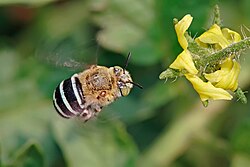
Key Facts
- Species Count: Contains at least 5,700 different species.
- Evolutionary Age: Fossil evidence suggests presence since the Late Cretaceous.
- Diversity: Includes honey bees, bumblebees, carpenter bees, and cuckoo bees.
- Social Structures: Ranges from solitary bees to eusocial (highly organized social) colonies.
- Ecological Role: Vital pollinators for both wild ecosystems and human agriculture.
Taxonomy and Evolutionary History
The classification of Apidae has evolved alongside advancements in scientific understanding. Historically, groups like honey bees, bumblebees, and orchid bees were categorized separately, but modern taxonomy now includes genera formerly placed in the families Anthophoridae and Ctenoplectridae within the Apidae family.
One of the most fascinating aspects of their history is their ancient lineage. The earliest known fossil apid is Cretotrigona, a stingless bee from the Late Cretaceous period. Because the single known specimen is a worker bee, scientists believe that eusociality—a form of social organization where individuals cooperate to raise offspring—had already evolved by that time.
Major Subfamilies of Apidae
To understand the complexity of this family, it is helpful to look at its three primary subfamilies, each defined by distinct behaviors and nesting habits.
Apinae: The Social and Solitary Specialists
The subfamily Apinae is perhaps the most well-known, containing honey bees, bumblebees, stingless bees, orchid bees, and digger bees. While many tribes within this group are solitary bees that build simple burrows in the soil, others have developed complex social lives.
Honey bees, stingless bees, and bumblebees are eusocial, meaning they live in organized colonies. Interestingly, scientists believe these groups may have developed colonial traits independently, as they exhibit different methods of nest construction and communication between workers.
Nomadinae: The Cuckoo Bees
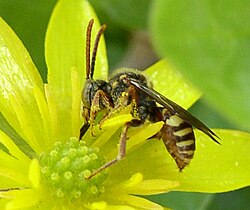
The Nomadinae subfamily consists of 31 genera known as cuckoo bees. Unlike most other bees, these are kleptoparasites—organisms that derive nutrients from the parental care or food stores of another species. They survive by laying their eggs in the nests of other bees, effectively hijacking the resources provided by the host.
Xylocopinae: The Carpenter Bees
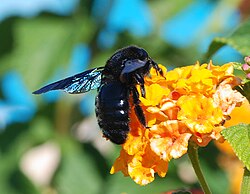
The Xylocopinae subfamily includes the carpenter bees. These bees are known for making their nests in wood or plant stems. Many species in this group are facultatively eusocial, meaning they can live either as solitary individuals or in small social colonies, typically consisting of only a few females.
Summary of Apidae Subfamilies
| Subfamily | Common Examples | Primary Nesting/Behavior |
|---|---|---|
| Apinae | Honey bees, Bumblebees, Digger bees | Burrows in soil; ranges from solitary to eusocial. |
| Nomadinae | Cuckoo bees | Kleptoparasitic (parasitize other bee nests). |
| Xylocopinae | Carpenter bees | Nests in wood or plant stems; often facultatively eusocial. |
Frequently Asked Questions
What is the difference between solitary and eusocial bees?
Solitary bees live and work alone, typically building their own nests and providing for their own offspring. Eusocial bees live in organized colonies with specialized roles, such as workers and queens, working together to maintain the nest and raise the next generation.
How many species of bees are in the Apidae family?
There are at least 5,700 known species within the Apidae family.
What are cuckoo bees?
Cuckoo bees (subfamily Nomadinae) are kleptoparasites. Instead of building their own nests, they lay their eggs in the nests of other bee species, relying on the host bees to provide food for their larvae.
Where do carpenter bees build their nests?
Carpenter bees, which belong to the Xylocopinae subfamily, typically construct their nests within wood or the stems of plants.
Are all bees in the Apidae family social?
No. While the family includes famous social insects like honey bees and bumblebees, the vast majority of apid bees are actually solitary.