Antioch on the Orontes: The Rise and Fall of a Metropolitan Giant
Perched on the fertile southwest Amuq plain in modern-day Turkey, Antioch on the Orontes was once one of the most influential cities of the ancient world. Founded as a strategic bastion of Greek power, it evolved into a sprawling metropolis that served as a bridge between the Mediterranean and the East. At its zenith, it was the third largest city in the Roman Empire, trailing only Rome and Alexandria in population and prestige.
The city's location on the Orontes River provided not only rich agricultural resources but also a commanding position over vital trade routes, ensuring its status as a center of commerce, culture, and early religious transformation.
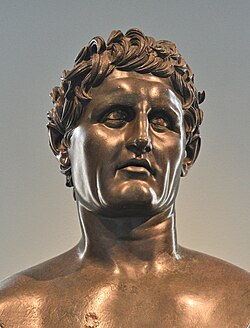
Key Facts
- Founder: Seleucus I Nicator, a successor of Alexander the Great, in 300 BC.
- Peak Population: Estimated at over 500,000 inhabitants during the Roman era.
- Strategic Importance: Served as the Seleucid capital (240–63 BC) and later the capital of Roman Syria.
- Architectural Marvels: Home to the Circus of Antioch, which could hold 80,000 spectators.
- Religious Legacy: A critical early center for Christianity where disciples were first called "Christians."
- Modern Location: Antakya, Hatay Province, Turkey.
Foundation and the Hellenistic Era
Antioch was established in 300 BC by Seleucus I Nicator to secure his newly conquered territories. The city was designed as a multicultural hub, populated by a mix of Macedonians, native Syrians, and Jews—the latter of whom were granted full status from the city's inception. Tradition suggests the initial settlement included 5,500 Athenians and Macedonians, though the total free Greek population likely ranged between 17,000 and 25,000.
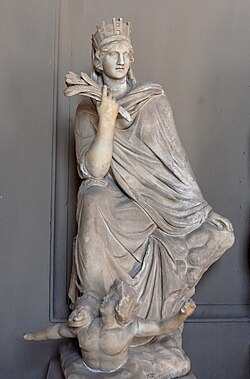
The Roman Golden Age
In 63 BC, the Romans took control of Antioch, establishing it as the capital of the province of Syria. Under Roman rule, the city expanded into a global center of luxury and administration. One of its most imposing structures was the Circus of Antioch, a chariot racing venue modeled after Rome's Circus Maximus. Measuring 490 meters in length, it was a testament to the city's immense wealth and population.
The city also boasted a magnificent Imperial Palace, which served as the residence for visiting Roman emperors. According to the sophist Libanius, the palace was unsurpassed in both beauty and scale.
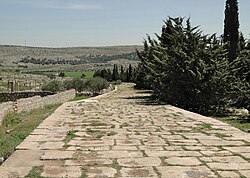
Currency and Commerce
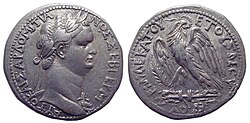
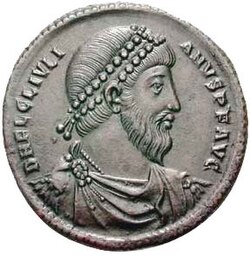
As a trade hub, Antioch maintained its own mint, producing coins that reflected the artistic and political shifts of the empire. From the realist portraits of the Domitian Tetradrachms to the coinage of Emperor Julian, these artifacts highlight the city's economic autonomy.
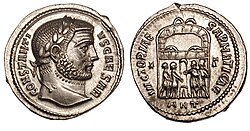
Christianity and Late Antiquity
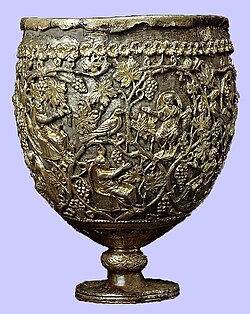
Antioch holds a pivotal place in religious history as a primary center for the early Christian church. It was here that the followers of Jesus were first referred to as "Christians." However, the city's later years were marked by volatility. In 526 and 528 AD, devastating earthquakes struck Antioch and its port, Seleucia Pieria. While the port never recovered due to silting, the city was renamed Theopolis ("City of God") by Justinian I in an attempt to revive it.
The decline accelerated in 540 AD when the Persian King Khosrow I deported much of the population—as many as 300,000 people—to a new city in Mesopotamia called Weh Antiok Khosrow.
The Crusader Era and Medieval Conflict
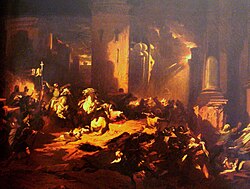
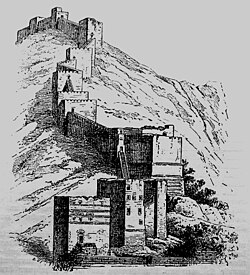
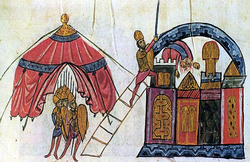
During the First Crusade, Antioch became a focal point of conflict. In 1098, Bohemund of Taranto captured the city, leading to the establishment of the Principality of Antioch. The city's governance was characterized by power struggles between the regents, such as Tancred and Roger of Salerno, and the Byzantine Empire.
The 12th and 13th centuries saw a cycle of sieges and shifting allegiances involving the Armenians and the Byzantines. Despite these conflicts, the city remained a strategic prize until it was eventually incorporated into the Ottoman Empire in 1516.
Archaeology and Artistic Legacy
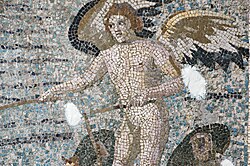
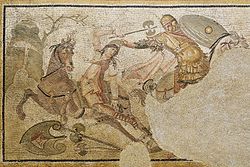
Though much of the ancient city is now buried, excavations conducted between 1932 and 1939 by an international committee (including the Louvre and Princeton University) revealed the city's artistic splendor. While the Great Octagonal Church and the Imperial Palace remained elusive, the team discovered breathtaking Roman mosaics from villas and baths in Antioch and its suburb, Daphne.
| Period | Ruling Power | Key Status/Event |
|---|---|---|
| 300 BC – 63 BC | Seleucid Empire | Founded by Seleucus I; Seleucid Capital |
| 63 BC – 395 AD | Roman Empire | Capital of Roman Syria; 3rd largest city in Empire |
| 395 AD – 630s AD | Byzantine Empire | Renamed Theopolis; suffered major earthquakes |
| 1098 – 1268 | Crusader States | Principality of Antioch established |
| 1516 onwards | Ottoman Empire | Incorporated as a sub-province of Aleppo |
Frequently Asked Questions
Who founded Antioch and why?
Antioch was founded in 300 BC by Seleucus I Nicator, a successor to Alexander the Great. He established the city on the Orontes River to secure the region he had conquered and to dominate the trade routes of the southwest Amuq plain.
How large was Antioch at its peak?
At its height during the Roman period, Antioch was one of the largest cities in the world, with an estimated population of over 500,000 people, making it the third largest city in the Roman Empire after Rome and Alexandria.
What is the significance of Antioch in early Christianity?
Antioch was a vital center for the early church; according to biblical accounts, it was the place where the disciples of Jesus were first called "Christians." It also served as a base for prominent figures like Saint Peter and Saint Paul.
What caused the decline of the city?
The decline was caused by a combination of natural disasters and warfare. Severe earthquakes in 526 and 528 AD caused massive damage, and the Persian invasion of 540 AD led to the deportation of a huge portion of the population.
What are the most significant archaeological finds from the site?
The most notable discoveries are the high-quality Roman mosaics found in villas and baths across Antioch, Daphne, and Seleucia Pieria, which showcase the luxury and artistic skill of the Roman era.