Anglo-French Blockade of the Río de la Plata
The Anglo-French blockade of the Río de la Plata, frequently referred to as the Paraná War, was a significant five-year naval conflict spanning from 1845 to 1850. This intervention saw the combined naval forces of the United Kingdom and France impose a blockade on the Argentine Confederation during the turmoil of the Uruguayan Civil War. The conflict was not merely a maritime dispute but a complex geopolitical struggle involving sovereignty, trade, and regional influence in the Río de la Plata Basin.
Key Facts
- Duration: 1845–1850.
- Primary Belligerents: Argentina (supported by the White Party) vs. United Kingdom and France (supporting the Colorado Party).
- Key Argentine Leader: Juan Manuel de Rosas.
- Major Engagement: The Battle of Vuelta de Obligado.
- Outcome: Argentine victory; recognition of Argentine sovereignty over its internal rivers.
- Final Agreements: The Arana–Southern Treaty (1849) and the Arana–Lepredour Treaty (1850).
Historical Context and Origins
The roots of the conflict lay in the Uruguayan Civil War, where the Argentine government, led by Juan Manuel de Rosas, supported the White Party. In response, the British Royal Navy and the French Navy intervened to support the Colorado Party (Redshirts). This intervention aimed to secure the Río de la Plata Basin and ensure maritime commerce remained open, eventually leading to the closure of Buenos Aires to trade.
This was not the first instance of tension; between 1838 and 1840, France had already imposed a blockade on Buenos Aires. During that earlier period, Rosas successfully navigated diplomatic disputes between France and England, eventually securing a most favored nation status with France in 1840.
The Escalation of Hostilities
Armed conflict began abruptly when British and French ships seized the entire Argentine navy, including the ships San Martín, 25 de mayo, General Echagüe, Maipú, and 9 de julio. Following this seizure, Anglo-French forces landed in Montevideo to reinforce its defenses, an action that secured Uruguayan independence for the Colorado Party but drew sharp criticism from the Junta of Representatives in Buenos Aires.
The blockade was formally declared on September 18, 1845. The European powers cited various justifications, including the alleged mistreatment of foreigners in Buenos Aires and the violent actions of the Mazorca (the government's paramilitary force). Rosas countered these claims by convening diplomats from the United States, Portugal, Sardinia, and Bolivia, who unanimously denied the allegations of abuse against foreigners.
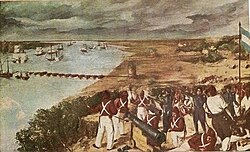
The Battle of Vuelta de Obligado
The conflict reached its peak on the Paraná River at Vuelta de Obligado. The geography here was strategic, as the river narrowed to approximately 700 meters, making navigation difficult for sailboats. The Argentine commander, Mansilla, attempted to block the river using three thick chains and 24 boats, supported by four batteries on the west coast.
The technological disparity was stark: Argentine cannons averaged a caliber of 20, while the Anglo-French navy utilized cannons with an average caliber of 80. Despite the bravery of the Regiment of Patricians and countryside volunteers led by Facundo Quiroga, the Anglo-French steamboats—which were not dependent on wind—eventually broke through the chains. The battle resulted in at least 250 Argentine deaths and 400 injuries.
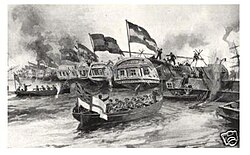
Aftermath of the Battle
While the Anglo-French fleet technically won the engagement and destroyed the batteries, the victory was pyrrhic. The expedition suffered losses in commercial shipping, and subsequent Argentine resistance at Tonelero, Acevedo, and San Lorenzo (on June 4, 1846) proved that the interior of the country remained contested. At San Lorenzo, hidden batteries surprised the fleet, causing collisions and significant combat engagement for several hours.
Diplomatic Resolution and Treaties
The conflict shifted from the battlefield to the diplomatic table. While some British officials requested more troops for a full-scale war, others, like Thomas Samuel Hood, recognized that a prolonged conflict was financially damaging, particularly to the Baring Brothers bank due to Rosas suspending foreign debt payments.
Britain eventually withdrew from the blockade in 1847, leaving France to continue alone until 1848. The resolution came through two primary treaties:
- Arana–Southern Treaty (1849): Britain recognized Argentine sovereignty over its internal waters, returned captured ships and the island of Martín García, and performed a 21-gun salute to the Argentine flag.
- Arana–Lepredour Treaty (1850): After prolonged negotiations and French nationalistic hesitation, France agreed to similar terms, including the evacuation of the foreign legion from Montevideo.
| Feature | Details |
|---|---|
| Timeline | 1845–1850 |
| Key Battle | Vuelta de Obligado |
| Argentine Casualties | At least 250 killed (Obligado) |
| Anglo-French Losses | At least 150 killed, 6 merchant ships sunk |
| Final Outcome | Argentine Victory / Sovereignty Recognized |
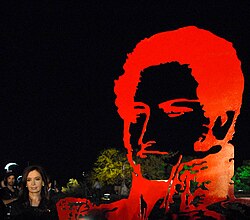
Historical Perspectives
The legacy of the Paraná War remains a point of debate among historians. Revisionist authors view the conflict as a cornerstone of Argentine national identity and sovereignty. Conversely, traditional historians argue that the Battle of Obligado was a military defeat and that the eventual peace was more a result of British policy shifts under Lord Palmerston than Argentine military success.
Modern analysis suggests the British mission was a failure, as it failed to establish total control of the Paraná River or create a separate state in the Argentine Mesopotamia, exposing the limitations of European intervention in the region.
Frequently Asked Questions
Why did Britain and France blockade the Río de la Plata?
The blockade was primarily intended to support the Colorado Party in the Uruguayan Civil War and to force Juan Manuel de Rosas to change his policies regarding trade and the treatment of foreigners.
What happened at the Battle of Vuelta de Obligado?
Argentine forces attempted to block the Paraná River with heavy chains and batteries. Although the Anglo-French fleet used superior firepower and steamboats to break the chains and destroy the defenses, the resistance slowed their progress and shifted international perception.
What were the terms of the Arana-Southern Treaty?
Under this 1849 treaty, Britain returned captured ships and the island of Martín García, recognized Argentine sovereignty over its internal waters, and withdrew its troops from Uruguay.
Who was Juan Manuel de Rosas?
Juan Manuel de Rosas was the leader of the Argentine Confederation who resisted the Anglo-French blockade through a combination of military defense and strategic diplomacy.
Is the Battle of Vuelta de Obligado considered a victory?
Militarily, it was a defeat as the Anglo-French forces broke through. However, strategically and politically, it is often viewed as a victory because it led to the eventual withdrawal of the European powers and the recognition of Argentine sovereignty.