Juan Manuel de Rosas: The Rise and Reign of the Argentine Caudillo
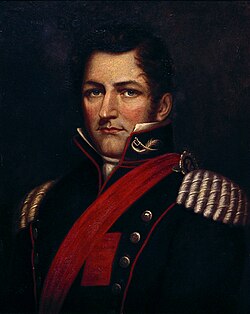
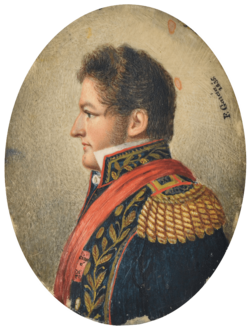
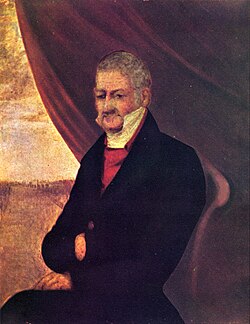
Juan Manuel de Rosas was one of the most polarizing figures in South American history. A wealthy landowner, skilled military officer, and ruthless politician, he dominated the province of Buenos Aires and eventually the entire Argentine Confederation. Known as the Restorer of the Laws, Rosas transformed the political landscape of 19th-century Argentina, evolving from a provincial leader into a totalitarian ruler whose influence extended far beyond the borders of his home province.
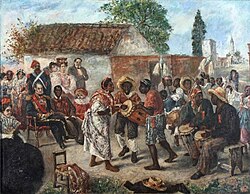
Rosas rose to power by leveraging his status as a caudillo—a regional warlord typical of the era—combining personal charisma with the brute force of a private army. His reign was characterized by a complex blend of populist appeal to the rural classes and a systematic campaign of state-sponsored repression against his political enemies.
Key Facts
- Full Name: Juan Manuel José Domingo Ortiz de Rozas y López de Osornio.
- Role: 13th and 17th Governor of Buenos Aires Province and Supreme Head of the Confederacy.
- Political Affiliation: Leader of the Federalist Party.
- Key Instrument of Terror: The Mazorca, a repressive parapolice force.
- Major Conflict: Led the Desert Campaign against indigenous peoples.
- Death: Died in exile in Southampton, UK, in 1877.
Early Life and the Path to Power
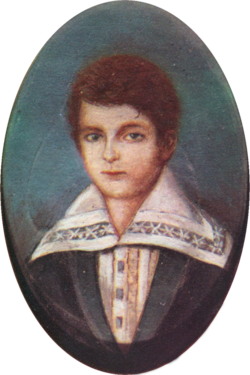
Born on March 30, 1793, in Buenos Aires, Rosas was the son of León Ortiz de Rozas and Agustina López de Osornio. While his father had an undistinguished military career, his mother was a strong-willed woman from a wealthy criollo (descendants of Spaniards born in the Americas) family, whose influence deeply shaped his character.
Rosas' early exposure to conflict began at age 13, when he assisted in distributing ammunition during the British invasions of Buenos Aires in 1806. Later, he served in the Caballería de los Migueletes, a militia cavalry, though illness occasionally hindered his active duty.
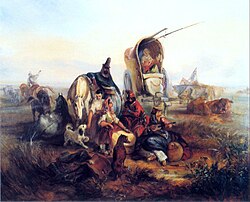
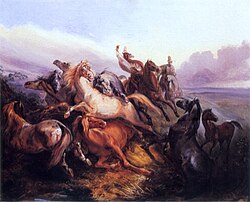
As an estanciero (large estate owner), Rosas amassed a massive personal fortune and acquired vast tracts of land. Following the custom of rural proprietors, he organized his workers into a private militia. This combination of economic wealth and military loyalty provided the foundation for his ascent as a caudillo.
The Governorships of Buenos Aires
Rosas first assumed the governorship of Buenos Aires in December 1829. During this first term, he established a dictatorship and signed the Federal Pact in 1831, which recognized provincial autonomy and laid the groundwork for the Argentine Confederation.
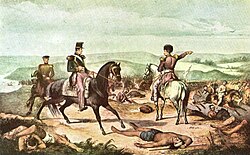
After his first term ended in 1832, Rosas shifted his focus to the frontier, leading the Desert Campaign, a military offensive against indigenous populations to expand territorial control.
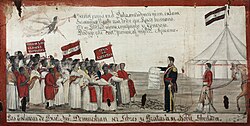
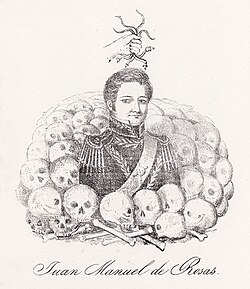
Following a coup by his supporters, Rosas returned to power for a second term starting in March 1835. This era marked the transition from a provincial leadership to a totalitarian regime. He created the Mazorca, an armed parapolice force that utilized state terrorism to kill thousands of dissidents. Under his rule, the judiciary and legislature became mere instruments of his will, and a pervasive cult of personality was established.
Dominance Over the Argentine Confederation
While Rosas initially held power only in Buenos Aires, he gradually turned other provinces into satellites. By installing weak or allied governors, he exercised indirect control over the entire region. By 1848, he began referring to his administration as the "general government," and by 1849, he officially named himself the Supreme Head of the Confederacy.
His grip on power was not without challenge. Rosas fought a war against the Peru–Bolivian Confederation in 1837 and faced a French blockade of the Port of Buenos Aires in 1838. He also suppressed internal revolts and a major rebellion that spanned five northern provinces.
Rosas' ambitions extended beyond Argentina, as he attempted to annex Uruguay and Paraguay. These expansionist goals led to a joint blockade by Great Britain and France in the late 1840s. Despite the economic pressure, Rosas' ability to withstand these European powers actually enhanced his prestige domestically.
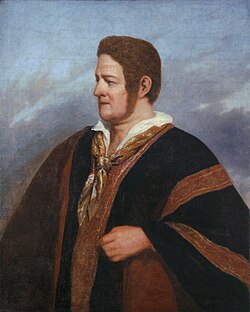
Later Years, Exile, and Legacy
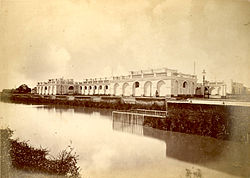
Despite his absolute control, the regime eventually collapsed. Rosas spent his final decades in exile, far from the land he once ruled with an iron fist.
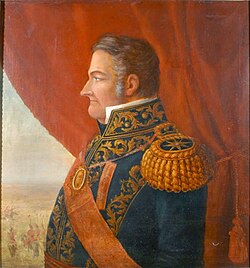
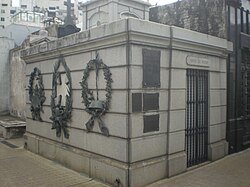
He died on March 14, 1877, in Southampton, United Kingdom, at the age of 83. His remains were eventually returned to Argentina and placed in the La Recoleta Cemetery.
| Period | Role/Title | Key Achievement/Event |
|---|---|---|
| 1829–1832 | Governor of Buenos Aires (1st term) | Signed the Federal Pact (1831) |
| 1833–1834 | Military Leader | Led the Desert Campaign |
| 1835–1852 | Governor of Buenos Aires (2nd term) | Established totalitarian rule and the Mazorca |
| 1849–1852 | Supreme Head of the Confederacy | Achieved undisputed rule over all Argentina |
Frequently Asked Questions
Who was Juan Manuel de Rosas?
Juan Manuel de Rosas was an Argentine army officer and politician who served as the Governor of Buenos Aires and the Supreme Head of the Argentine Confederation, ruling as a caudillo with totalitarian control.
What was the Mazorca?
The Mazorca was an armed parapolice force created by Rosas during his second governorship to enforce his will through state terrorism, resulting in the deaths of thousands of citizens.
What was the significance of the Federal Pact?
Signed in 1831, the Federal Pact recognized the autonomy of the provinces and served as the foundational agreement for the creation of the Argentine Confederation.
How did Rosas achieve control over all of Argentina?
Rosas used a combination of military victory, the installation of puppet governors in other provinces, and the suppression of internal rebellions to turn the provinces into satellites of Buenos Aires.
Where did Rosas die?
Rosas died in exile in Southampton, United Kingdom, on March 14, 1877.