Justo José de Urquiza: The Architect of the Argentine Confederation
Justo José de Urquiza y García (1801–1870) was a pivotal Argentine general and politician whose leadership fundamentally reshaped the nation. As a prominent member of the Federalist Party, Urquiza transitioned from a regional governor to the 3rd President of Argentina, dedicating much of his career to the struggle for national organization and the establishment of a formal constitution.
His legacy is defined by his opposition to the centralized dominance of Buenos Aires and his efforts to integrate the interior provinces into a cohesive federal state.
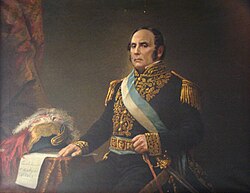
Key Facts
- Role: 3rd President of the Argentine Confederation (1854–1860).
- Major Victory: Defeated Juan Manuel de Rosas at the Battle of Caseros in 1852.
- Constitutional Impact: Oversaw the adoption of the 1853 Constitution based on Juan Bautista Alberdi's ideas.
- Regional Power: Served multiple terms as Governor of Entre Ríos.
- Death: Assassinated in 1870 at his residence, the San José Palace.
The Rise to Power and the Fall of Rosas
Urquiza began his political ascent as the governor of Entre Ríos. During this time, Juan Manuel de Rosas, the governor of Buenos Aires, held delegated powers from other provinces, effectively controlling the region. By 1851, Urquiza grew resentful of the economic and political stranglehold Buenos Aires maintained over the interior.
In a bold move, Urquiza accepted Rosas' resignation and reclaimed the delegated powers for Entre Ríos. He shifted the political rhetoric from the Rosas-era slogan "Death to the savage unitarians!" to "Death to the enemies of national organization!" Seeking a national constitution—which Rosas had long blocked—Urquiza formed the Grand Army with support from Brazil and Uruguayan liberals.
This campaign led to the capitulation of Manuel Oribe in October 1851 and culminated in the decisive Battle of Caseros on February 3, 1852, where Urquiza defeated Rosas, paving the way for a new era of national organization.
Presidency and National Organization
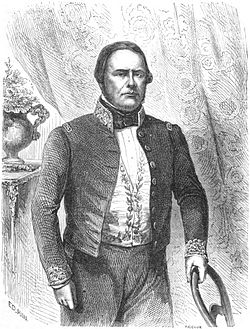
Following the defeat of Rosas, Urquiza served as the provisional director of the Argentine Confederation starting in May 1852. In 1853, a constituent assembly adopted a new constitution, and Urquiza was elected president, with Salvador María del Carril as vice president.
During his presidency (1854–1860), Urquiza focused on several modernization efforts:
- Education and Infrastructure: He encouraged public education and initiated plans for railroad construction.
- Colonization: To boost agricultural and livestock production, he promoted European immigration. A notable example was Colonia San José, founded by Urquiza in 1857.
- Foreign Relations: He worked to improve international ties and diplomatic standing.
Despite these gains, his administration was plagued by the secession of Buenos Aires, which refused to join the Confederation, leading to prolonged conflict.
Conflict with Buenos Aires and the Battle of Cepeda
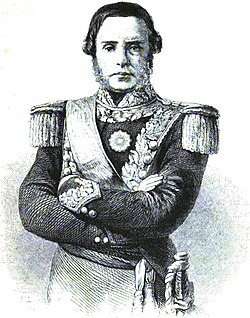
The tension between the Confederation and the seceded state of Buenos Aires erupted into open war in 1859. Urquiza led an army of 14,000 men—including cavalry, infantry, and allied Ranquel Indigenous forces—against the Buenos Aires army led by Bartolomé Mitre.
On October 23, 1859, the Battle of Cepeda took place. Urquiza achieved a significant victory, inflicting heavy losses on Mitre's forces. This victory forced Buenos Aires to negotiate its return to the Confederation through the Pact of San José de Flores (also known as the Pact of National Union) signed on November 11, 1859.
The pact established that Buenos Aires would become part of the Confederation and nationalize its Customs House, though the province was allowed to propose amendments to the 1853 Constitution.
Final Years and Assassination
The peace achieved by the Pact of San José de Flores was fragile. Further political difficulties led to another civil war. In September 1861, Urquiza again faced Mitre's army. Although the battle was indecisive, Urquiza withdrew, effectively granting victory to Mitre.
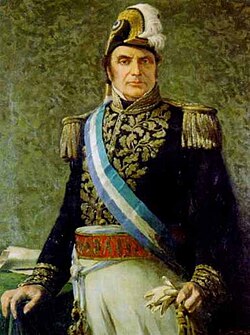
Urquiza retired to his residence, the San José Palace in Entre Ríos. His life ended tragically on April 11, 1870, when he and his sons, Justo and Waldino, were assassinated by followers of his political rival, Ricardo López Jordán.
| Role | Period | Key Achievement/Event |
|---|---|---|
| Governor of Entre Ríos | Various (1842–1870) | Regional leadership and colonization efforts |
| Provisional Director | 1852–1854 | Initiated national organization post-Rosas |
| President of Argentina | 1854–1860 | Implementation of the 1853 Constitution |
| Governor of Buenos Aires | 1852 (Briefly) | Transition period after the fall of Rosas |
Frequently Asked Questions
Who was Justo José de Urquiza?
He was an Argentine general and politician who served as the 3rd President of the Argentine Confederation and was instrumental in defeating the dictator Juan Manuel de Rosas.
What was the significance of the Battle of Caseros?
The Battle of Caseros in 1852 marked the end of Juan Manuel de Rosas' rule, allowing Urquiza to begin the process of organizing Argentina under a national constitution.
What was the Pact of San José de Flores?
It was an agreement signed in 1859 that ended the conflict between the Argentine Confederation and the state of Buenos Aires, leading to the re-incorporation of Buenos Aires into the nation.
How did Urquiza promote economic growth?
Urquiza promoted the creation of agricultural colonies to attract European immigrants, such as Colonia San José, and initiated the planning of the national railroad network.
How did Justo José de Urquiza die?
He was assassinated in 1870 at the San José Palace by followers of his political rival, Ricardo López Jordán.